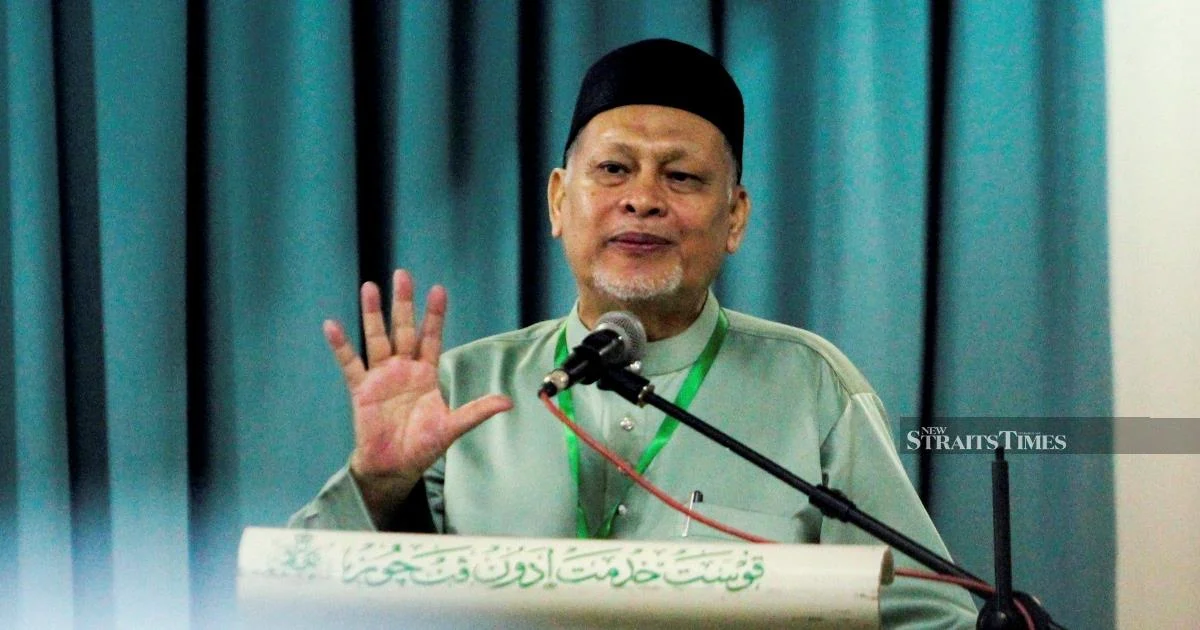
Political tensions within Malaysia's opposition coalition have surfaced once again, with PAS expressing displeasure over Tan Sri Muhyiddin Yassin's unilateral announcement concerning the use of the Perikatan Nasional logo in the impending Johor and Negri Sembilan state elections. The vocal criticism from the Islamic party, delivered from its stronghold in Kota Baru, underscores the persistent friction that continues to characterise the working relationship between the coalition's key parties.
Muhyiddin's statement, made without apparent consultation with alliance partners, represents the type of unilateral decision-making that has periodically destabilised the coalition since its formation. PAS officials contend that such pronouncements should have emerged from formal discussions involving all constituent members of Perikatan Nasional, rather than being announced by the Bersatu president independently. The disagreement highlights the ongoing challenge of maintaining coordinated messaging and unified decision-making processes within an alliance comprising parties with sometimes divergent strategic interests.
The logo question carries more than symbolic weight in Malaysian politics. Control over which party symbol appears on ballot papers directly influences voter perception and party branding within election campaigns. For a coalition like Perikatan Nasional, which seeks to present itself as a unified alternative to the ruling Barisan Nasional, such visual representations matter substantially in shaping public understanding of the alliance's cohesion and strength. Muhyiddin's apparent decision to use the coalition logo for Bersatu's state-level campaigns suggests an attempt to elevate the broader PN brand, yet the hasty manner of this announcement has achieved the opposite effect by creating visible discord.
PAS, as the coalition's largest party by membership and parliamentary representation, wields considerable leverage within Perikatan Nasional's decision-making apparatus. The Kelantan-based party's objection to Muhyiddin's approach reflects its expectation that major strategic decisions should emerge through consensus-building rather than top-down directive. This mirrors previous disputes within the coalition regarding candidate selection, division of constituencies, and allocation of ministerial portfolios, each of which has periodically tested the alliance's resilience.
The timing of this disagreement carries significance given that Johor and Negri Sembilan represent strategically important battlegrounds in Malaysia's electoral landscape. Johor particularly commands attention as the country's second-most populous state and a traditional stronghold for the ruling coalition. Any weakening of opposition coordination in these territories directly benefits Barisan Nasional, making internal disputes especially consequential. Negri Sembilan's political landscape, meanwhile, has demonstrated increasing volatility in recent electoral cycles, making unified opposition messaging equally important in that context.
Beyond the immediate electoral implications, the disagreement reflects deeper structural tensions within Perikatan Nasional regarding party hierarchy and influence distribution. Muhyiddin, as Bersatu chairman and a former prime minister, maintains considerable stature, yet his authority cannot unilaterally override the consensus-building norms that coalition partners, particularly PAS, expect to govern important decisions. This pattern of friction suggests that Perikatan Nasional operates on different organisational principles than members might ideally prefer, with stronger personalities wielding outsized influence over formal processes.
For Malaysian voters observing these developments, the public airing of such disagreements raises legitimate questions about the coalition's operational effectiveness and its capacity to function cohesively in government. Opposition coalitions necessarily demand higher degrees of internal discipline and transparency than governing coalitions, since they must convince voters that they can execute a unified alternative platform. When parties squabble publicly over procedural matters, the broader electorate reasonably questions whether they possess the maturity and organisational capability to manage national governance effectively.
The PAS position also contains an implicit assertion about the coalition's architectural principles. If Perikatan Nasional truly functions as an alliance of equals rather than as a vehicle for Bersatu's political ambitions, then major decisions must reflect negotiated outcomes rather than individual party announcements. PAS's willingness to voice criticism publicly suggests frustration that this principle is not being observed consistently. The party's deployment of the term 'hasty' signals not merely disagreement on substance, but critique of the decision-making process itself.
Looking forward, the Johor and Negri Sembilan campaigns will serve as a proving ground for whether Perikatan Nasional can resolve such disagreements through internal mechanisms before they damage the coalition's public image further. The parties must determine how the PN logo will be deployed across different party candidates, how campaign resources will be allocated, and how the alliance's collective brand will be presented to voters. These negotiations, ideally conducted behind closed doors, will determine whether public discord gives way to unified electoral performance.
For Southeast Asian observers tracking Malaysian political dynamics, these internal coalition developments merit attention because they reflect broader regional patterns of opposition alliance management. Across Southeast Asia, opposition coalitions have struggled to maintain cohesion, with short-term tactical disagreements frequently metamorphosing into strategic fractures. Perikatan Nasional's trajectory will offer instructive lessons about whether diverse political parties can subordinate institutional interests to collective objectives, a challenge that transcends the Malaysian context.

%22%2F%3E%3C%2Fpattern%3E%3C%2Fdefs%3E%3Crect%20width%3D%22100%25%22%20height%3D%22100%25%22%20fill%3D%22url(%23ph40buhg)%22%2F%3E%3Crect%20width%3D%22100%25%22%20height%3D%22100%25%22%20fill%3D%22url(%23ph40buhp)%22%2F%3E%3Ctext%20x%3D%2250%25%22%20y%3D%2250%25%22%20text-anchor%3D%22middle%22%20dominant-baseline%3D%22central%22%20fill%3D%22rgba(255%2C255%2C255%2C0.95)%22%20font-family%3D%22Georgia%2C%20'Times%20New%20Roman'%2C%20serif%22%20font-weight%3D%22700%22%20font-size%3D%22320%22%20letter-spacing%3D%22-0.02em%22%3EGRS%3C%2Ftext%3E%3C%2Fsvg%3E)