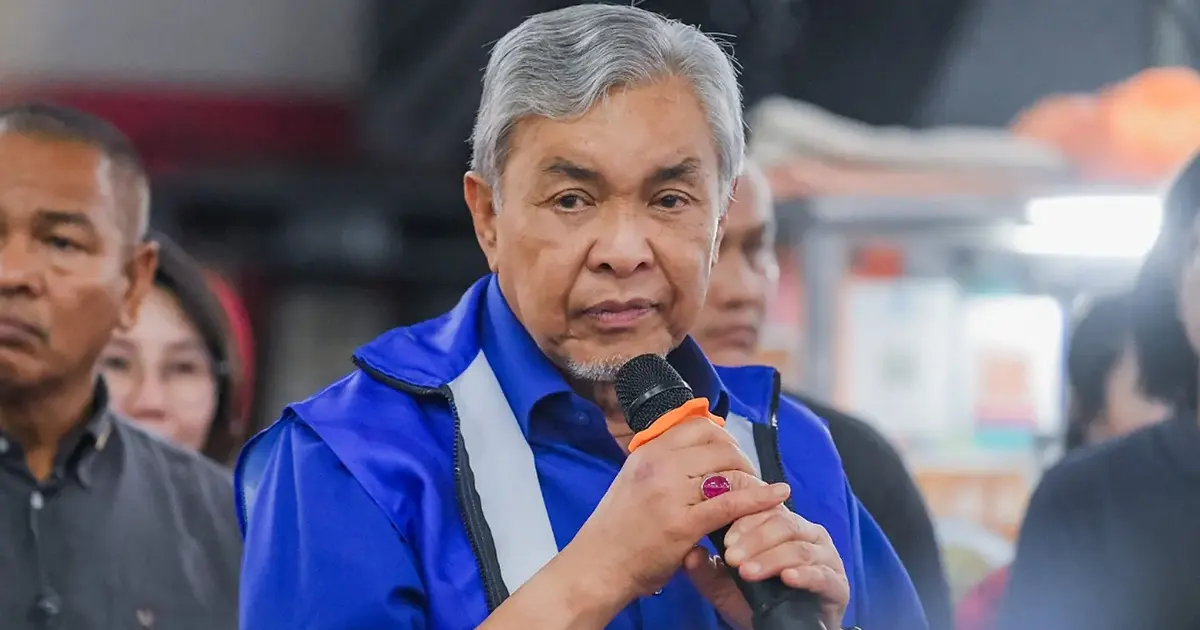
Umno president Datuk Seri Zahid Hamidi has moved to clarify the limits of his party's relationship with PAS following the Islamic party's endorsement of Barisan Nasional hopefuls in the forthcoming Johor state elections, emphasizing that tactical electoral cooperation does not translate into strategic coalition commitments. The BN chairman's statement represents an attempt to manage expectations on both sides of the partnership while shoring up Umno's own political positioning ahead of voting in the southeastern state.
Zahid's remarks come as PAS has chosen to throw its weight behind BN-backed candidates rather than field its own runners in the Johor contest, a decision that reflects the complex calculus of Malaysian Islamic politics and the ongoing jockeying for dominance within the Malay-Muslim political space. The move signals that PAS leadership believes it can maximize its influence and advance its ideological agenda more effectively through selective cooperation with the broader coalition than by pursuing a standalone electoral strategy in Johor specifically.
By clarifying that electoral support does not obligate Umno to accept PAS into a formal governing alliance, Zahid appears intent on preserving Umno's room for maneuver in post-election coalition negotiations. The nuance matters considerably for Umno's broader political calculations, particularly given the party's existing commitments to other coalition partners and its desire to maintain distinct party identity and policy independence. Umno's leadership has long wrestled with the challenge of managing ties to PAS without appearing to capitulate to the Islamic party's political demands or ideological positions.
The Johor election itself carries significant implications for the broader Malaysian political landscape, serving as a barometer for voter sentiment and intra-coalition dynamics ahead of potential national-level contests. Control of Johor, Malaysia's second-largest state by population and a crucial economic engine, has long represented a strategic prize for both Barisan Nasional and Opposition coalitions. The state's traditionally robust support for Umno has been tested in recent election cycles, making the upcoming contest particularly consequential for assessing the coalition's electoral durability.
PAS's decision to lend support rather than compete directly reflects the party's evolving strategic thinking under its current leadership. The Islamic party has undergone significant transformation over the past decade, shifting from consistent opposition posturing to a more pragmatic engagement with established power structures. This repositioning has created both opportunities and tensions within the broader Malay-Muslim political ecosystem, as traditional rivalries and ideological differences persist beneath the surface of tactical accommodation.
For Umno, maintaining boundaries around coalition obligations serves multiple purposes. First, it allows the party to extract maximum electoral benefit from PAS support without creating domestic political complications among its own cadre who remain skeptical of closer ties with the Islamic party. Second, it preserves Umno's negotiating flexibility should coalition configurations shift following the Johor results. Third, it signals to other BN partners, particularly the Malaysian Chinese Association and Sarawak-based parties, that Umno has not fundamentally realigned its coalition architecture.
The distinction Zahid draws between electoral cooperation and formal alliance carries particular weight given Malaysia's recent political history. The previous collaboration between Umno and PAS in the Perikatan Nasional framework during the Muhyiddin administration remains fresh in political memory, and many Umno members and supporters harbor reservations about deeper integration with an organization that competes for Malay-Muslim support. Zahid's careful language appears designed to assuage these concerns while still benefiting from PAS's organizational machinery and voter base in targeted constituencies.
Regionally, Malaysia's coalition politics continue to influence Southeast Asian perceptions of democratic governance and institutional stability in the broader region. Neighboring countries closely observe how Malaysian political parties negotiate power-sharing arrangements and manage competing ideological agendas within democratic frameworks. The careful calibration of Umno-PAS relations reflects the maturation of Malaysian political discourse around coalition management, even as underlying tensions remain unresolved.
Looking forward, the actual results in Johor will likely determine whether this tactical accommodation proves durable or temporary. Should PAS-backed candidates perform strongly, pressure may mount within PAS for more substantial political rewards, potentially complicating Zahid's careful distinctions. Conversely, if results disappoint PAS leadership, the Islamic party may pivot toward different strategic alignments. For Umno, maintaining this ambiguity may prove the optimal short-term strategy while longer-term coalition dynamics remain fluid and unpredictable in Malaysia's intensely competitive political environment.

