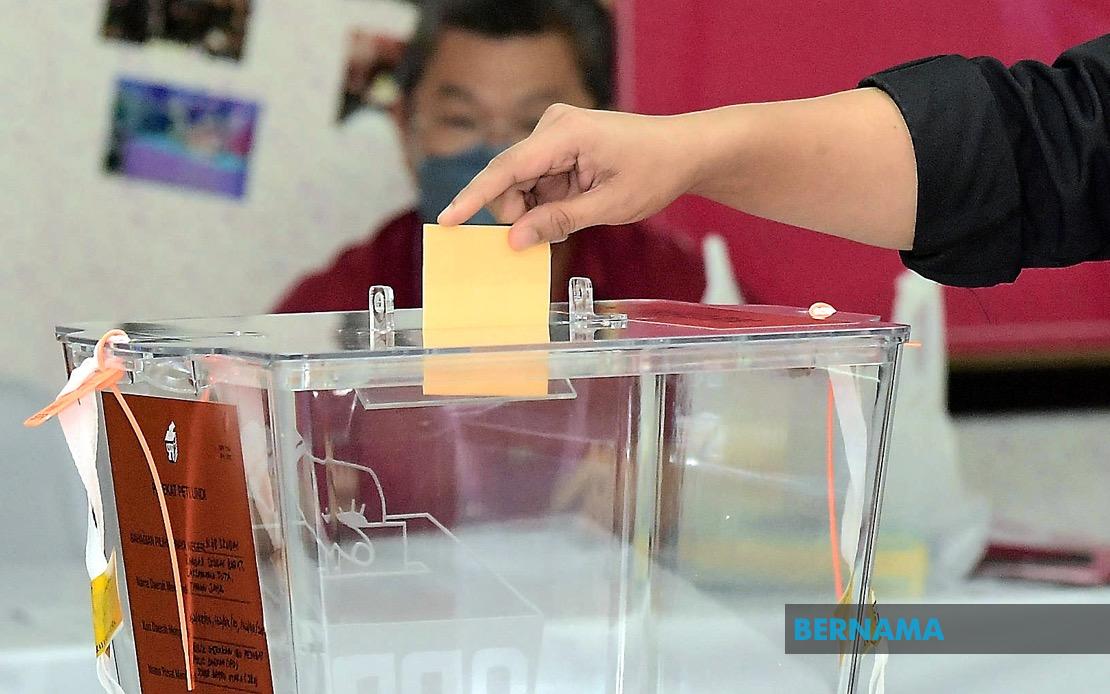
Johor's ruling Perikatan Nasional ally PAS has gracefully accepted the state election outcome, signalling unity within the broader political coalition even as the results underscore shifting electoral dynamics in one of Malaysia's most crucial states. Speaking on the night of the polls, Johor PAS commissioner Datuk Dr Mahfodz Mohamed acknowledged the electorate's decisive backing for Barisan Nasional, which captured 29 of the 56 state assembly seats to secure a comfortable governing majority under returning Menteri Besar Datuk Onn Hafiz Ghazi.
The acknowledgement from PAS carries particular weight given that the party, alongside other Perikatan Nasional components, had contested the election as part of a broader coalition strategy. Dr Mahfodz's measured response reflects a disciplined approach within PN's ranks, emphasizing continuity and preparedness rather than recrimination. In his statement, the PAS commissioner framed the result not as a setback but as an opportunity to strengthen the coalition's grassroots organisation ahead of the 16th General Election, pledging that PN would maintain its commitment to advancing religious, racial and social welfare objectives.
The performance of Johor's two main political blocs reveals a striking tale of consolidation around BN. Pakatan Harapan, the opposition alliance that had hoped to build on limited gains, managed to capture only two seats in a state where it has struggled to gain meaningful traction. The outcome demonstrates BN's continued ability to mobilise traditional support networks in Johor, a state where the coalition has held sway across multiple electoral cycles. This consolidation suggests that despite national political turbulence over recent years, BN's base in Johor remains resilient and geographically distributed across the 56 constituencies.
Bersatu's response indicates the party is embarking on a period of introspection. Secretary-general Datuk Seri Mohamed Azmin Ali announced that the party would undertake a comprehensive analysis of the election results to determine tactical adjustments for future contests. This measured approach contrasts with more dramatic responses sometimes seen after electoral disappointments and suggests Bersatu leadership recognises the need for strategic recalibration rather than wholesale organisational change. The party's willingness to conduct detailed review work signals confidence in its long-term positioning within the political landscape, even as immediate results fell short of expectations.
Perhaps the most striking narrative concerns Bersama Malaysia, the newly-formed political party led by Datuk Seri Rafizi Ramli. Despite being merely 52 days old at the time of voting, Bersama fielded candidates across 15 seats, demonstrating ambitious initial expansion. However, the party's complete failure to retain any deposits—a metric indicating catastrophic electoral performance—represents a sobering debut for an organisation founded with considerable public attention. All 15 Bersama candidates fell below the minimum vote threshold required to recover their election deposits, a outcome that underscores the formidable challenges facing new political entrants in Malaysia's first-past-the-post system.
Rafizi's public response, delivered through a Facebook post, emphasised learning and organisational development rather than dwelling on the negative result. He argued that the experience of campaigning, despite the disappointing outcome, would prove valuable in building party capacity and appeal. This rhetoric, while necessarily containing an element of damage control, reflects a pragmatic understanding that new political movements rarely achieve electoral success immediately and that learning curves are inevitable. His framing suggests Bersama intends to persist beyond this initial setback, with plans to refine voter engagement strategies and strengthen party infrastructure.
The broader election results paint a picture of Malaysian politics settling into more predictable patterns after years of uncertainty. Beyond BN's 29 seats and PH's two, other contestants including MUDA, Parti Orang Asli Malaysia, Parti Sosialis Malaysia, and independent candidates failed to secure representation. This consolidation around two main blocs—BN and PH—mirrors patterns observed in other state elections and suggests that Malaysia's political marketplace may be stabilising around fewer major players, despite the proliferation of registered parties. The disappearance of numerous smaller parties and independents from the winners' circle indicates significant barriers to entry for new or fringe political movements.
Johor's result carries implications extending far beyond the state itself. As Malaysia's most populous state and a crucial battleground in federal politics, Johor elections often serve as bellwethers for national sentiment. BN's decisive performance here suggests the coalition maintains substantial electoral viability heading toward federal elections, a finding that reshapes calculations for all major political actors. The state's result may influence coalition-building strategies across the country, as parties reassess which alliances offer the best pathway to power.
For PAS specifically, the Johor outcome illustrates the party's strategic positioning. Rather than competing independently or leading its own coalition, PAS appears content operating within the Perikatan Nasional framework while supporting BN-led state governments. This arrangement allows PAS to maintain influence without bearing primary responsibility for governance outcomes, a formula that may prove sustainable across multiple electoral cycles. The party's gracious acceptance of Johor results, coupled with its focus on federal-level preparations, suggests PAS leadership believes the party's fortunes lie in disciplined coalition management rather than pursuing solo electoral dominance.
The Johor election ultimately reinforces several trends in contemporary Malaysian politics: the durability of BN's traditional support base, the difficulties confronting new political movements, and the relative stability of the two-bloc system despite numerous minor parties operating on the margins. As PAS and its coalition partners refocus their energies on the looming federal election, Bersatu and Bersama embark on strategic reviews designed to improve future performance. The election results, while disappointing for some, provide valuable data for all participants as they prepare for contests that will determine Malaysia's political direction in the years ahead.

