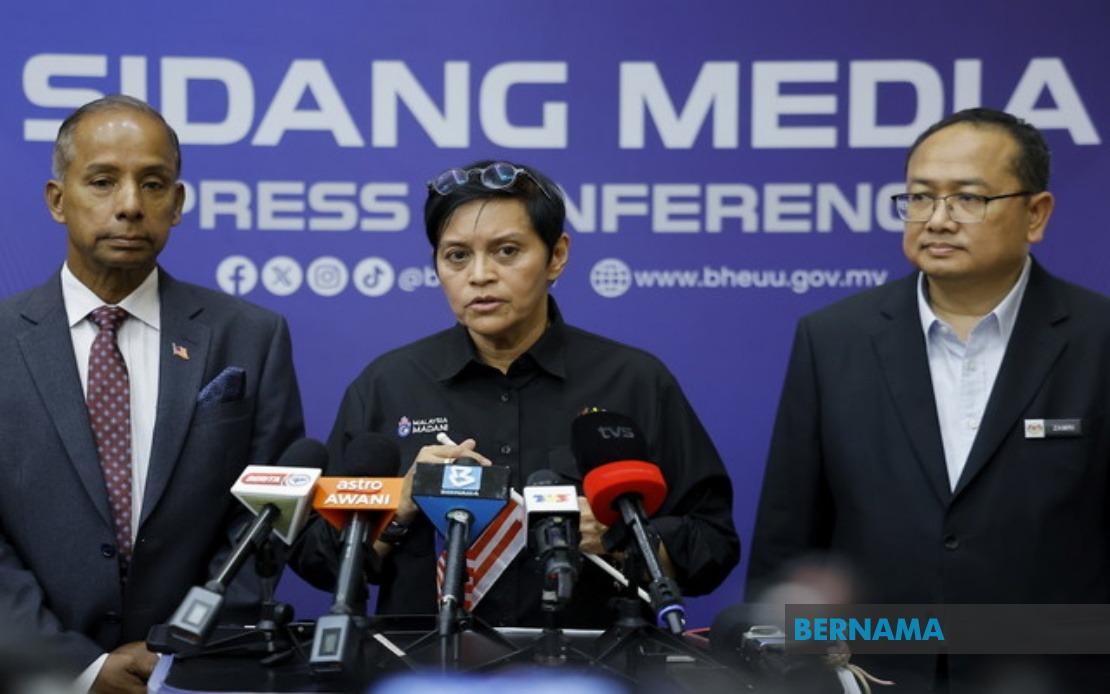
A Parliamentary Select Committee is set to commence its examination of the Freedom of Information Bill 2026, marking a critical juncture in the government's push to establish a formal mechanism for public access to official information. The committee, to be chaired by Datuk Seri Azalina Othman Said, the Minister in the Prime Minister's Department (Law and Institutional Reform), will convene for its inaugural session with the primary aim of establishing and finalising its terms of reference. This procedural step represents the first substantive parliamentary engagement with legislation that has already generated considerable debate among civil society organisations and professional bodies across Malaysia.
The establishment of a dedicated Select Committee reflects the government's commitment to subjecting the Bill to heightened legislative scrutiny before formal tabling in Parliament. Rather than proceeding directly to debate on the parliamentary floor, the decision to route the legislation through committee consideration allows for more expansive dialogue between Members of Parliament and external stakeholders. Azalina confirmed that the committee would operate on a bipartisan basis, indicating that the legislative process aims to build consensus across party lines on this potentially transformative piece of transparency legislation. The committee is expected to complete its work and present its recommendations and findings in time for submission before the next parliamentary sitting.
The deliberative process is being shaped significantly by input from various constituencies beyond Parliament itself. Non-governmental organisations focused on transparency and accountability, alongside professional bodies representing lawyers, journalists, and other sectors with direct interests in access to information, have already submitted detailed comments and positions. These submissions have coalesced around a common theme: numerous stakeholders believe the Bill's scope is insufficiently broad and should encompass a wider definition of public information and authorities subject to disclosure requirements. This feedback will directly inform the committee's review process and may result in recommendations for substantive amendments before the Bill reaches Parliament proper.
The proposed legislation represents a foundational shift in Malaysia's approach to government transparency and accountability. Currently, Malaysia lacks a comprehensive, enforceable freedom of information statute comparable to those in many Commonwealth jurisdictions and other democracies. The Bill, once enacted, would establish a formalised procedural framework governing how Malaysian citizens can request access to information held by public authorities. The eligibility criteria are broadly inclusive: any Malaysian citizen aged 18 and above would be entitled to submit written applications for access to official records. This baseline provision signals the government's intention to democratise access to government information rather than limiting it to researchers, journalists, or other privileged categories.
However, the legislation as currently drafted contains significant carve-outs that will likely remain contentious points during the committee's review. The mechanism preserves the application of existing secrecy legislation, most notably the Official Secrets Act 1972, which grants broad classification powers to government agencies and has historically been used to shield substantial categories of information from public view. Additionally, the Bill maintains exemptions for any information whose disclosure is prohibited or restricted under other written laws. These safeguards reflect longstanding concerns about national security, commercial confidentiality, and personal privacy that prevail across government. Yet they also create the potential for the Bill to function as a narrow transparency measure that leaves many categories of information inaccessible to the public.
The tension between expansive transparency and legitimate secrecy is central to the debates that will unfold within the Select Committee. Civil society organisations have signalled that they view the current draft as potentially compromised by excessive reliance on existing secrecy frameworks, particularly the Official Secrets Act, which they regard as overly restrictive and insufficiently subject to judicial review. They have advocated for clearer, narrower exemptions that would require government agencies to demonstrate specific, demonstrable harms that would result from disclosure rather than simply invoking categorical secrecy classifications. The committee's challenge will be to calibrate the Bill so that it advances transparency objectives while accommodating legitimate state interests and protecting genuinely sensitive information.
From a regional perspective, Malaysia's approach to freedom of information legislation reflects broader patterns emerging across Southeast Asia. Several neighbouring countries have enacted or are considering similar frameworks as democratic governance and accountability become increasingly prominent in public discourse. How Malaysia designs and implements this legislation will send signals about the government's commitment to transparency and may influence legislative efforts elsewhere in the region. The bipartisan parliamentary approach is also noteworthy in demonstrating that transparency and access-to-information issues can transcend partisan divisions, potentially offering a model for other legislative areas where broader consensus is desirable.
The committee's work carries particular significance for Malaysian civil society, the media, and citizens seeking to hold government accountable. A robust freedom of information regime, properly implemented, would enhance public participation in governance by enabling informed scrutiny of government decision-making. It would provide journalists with tools to investigate matters of public concern and would allow researchers, NGOs, and ordinary citizens to access information relevant to their interests and rights. Conversely, a heavily exempted regime that preserves existing secrecy practices would represent a more limited advance on the status quo, potentially serving primarily symbolic purposes rather than substantive transparency gains.
The committee's timeline suggests that the legislative process will move relatively expeditiously, with recommendations expected before the next parliamentary sitting. This compressed schedule reflects government determination to progress the Bill, though it also raises questions about whether sufficient time is being allocated for thorough deliberation of complex issues spanning transparency, security, privacy, and institutional reform. Stakeholders will need to engage strategically during the committee phase to ensure their concerns and recommendations are fully documented for consideration by the full Parliament.
Looking ahead, the Select Committee's recommendations will likely catalyse further debate about Malaysia's transparency trajectory. Whether the committee recommends broadening the Bill's scope to encompass wider categories of information and authorities, or whether it endorses the current narrower framework with modest modifications, will signal the government's true commitment to meaningful freedom of information reform. The decisions made in coming weeks will determine whether the legislation becomes a transformative accountability tool or a more modest procedural mechanism that leaves Malaysia's information landscape largely unchanged.

