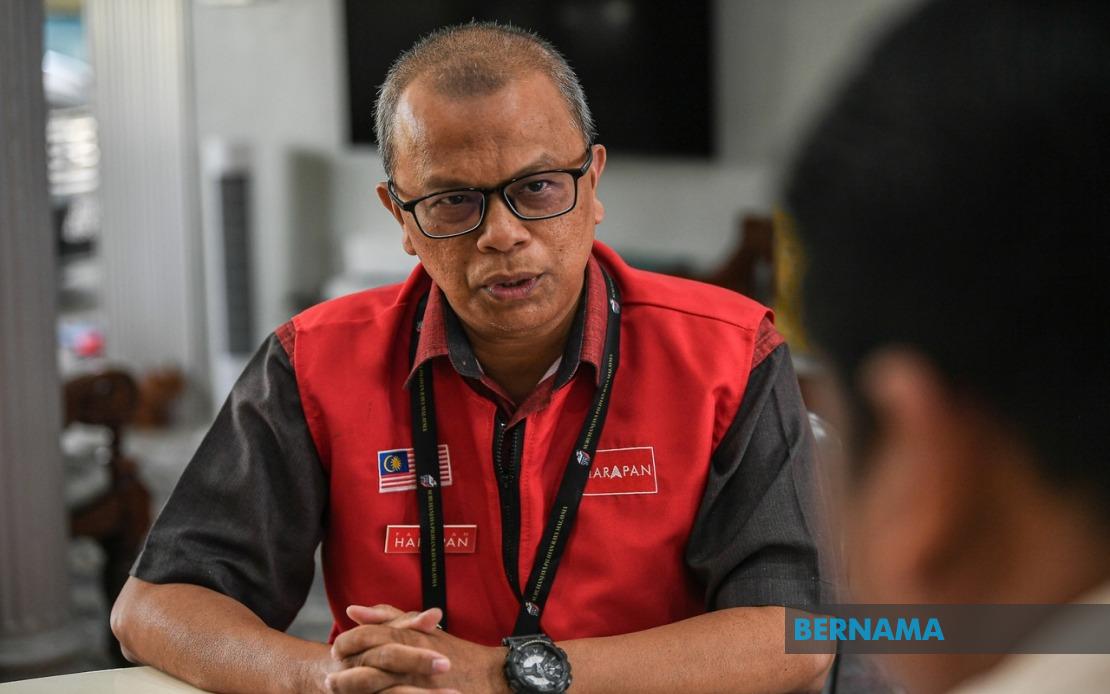
Ahmad Daniel Sharudin, the 54-year-old Pakatan Harapan candidate contesting the Panti state seat, is banking on a strategy centred around transforming his constituency into a premier eco-tourism destination within Kota Tinggi district. Recognising that the area possesses distinctive natural features that remain largely underdeveloped, Ahmad Daniel believes strategic investment in sustainable tourism infrastructure could unlock significant economic potential for the rural constituency while preserving its environmental character.
The former Kota Tinggi District Council member identifies several underexploited natural assets that could anchor this development vision. Most notably, he highlights the rapids at Kampung Temenin as a compelling tourism prospect, arguing that with appropriate upgrades and strategic marketing, the site could attract both domestic visitors and international tourists seeking authentic nature-based experiences. This focus represents a differentiation from Kota Tinggi's established reputation for waterfalls, positioning Panti as offering distinct recreational experiences that complement rather than duplicate existing district attractions.
Ahmad Daniel's platform rests on a fundamental premise: that eco-tourism development addresses multiple challenges simultaneously within the constituency. Beyond generating visitor revenue, he contends that expanded tourism would catalyse supporting industries including homestays, food establishments, and tour guiding services, thereby creating diverse employment pathways for local entrepreneurs and young workers. This multiplier effect logic appeals particularly to communities experiencing economic stagnation and youth outmigration.
The engineer-turned-politician draws direct connection between employment scarcity and population retention. He observes that limited economic opportunities have compelled Panti's youth to seek livelihoods elsewhere, with some crossing into Singapore for superior earning prospects. By establishing a functioning tourism ecosystem, Ahmad Daniel argues that local young people could access meaningful work without abandoning their communities, addressing both individual economic aspirations and broader regional development imbalances.
Beyond tourism, Ahmad Daniel's electoral manifesto encompasses three complementary policy pillars: affordable housing availability, industrial-sector employment creation, and public infrastructure renewal. He frames these commitments as grounded in practical achievability rather than aspirational rhetoric, explicitly linking successful implementation to Pakatan Harapan's alignment with the current federal administration. This positioning suggests that constituent benefits would flow from privileged access to national resources and coordination with federal bodies, a claim his rivals may contest.
In his capacity as state Amanah's Syariah and Dakwah Bureau director and Tenggara Amanah division chief, Ahmad Daniel has positioned himself as embedded within PH's institutional structures. This biographical detail carries significance in Malaysian politics, where factional relationships and internal party standing often determine candidates' capacity to deliver on promises through access to party resources and federal channels.
The campaign logistics present substantial operational challenges inherent to rural constituencies. Ahmad Daniel acknowledges that Panti's vast geographical expanse hampers his team's ability to conduct comprehensive ground outreach, particularly as voting day approaches. Despite completing face-to-face engagement across approximately 80 percent of the constituency, the remaining campaign period offers limited opportunity for traditional door-to-door persuasion across the remaining territory.
To overcome geographical constraints, Ahmad Daniel's team has pivoted toward digital campaign amplification. Recognising that social media platforms transcend physical boundaries and appeal across demographic categories, the campaign strategy emphasises aggressive digital engagement during the final campaign phase. This technological pivot reflects broader patterns in contemporary Malaysian electoral politics, wherein candidates increasingly supplement traditional campaigning with targeted online messaging to reach diverse voter cohorts efficiently.
The Panti contest has crystallised into a three-way competition that represents the competitive fragmentation increasingly evident in Malaysian state elections. Ahmad Daniel faces challenge from Dr Muhammad Naqib Md Ghazali representing Barisan Nasional and Alias Rasman of Perikatan Nasional. This tri-polar dynamic means that victory requires plurality rather than majority support, potentially amplifying the impact of voter mobilisation and turnout variations between competing camps.
The broader electoral context shows Johor state election engaging 2.7 million eligible voters in selecting representatives across 56 state seats through 172 candidates on July 11. Panti therefore represents one slice of a substantially consequential state-level contest whose outcomes could reshape Johor's political trajectory and possess implications for federal political alignments. The timing coincides with evolving national political dynamics following recent federal administration transitions.
For Ahmad Daniel and other rural candidates, the development agenda necessarily intertwines with political viability. Rural constituencies frequently feature lower income levels, infrastructure deficits, and demographic challenges including youth outmigration. Candidates capable of articulating credible narratives linking local resource development to employment creation and community retention possess significant persuasive advantage. Ahmad Daniel's eco-tourism framework attempts precisely this connection, though implementation capacity and competitive alternatives will ultimately influence voter calculations.

