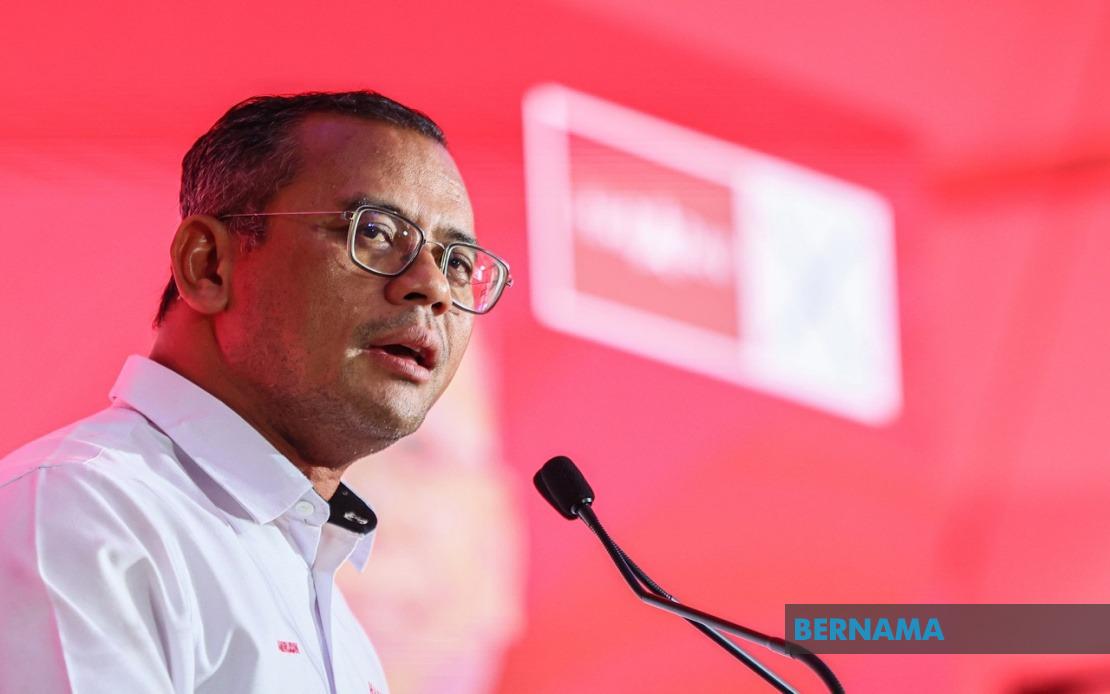
Pakatan Harapan has pushed back firmly against suggestions that its manifesto for the 16th Johor State Election represents recycled promises from rival coalitions, with senior coalition figures insisting the document reflects carefully considered policy work undertaken by the opposition alliance's core leadership. Speaking in Kluang on July 3, PKR vice-president Datuk Seri Amirudin Shari characterised the manifesto as a product of sustained internal dialogue and strategic planning by PH's top echelon, developed in anticipation of a state poll that has now been called for July 11.
The manifesto's key planks—particularly initiatives centred on affordable housing and expanded healthcare support—emerged from deliberative processes involving survey data and structured feedback mechanisms, Amirudin explained. Rather than dismissing critics outright, he grounded his defence in empirical reasoning, arguing that the coalition's policy proposals rested on demonstrable evidence about voter needs and practical governance lessons drawn from PH's experience administering various states. This methodical framing represented an attempt to position PH's offering not as ideological positioning but as pragmatic problem-solving anchored in real demand from Malaysian households.
The housing affordability pledge has attracted particular scrutiny, with observers questioning whether PH can realistically deliver on ambitious numerical targets set during election campaigns. Amirudin, who simultaneously holds the post of Selangor Menteri Besar, deployed his track record in the nation's wealthiest state as evidence that bold housing targets remain achievable with sufficient political will and budgetary commitment. He pointed to Selangor's approval of 174,000 affordable housing units as a concrete demonstration, noting that 40,000 units had already been constructed. These figures serve as a template for what PH believes is possible in Johor, a state significantly larger in land area but with comparable urbanisation pressures in key population centres.
Crucially, Amirudin reframed the manifesto's housing commitments by inverting conventional campaign logic. Rather than presenting targets as stretches that PH hoped to achieve, he cast them as baseline requirements derived from community assessments. This rhetorical strategy seeks to prevent future accusations of overselling; by arguing the targets reflect necessity rather than aspiration, PH positions itself as responding to demonstrated need rather than making unfounded promises. Whether voters accept this framing may substantially influence their assessment of PH's credibility heading into the ballot.
The coalition assembled a cross-party delegation to reinforce messaging around the manifesto's legitimacy, with representatives from PKR, Amanah, and candidate representatives present during Amirudin's statement. This multi-party show of unity underscores that the manifesto construction involved genuine coalition consensus rather than domination by any single component party. For Malaysian voters increasingly cynical about election pledges, such collaborative messaging may offer modest reassurance that policy commitments reflect broader alignment rather than unilateral positioning by an individual politician or party faction.
Amirudin, functioning simultaneously as Johor election machinery director for PH, reported that grassroots campaign activities have generated encouraging early responses, though he cautiously noted that many voters may harbour support for the coalition without yet publicly declaring their intentions. This observation reflects broader realities of Malaysian electoral politics, where social pressure, workplace dynamics, and family considerations often create gaps between private voting preferences and public declarations of political affiliation. The campaign's local operatives apparently sense momentum that public opinion surveys may not yet fully capture.
The upcoming participation of Prime Minister Datuk Seri Anwar Ibrahim at Johor campaign events figured prominently in Amirudin's remarks, with the PH leadership director explicitly linking the Prime Minister's presence to enhanced motivation among party volunteers and strengthened voter confidence in the coalition's broader project. This framing reflects PH's strategic calculation that Anwar's personal popularity and ministerial status translate into tangible electoral assets at the state level. For opposition-inclined voters evaluating whether PH merits their support, such high-level party engagement signals seriousness about recapturing Johor, historically a stronghold before the 2023 federal election and its aftermath reshaped state alignments.
The election itself will determine the composition of Johor's 56 State Legislative Assembly seats, with 172 candidates fielded across competing coalitions and independent candidates contesting the contest scheduled for July 11. Early voting arrangements on July 7 provide advance opportunities for voters with scheduling constraints or mobility limitations. This scale of electoral competition means that individual seats will carry significant strategic weight; controlling the state government hinges on winning a simple majority of the 56 seats, a target that may prove competitive given current Malaysian political fragmentation.
For Malaysian observers tracking broader coalition dynamics, the Johor election functions as a significant data point about PH's organisational capacity and residual electoral strength following recent federal-level turbulence. A strong showing would reinforce PH's narrative of recovery and sustained relevance despite setbacks in the 2023 general election. Conversely, a disappointing result would intensify questions about whether the coalition can recover lost ground in states where it once held commanding majorities. The manifesto's substantive credibility—whether voters believe PH's promises reflect serious intent or merely tactical positioning—will materially influence the outcome.

