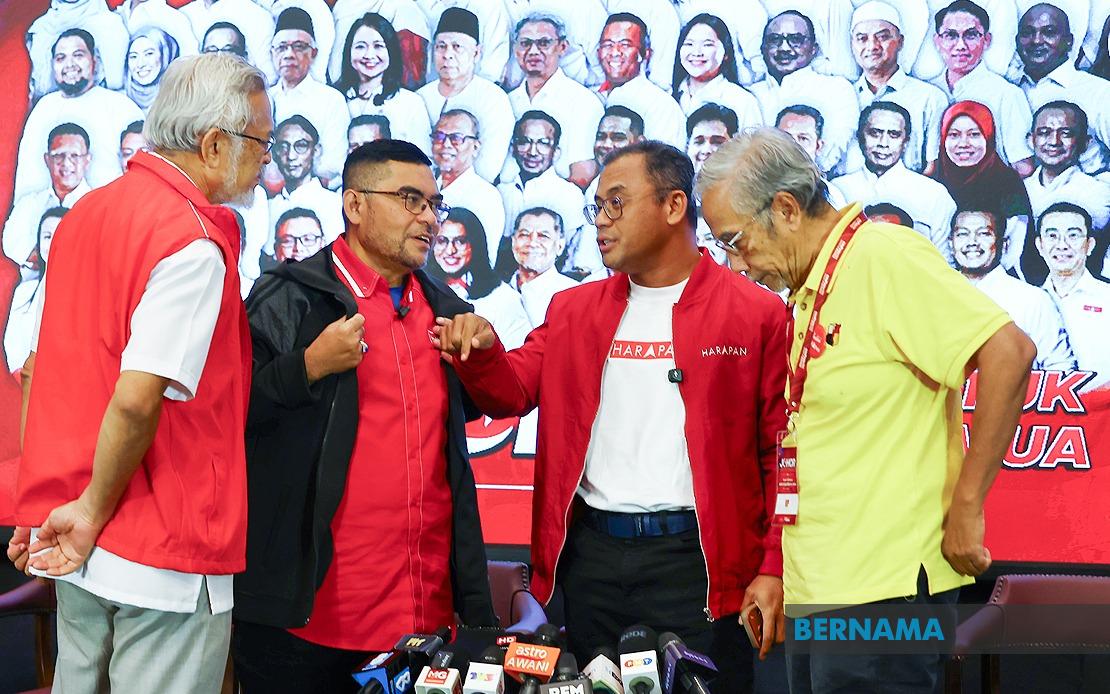
Pakatan Harapan (PH) signalled it would conduct a searching examination of its setback in the Johor state election while mobilising its organisational apparatus for an aggressive defence of its Negeri Sembilan stronghold. The opposition coalition's announcement came hours after Barisan Nasional secured a decisive majority by capturing 29 of 56 state seats in Johor, underlining the mounting electoral pressure facing PH across peninsular Malaysia as multiple state governments head to the polls.
Datuk Seri Amirudin Shari, who holds the dual role of Selangor Menteri Besar and PKR Election Co-director, outlined an ambitious diagnostic effort to dissect the factors behind PH's disappointing Johor performance. The review would encompass shifts in voting behaviour and the crucial—and troubling—indicator of support levels among younger voters, a demographic traditionally viewed as a source of PH strength during the party's 2018 breakthrough. By examining these granular patterns, PH appears intent on identifying which voter segments have drifted elsewhere and why, information critical to recalibrating its appeal before the Negeri Sembilan contest scheduled for later this year.
Speaking at the PH Operations Centre in Johor Bahru, Amirudin cautioned against hasty interpretation of the Johor results, noting that several seat outcomes remained unconfirmed as counting continued. He suggested analysts and party strategists should allow at least a week for complete results and proper verification before drawing firm conclusions, reflecting the meticulous approach PH intends to bring to its post-election assessment. This emphasis on deliberation rather than reactive scrambling suggests the coalition recognises the need for thoughtful restructuring rather than superficial adjustments.
The Negeri Sembilan challenge presents both opportunity and risk for PH. The state remains one of the coalition's few territorial strongholds, with the current Menteri Besar, Datuk Seri Aminuddin Harun, presiding over a government that has compiled what Amirudin characterised as a commendable track record on developmental and administrative fronts. PH's confidence in retaining the state rests substantially on this incumbent's personal standing and the perception of effective governance, factors that could insulate Negeri Sembilan from broader anti-PH sentiment that appears to have driven Johor voters toward Barisan Nasional.
Critically, PH's strategic planning for Negeri Sembilan diverges from its Johor approach in one vital respect: the coalition is affording itself time for deliberate candidate selection and refinement. Discussions among PH component parties were scheduled for July 12, just two days after the Johor election, allowing the coalition to absorb lessons and apply them to candidate vetting processes. The final candidate roster would be unveiled on July 14, providing a fortnight or more of campaigning time before the election itself. This compressed but purposeful timeline contrasts with rushed preparations and suggests PH has learned from any organisational stumbles in Johor.
The composition of PH's senior leadership at the press conference reflected the coalition's multi-party structure. Amanah deputy president Datuk Seri Dr Mujahid Yusof Rawa, Amanah vice-president Datuk Dr Mohd Hatta Ramli, and Amanah Communications director Khalid Abdul Samad's presence underscored that the Johor setback was being treated as a coalition-wide concern rather than a single party's problem. This inclusive approach to post-election analysis and recovery planning may help bind the coalition together despite the evident tensions that electoral defeats tend to expose.
Perhaps most significantly for federal stability, Amirudin moved to ring-fence the national government from fallout arising from state-level electoral turbulence. He stressed that all coalition partners, including Barisan Nasional at the federal level, had renewed their commitment to maintaining Prime Minister Datuk Seri Anwar Ibrahim's administration through its full parliamentary term. This reassurance holds particular weight given the fluid nature of Malaysian politics and the frequency with which state election results trigger speculation about shifting federal alignments. By securing explicit reaffirmation of federal stability, PH appears intent on preventing Johor's loss from triggering a broader political realignment that could undermine the government in Putrajaya.
The Johor outcome itself, with BN securing 51.8 per cent of contested seats according to Election Commission chairman Datuk Seri Ramlan Harun, represents a decisive rebuff for PH but falls short of the sweeping mandate that some BN figures had sought. This suggests room for PH to recover credibility if it can successfully defend existing positions, particularly in states like Negeri Sembilan where incumbent advantage and demonstrated governance may count for more than broader national sentiment.
For Malaysian observers, the unfolding state election cycle illuminates the fragmented nature of contemporary electoral politics, where federal and state-level contests operate according to distinct logics and voter priorities. Johor's result cannot be mechanically extrapolated to predict outcomes in Negeri Sembilan, Terengganu, or other states where elections loom. Amirudin's emphasis on state-specific analysis and tailored strategies reflects this reality, suggesting PH recognises that recovery requires careful, differentiated responses rather than blanket organisational overhauls.
The coming fortnight will test whether PH's prescribed review process yields genuine strategic innovations or merely provides cover for business-as-usual campaigning. The party's success in Negeri Sembilan will substantially determine whether Johor represents a sharp break in PH's electoral trajectory or a recoverable setback amid continued, if uneven, overall political strength.

