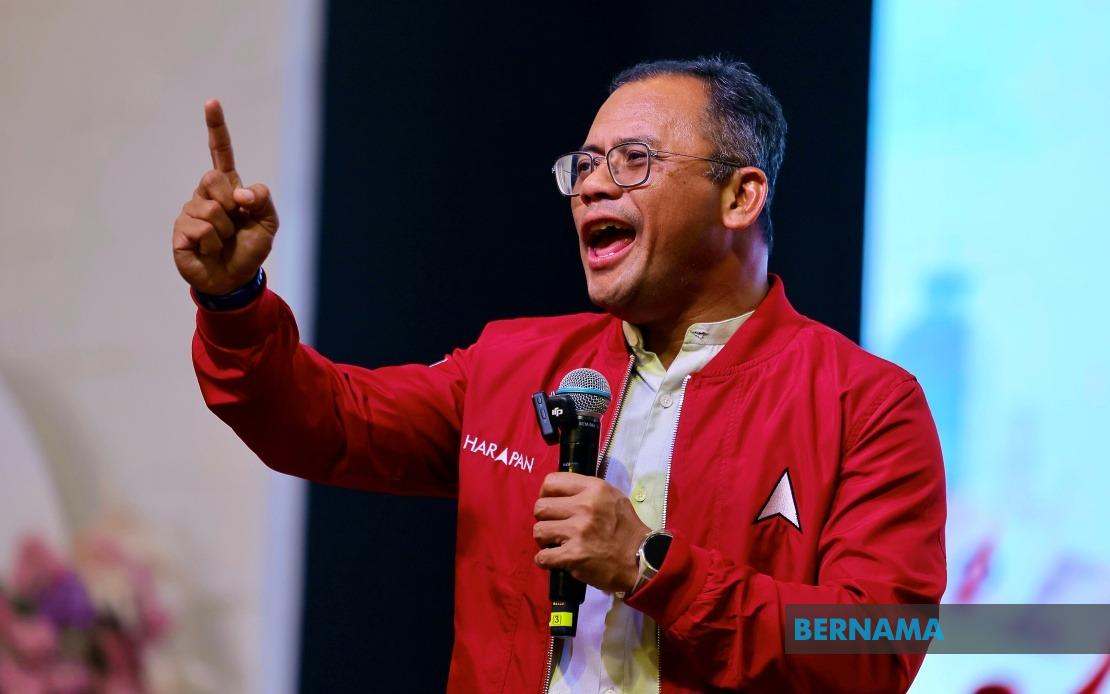
Pakatan Harapan formally presented its 'Johor for All' manifesto in Johor Bahru on July 3, positioning the coalition's electoral platform and policy commitments ahead of the 16th Johor state election. The launch event brought together senior figures from across the opposition alliance, signalling a coordinated approach to capturing voter support in the southern state, which has long been a crucial battleground in Malaysian politics.
Datuk Seri Amirudin Shari, a member of PH's Presidential Council and co-election director for PKR, presided over the manifesto launch, underscoring the coalition's determination to present a unified front. His role indicates that national party leadership has taken direct responsibility for the Johor campaign strategy, reflecting the significance party strategists attach to the state election outcome. The presence of senior figures suggests PH is mobilising substantial resources and political capital for this particular contest.
The gathering included Johor's key coalition representatives, demonstrating the breadth of PH's organisational footprint in the state. Aminolhuda Hassan, who leads PH's Johor chapter, coordinated with Teo Nie Ching, the DAP's state chairman, and Datuk Seri Dr Zaliha Mustafa, PKR's Johor chief, to present a consolidated vision. This three-party alignment—spanning PKR, DAP, and their broader PH network—reflects the coalition's structural approach to state-level politics in Malaysia, where multi-party coordination is essential for competitive electoral performance.
The manifesto's overarching theme of inclusivity and universality, encapsulated in the 'for All' framing, addresses a recurring challenge for opposition coalitions in Malaysian politics. By emphasising breadth of appeal rather than narrow factional interests, PH attempts to position itself as a pragmatic governing alternative rather than a collection of special interests. This rhetorical strategy proves particularly relevant in Johor, where ethnic and class divisions have historically shaped voting patterns, and where BN-aligned parties have long claimed to represent all communities effectively.
For Malaysian voters, especially those in Johor, opposition manifestos serve as explicit blueprints for what alternative governance might deliver. Unlike ruling coalitions, which can point to implemented policies and administrative records, opposition platforms must articulate credible visions of change while navigating voter scepticism about their capacity to deliver. The substantive content of PH's 'Johor for All' manifesto would address tangible concerns: employment generation, education quality, healthcare accessibility, and infrastructure development—areas where Johor, despite its economic prominence, faces persistent gaps in service delivery across both urban and rural constituencies.
Johor's electoral significance extends beyond state-level politics, carrying implications for national political configurations. As the country's second-largest state by population and a major economic contributor, Johor election results often signal broader shifts in voter sentiment. A strong PH showing would suggest opposition consolidation is advancing; conversely, a BN victory would reinforce the ruling coalition's control over Malaysia's southern flank. National party leaders monitor Johor elections closely as barometers of their competitive standing nationally, making state campaigns effectively proxy battles for national political positioning.
The manifesto launch also reflects the coalition's recognition that electoral success requires organisation at the grassroots level. By assembling candidates alongside state and national leadership, PH demonstrated the hierarchical coordination linking campaign headquarters to individual constituency teams. This visible integration of different organisational layers aims to project unity and competence to voters—critical for an opposition alliance, which frequently faces accusations of internal discord and inconsistency.
Context matters considerably for understanding PH's strategic approach in Johor. The coalition has experienced significant flux in recent years, with the 2018 federal election victory followed by internal tensions, the Sheraton Move political realignment, and subsequent electoral setbacks. Presenting a cohesive, forward-looking manifesto represents an effort to move past internal disputes and concentrate on policy differentiation from incumbents. For Johor voters weighing their options, a manifesto launch signals that PH has consolidated its internal disputes sufficiently to offer a coherent alternative programme.
The timing of the manifesto release in early July suggests the campaign was already in motion or imminent. In Malaysian state elections, manifestos typically appear within weeks of polling day, allowing campaigns to mobilise around specific pledges while voter attention remains focused. PH's decision to highlight the manifesto through a formal, well-attended launch rather than a routine distribution underscores the coalition's determination to generate media coverage and communicate directly with the electorate about its priorities.
Southeast Asian opposition movements frequently struggle with credibility deficits, particularly regarding implementability of ambitious policy platforms. PH's focus on inclusive governance language potentially addresses this challenge by emphasising values—universality, fairness, accessibility—rather than making grandiose spending commitments that voter scepticism might dismiss as unaffordable. This approach resonates with Malaysian voters who have observed previous governments struggle with fiscal constraints while maintaining political spending commitments.
For regional observers, the Johor election carries broader implications for Malaysian democratic health and opposition functionality. A competitive race demonstrating institutional respect, transparent campaigning, and meaningful policy differentiation contributes to regional perceptions of Malaysia's democratic robustness. Conversely, elections marred by irregularities, intimidation, or voter suppression damage democratic credentials. The manifesto launch itself, as a peaceful public event with media access, represents the type of democratic normalcy that distinguishes Malaysia's political system from more authoritarian neighbours.
The 'Johor for All' framing ultimately represents PH's bet that inclusive, universal governance messaging can overcome structural advantages BN maintains in the state. Whether the manifesto's promises resonate with voters will depend on both the specific policy content and voters' assessment of PH's trustworthiness and capability to deliver. The election itself will reveal whether this strategic positioning translates into electoral support.

