Pakatan Harapan is preparing to wage its Johor state election campaign by marrying conventional community engagement with modern social media tactics, according to the coalition's communications leadership. The strategy reflects a recognition that electoral success in Malaysia increasingly depends on simultaneous presence at grassroots level and in digital spaces where voter sentiment crystallizes. The approach becomes operational as official campaigning begins, with PH calculating that this hybrid model will amplify its reach and reinforce policy messages across diverse voter demographics throughout Johor.
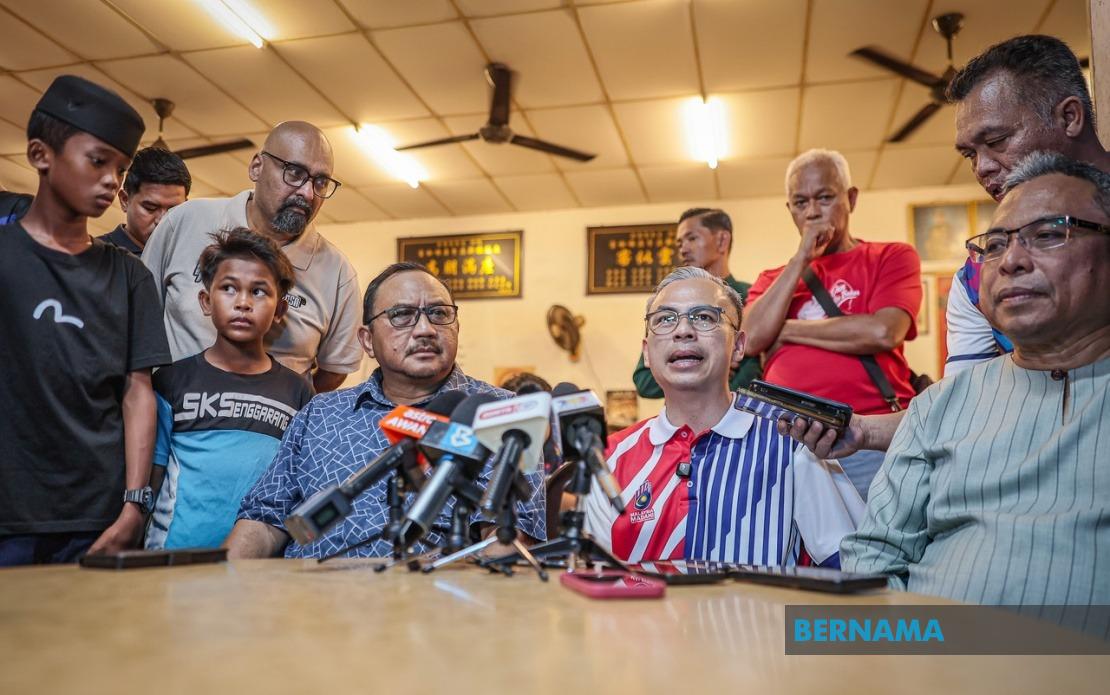
Datak Fahmi Fadzil, the coalition's communications director and currently Minister of Communications, outlined the framework during a press engagement in Batu Pahat, framing integrated outreach as essential for translating electoral ambitions into concrete voter support. The strategy signals PH's awareness that traditional canvassing alone proves insufficient in modern electoral contests, particularly in states where demographic diversity and digital connectivity create fragmented information environments. Fahmi's emphasis on combining both channels suggests the coalition views neither approach as redundant but rather as complementary mechanisms for different audience segments.
PKR, contesting 20 seats within the PH machinery, will immediately initiate campaign activities following the completion of nomination procedures scheduled for tomorrow morning. The party's leadership has already designated senior figures to particular constituencies, with Fahmi personally directing efforts in Semerah while PKR deputy president Nurul Izzah Anwar accompanies Senggarang candidate Onn Abu Bakar through the nomination process. This hands-on involvement by senior party architects signals the strategic importance PH assigns to the Johor election as a potential platform for organizational consolidation and electoral advancement in a state historically competitive between rival coalitions.
A critical component of PH's campaign infrastructure involves establishing dedicated media channels for rapid dissemination of information about candidates and policy positions. The creation of an official media group reflects contemporary electoral practice where information velocity significantly influences voter perception and decision-making. By controlling information flows through identified channels, PH aims to shape narrative construction around its candidates while reducing reliance on traditional media gatekeeping. This mechanism also enables real-time response to opposition messaging and misinformation, maintaining campaign momentum through continuous communication cycles.
Factual accuracy in political messaging stands as a cornerstone of PH's electoral philosophy, according to Fahmi's statements. The coalition has committed to ensuring voters receive verified information throughout the campaign period, a positioning that implicitly contrasts with perceived opposition tendencies toward contested or misleading claims. This emphasis carries particular resonance in contemporary Malaysian politics, where social media amplification of unverified narratives has demonstrably influenced electoral outcomes. By privileging fact-based communication, PH positions itself as an alternative to what it characterizes as less scrupulous political operators.
PH strategists are leveraging federal-state administrative cooperation as a campaign asset, highlighting infrastructure projects they contend demonstrate effective governance collaboration. The Rapid Transit System Link and the Johor-Singapore Special Economic Zone exemplify development initiatives that PH argues could generate economic stimulus and reduce inter-district disparities. These projects carry tangible visibility that resonates with voters concerned about economic opportunity and infrastructure modernization. By connecting federal government capacity to state-level implementation, PH constructs a narrative wherein governing the state requires alignment with federal-level partners capable of mobilizing resources for transformative projects.
PH's governance record in states such as Selangor, Negeri Sembilan, and Penang forms a central argumentative pillar in the coalition's electoral positioning for Johor. Rather than engaging purely in future promises, PH can point to administrative achievements in other state jurisdictions as evidence of organizational competence and delivery capacity. This retrospective validation carries weight with voters evaluating coalitional viability, particularly in states where governance performance directly impacts quality of life through infrastructure quality, service delivery, and economic development trajectories. The coalition frames its Johor candidacy as an extension of established governance capabilities into a new territorial context.
Specific candidate selections underscore PH's confidence in particular individuals to embody the coalition's transformation narrative. Dr Maszlee Malik in Puteri Wangsa and Onn Abu Bakar in Senggarang represent figures through whom PH believes it can articulate substantive change messaging to Johor voters. These candidates presumably bring professional credentials, community connections, or political track records that PH calculates will resonate with voters in respective constituencies. The strategic deployment of particular individuals signals broader coalition calculations about where electoral gains appear attainable and where candidate quality significantly influences competitive dynamics.
PH has committed to producing a dedicated state election manifesto that will presumably detail policy commitments tailored specifically to Johor constituencies and voter concerns. The forthcoming manifesto document will formalize campaign messaging into written commitments against which future performance can be measured. Such documentational specificity differs from generalized campaign rhetoric and represents a claim that PH has engaged substantive policy thinking regarding state-level governance challenges. The manifesto becomes a contract of sorts between electorate and political organization, lending weight to campaign assertions.
Multi-institutional coordination to combat electoral-period misinformation reflects recognition that false or misleading narratives can significantly distort voter decision-making. The Malaysian Communications and Multimedia Commission has established a specialized task force incorporating the Election Commission, Royal Malaysia Police, and Malaysian Media Council to monitor and suppress misinformation circulation during the campaign period. This coordinated approach combines regulatory authority with security apparatus and media stakeholder participation to create overlapping surveillance mechanisms. The inclusion of multiple institutional actors signals government-wide commitment to maintaining information environment integrity, though critics might view such coordination as potential incumbent advantage in controlling permissible campaign narratives.
Fahmi's direct community engagement in Senggarang, including participation in the Hasrat MADANI programme and attendance at a community film screening, exemplifies the grassroots dimension of PH's dual-track campaign strategy. Such activities generate informal voter contact opportunities and demonstrate political leadership accessibility to ordinary constituents. The wayang pacak screening of Blood Brothers served as informal gathering mechanism where political messaging could occur within entertainment contexts, illustrating how PH integrates campaign activity into community life rather than presenting politics as separate from cultural and social engagement. This approach contrasts with purely formal campaign events, suggesting PH views electoral success as requiring embedded presence within community rhythms.
The Johor state election carries implications extending beyond the state itself within broader Malaysian political dynamics. Electoral performance in Johor influences coalitional positioning nationally and affects calculations regarding future national-level coalition viability. For PH, demonstrating governance capacity and electoral competitiveness in Johor represents organizational validation at regional scale. The campaign strategy combining grassroots mobilization with digital sophistication reflects lessons learned from previous electoral contests where traditional approaches proved insufficient for matching opposition reach and persuasion capacity. Whether this hybrid approach generates anticipated electoral dividends will significantly influence subsequent strategic decisions by PH and other major coalitions regarding campaign models for future state and national elections.

