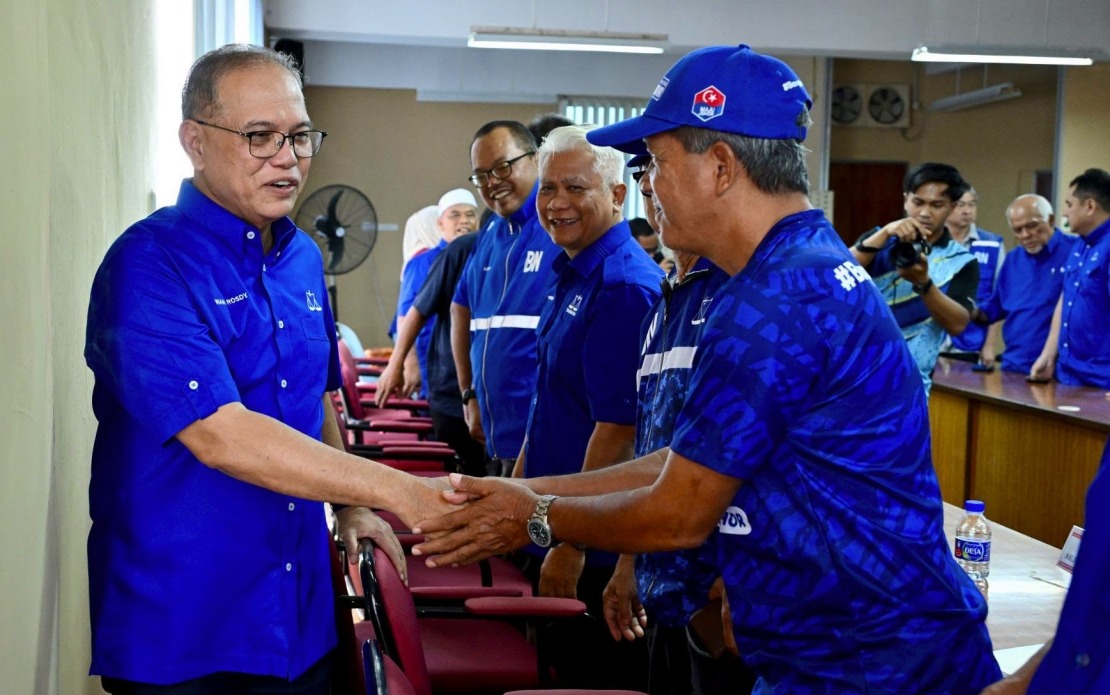
Cross-state political campaigning has intensified as Pahang's Barisan Nasional contingent throws its weight behind the Johor state election effort, concentrating resources on four targeted constituencies. The strategic deployment, revealed by Pahang Menteri Besar Datuk Seri Wan Rosdy Wan Ismail, represents a coordinated approach by the coalition to consolidate support in specific battleground areas where victory margins may prove decisive in determining the overall outcome of the contest.
The four seats receiving concentrated attention—Pekan Nanas, Pulai Sebatang, Benut, and Kukup—all fall within the Tanjung Piai parliamentary constituency, a region that has historically been politically significant in Johor. By concentrating Pahang's organizational resources in these particular areas, BN aims to maximize the efficiency of its campaign machinery and leverage experienced operatives from another state to energize local party structures. This inter-state coordination reflects the coalition's understanding that decisive victories in specific constituencies, rather than broad-based support everywhere, can determine overall electoral outcomes in closely contested states.
Wan Rosdy indicated that his personal involvement extends beyond symbolic support, announcing plans to visit the FELDA area in Segamat to bolster campaign efforts there. Such high-profile participation by senior figures serves multiple purposes: it signals party confidence in victory, demonstrates organizational vitality to wavering supporters, and provides media coverage that amplifies campaign messages. The visibility of state leadership engaging directly in ground-level campaigning can influence voter perceptions regarding the seriousness with which the coalition approaches the contest and its commitment to winning specific regions.
The Pahang leader expressed considerable optimism about BN's electoral prospects, attributing his confidence to what he characterized as strong organizational momentum and genuine voter receptiveness. Having personally visited Johor for three days from the nomination period, Wan Rosdy observed what he described as impressive enthusiasm among party machinery and high levels of motivation among BN candidates. This firsthand assessment carries weight within party circles, as it comes from someone managing a state government and thus possessing significant organizational experience. Such internal confidence, whether or not it translates into actual electoral success, influences how party members mobilize and shapes their messaging intensity.
The broader electoral context for the Johor state election encompasses 56 state seats contested by a total of 172 candidates across multiple political parties and independent candidates. This candidate density—roughly three candidates per seat on average—suggests a fragmented political landscape where plurality voting could produce unexpected outcomes. The distribution of opposition and independent candidates across constituencies will significantly influence whether BN's concentrated efforts in four specific seats yield proportionate dividends or whether vote-splitting dynamics elsewhere undermine the coalition's overall performance.
Election timing presents both logistical challenges and strategic considerations for the Pahang BN deployment. With polling day scheduled for July 11 and early voting permitted on July 7, the campaign window for intensive ground operations remains relatively compressed. This necessitates efficient resource allocation and rapid decision-making regarding where Pahang personnel should concentrate efforts. The decision to focus on four constituencies rather than attempting broader statewide presence suggests BN's strategic calculation that marginal gains in specific areas offer better return on organizational investment than diffuse efforts across all 56 seats.
For Malaysian political observers, the Pahang BN involvement in the Johor campaign illustrates the mechanics of coalition management and inter-state support systems within Malaysia's federal structure. The ruling coalition's capacity to mobilize resources across state boundaries and coordinate campaigns reflects its organizational infrastructure and demonstrates how established political parties leverage advantages in administrative experience and machinery. This cross-state coordination capability represents a structural advantage that opposition parties, particularly those lacking governmental control in multiple states, find difficult to replicate.
The four target constituencies reveal strategic thinking about Johor's political composition. Tanjung Piai, the parliamentary division containing these seats, occupies a particular significance in Malaysian electoral geography. The area's voter demographics and historical voting patterns likely informed BN's decision to concentrate resources there rather than in other parliamentary constituencies. Such targeted approaches increasingly characterize modern Malaysian electioneering, moving away from universal campaign presence toward algorithmic or data-driven identification of winnable seats and persuadable voter segments.
Wan Rosdy's emphasis on voter receptiveness and candidate motivation reflects internal party assessments of electoral viability. When senior figures publicly express confidence in victory, they simultaneously raise expectations among party members and set benchmarks against which future performance will be evaluated. Overconfident messaging can paradoxically reduce voter turnout among supporters who perceive victory as assured, making the tone and substance of such statements strategically consequential. The Pahang leader's balanced presentation of confidence tempered by acknowledgment of ongoing campaign work may reflect sophisticated awareness of these dynamics.
The deployment of Pahang BN resources to Johor carries implications beyond the immediate state election. It demonstrates the coalition's commitment to performing strongly across multiple states and its capacity to sustain electoral competition on several fronts simultaneously. Success in Johor, which remains a significant state economically and demographically, would reinforce BN's broader positioning as the coalition most capable of governing Malaysia. Conversely, disappointing results would invite questions about the coalition's resilience and adaptability in an increasingly competitive political environment where assumptions about electoral dominance no longer hold.
Looking toward July 11, the Pahang BN campaign efforts in the four targeted constituencies will serve as a test case for inter-state coordination mechanisms and the effectiveness of mobilizing experienced party operatives from one state to support campaigns in another. The electoral results in Pekan Nanas, Pulai Sebatang, Benut, and Kukup will provide concrete data regarding whether such strategic concentration of resources yields proportionate electoral gains or whether local dynamics and opposition strength prove determinative regardless of external support mobilization.

