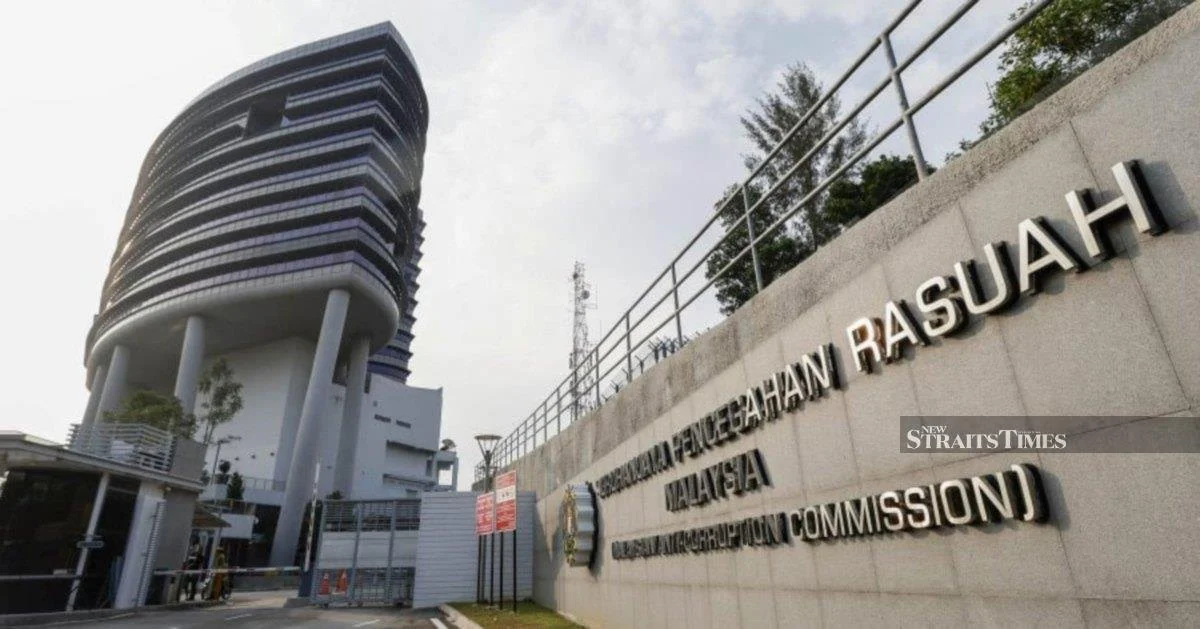
Malaysia's ongoing battle against corruption extends well beyond the corridors of government, reaching increasingly into the operations of non-governmental organisations that handle substantial public funding. This reality came into sharp focus at Shah Alam Sessions Court on Tuesday, when Fakhrudin Abd Karim, a former committee member of Pertubuhan Ikram Malaysia, formally claimed trial to 158 charges spanning a five-year period in which he allegedly exploited his organisational position for financial gain. The sheer number of charges against Fakhrudin—158 counts related to abuse of position for gratification—paints a troubling picture of how even lesser-known figures within civil society institutions can accumulate significant wrongdoing if internal controls prove inadequate.
The Fakhrudin case is instructive precisely because it involves neither a headline-grabbing political figure nor a household name. Instead, it draws attention to a more systemic vulnerability: the governance frameworks surrounding Malaysia's diverse ecosystem of non-governmental organisations. Many NGOs, particularly those receiving government grants, operate with varying degrees of internal audit, financial transparency, and oversight. When an individual in a committee position is able to systematically abuse that role over five years without apparent detection by internal mechanisms, questions arise about the adequacy of checks and balances within such organisations. The scale of alleged misconduct suggests a pattern rather than isolated lapses, raising concerns about the effectiveness of existing governance protocols.
Public funding of NGOs serves vital functions across Malaysia's social landscape—from welfare provision to community development to advocacy work. However, the allocation of government resources to civil society organisations carries an implicit expectation that those funds will be stewarded responsibly and transparently. When an NGO committee member allegedly uses their position for personal enrichment, the reputational damage extends beyond the individual to the entire sector. It erodes public confidence in non-governmental organisations generally and creates political ammunition for those sceptical of channelling public money through such entities. This is particularly consequential in Malaysia's current climate, where every instance of alleged misuse of funds attracts intense scrutiny and scrutinises policymakers' decisions to outsource social functions to the third sector.
The Pertubuhan Ikram Malaysia case also illuminates the enforcement dimension of anti-corruption efforts. Malaysian authorities, including the Malaysian Anti-Corruption Commission (MACC), have broadened their investigative remit to include NGO officials and committee members. This represents an important evolution from an era when graft prosecutions focused almost exclusively on civil servants and elected officials. However, enforcement action alone cannot solve the underlying problem. The fact that it took five years of alleged misconduct before charges were brought suggests that initial detection and reporting mechanisms—whether internal whistleblowing channels, board-level oversight, or external audits—may not have functioned optimally.
Governance standards for NGOs in Malaysia currently exist in patchwork form. While registered NGOs fall under various regulatory frameworks depending on their charitable status, religious affiliation, or sector focus, there is no unified, comprehensive governance code binding all organisations. Unlike listed companies, which must comply with the Malaysian Code on Corporate Governance, many NGOs face less stringent requirements regarding board composition, financial reporting, and conflict-of-interest protocols. This regulatory fragmentation creates opportunities for organisations with weaker internal controls to operate with minimal external scrutiny. Strengthening governance standards across the NGO sector would establish baseline expectations for transparency, financial management, and accountability that could prevent cases like Fakhrudin's from going undetected for such extended periods.
The implications for Southeast Asia are broader than Malaysia alone. Across the region, NGOs play increasingly important roles in delivering social services, environmental protection, and advocacy work often with limited government capacity. As funding flows into these organisations from both domestic and international sources, the question of how to ensure accountability without stifling civil society becomes a critical governance challenge. Malaysia's approach—combining regulatory oversight with enforcement action against those who abuse positions of trust—offers both lessons and cautionary tales for neighbouring countries developing their own NGO governance frameworks.
For Malaysian policymakers and civil society leaders, the Fakhrudin case serves as a wake-up call. Institutions that wish to maintain public trust and government support must invest in governance infrastructure: independent audit committees, conflict-of-interest policies, robust financial controls, and protected whistleblowing channels. Board members and organisational leaders bear responsibility for creating a culture of accountability that makes wrongdoing difficult to conceal. Simultaneously, government bodies that allocate public funds to NGOs should conduct risk-based assessments of organisational governance before dispersing funds and maintain monitoring mechanisms throughout the funding relationship. Such steps would represent not bureaucratic obstruction but reasonable precautions protecting both public resources and the reputations of NGOs operating with integrity.
The path forward requires balanced approach: one that enables civil society organisations to function effectively while establishing clear standards for financial propriety and organisational conduct. Public trust in the NGO sector ultimately depends on confidence that internal systems work and that wrongdoing will be detected and prosecuted. The Fakhrudin case, while concerning, also demonstrates that enforcement mechanisms do exist and can be activated when evidence emerges. What remains to be seen is whether the sector will respond proactively by strengthening governance standards across the board, or whether additional prosecutions will become necessary to underscore the message that positions of trust carry corresponding responsibilities.


%22%2F%3E%3C%2Fpattern%3E%3C%2Fdefs%3E%3Crect%20width%3D%22100%25%22%20height%3D%22100%25%22%20fill%3D%22url(%23ph40buhg)%22%2F%3E%3Crect%20width%3D%22100%25%22%20height%3D%22100%25%22%20fill%3D%22url(%23ph40buhp)%22%2F%3E%3Ctext%20x%3D%2250%25%22%20y%3D%2250%25%22%20text-anchor%3D%22middle%22%20dominant-baseline%3D%22central%22%20fill%3D%22rgba(255%2C255%2C255%2C0.95)%22%20font-family%3D%22Georgia%2C%20'Times%20New%20Roman'%2C%20serif%22%20font-weight%3D%22700%22%20font-size%3D%22320%22%20letter-spacing%3D%22-0.02em%22%3EGRS%3C%2Ftext%3E%3C%2Fsvg%3E)