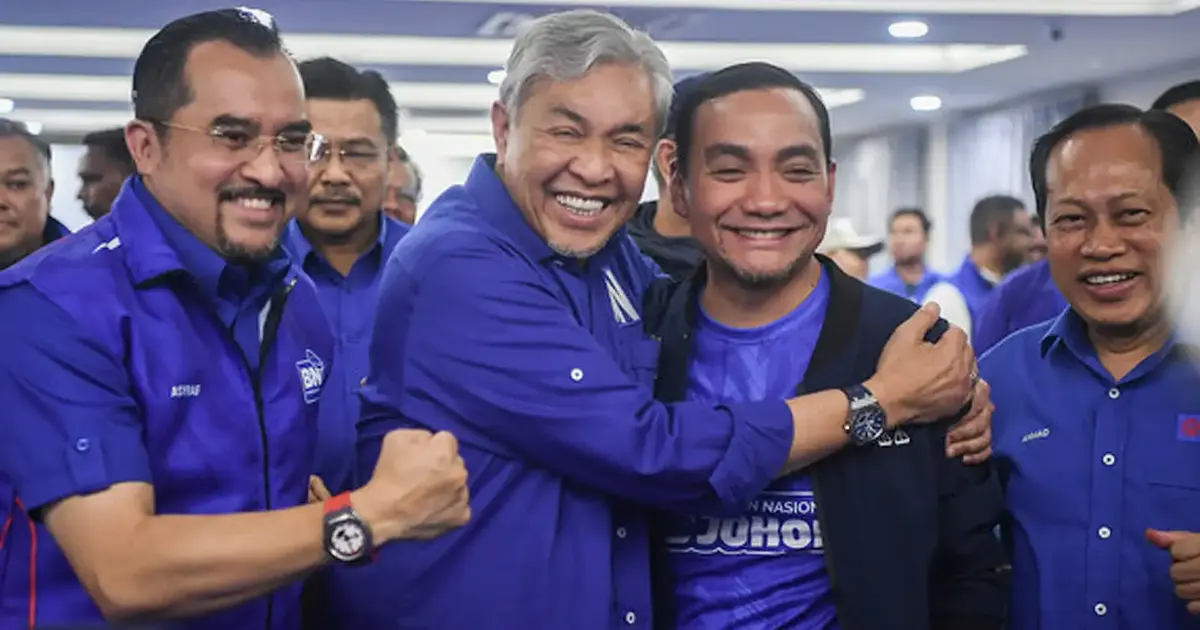
Johor's election results have vindicated Barisan Nasional's strategy of fielding Menteri Besar Onn Hafiz as its figurehead, according to political analysts examining the coalition's performance across the state. The incumbent politician's personal standing among voters, cultivated through his tenure and public initiatives, emerged as a decisive advantage in swaying the electorate during the campaign period. Observers suggest that Onn Hafiz's ability to connect with Johor residents transcended traditional party lines and resonated particularly strongly among undecided voters who viewed him as a stabilising force capable of delivering on development promises.
The endorsement and active participation of Parti Islam Se-Malaysia (PAS) fundamentally reshaped the electoral landscape in BN's favour. Rather than contesting independently or aligning with other opposition coalitions, PAS's decision to either step aside in key constituencies or explicitly support BN candidates prevented the traditional three-way split that has historically fragmented opposition votes. This strategic coordination meant that Malay-Muslim voters who might otherwise have been divided between multiple parties consolidated behind the coalition's preferred candidates, providing crucial margins in closely contested seats. Political analysts emphasise that such unified positioning on the Malay-Muslim political spectrum represented a significant shift from recent national trends and underscored PAS's confidence in backing the incumbent administration.
Equally significant was the failure of opposition forces to present a coherent alternative narrative. The prominent rift between PKR-led Pakatan Harapan and Bersatu—which commands substantial support among Malay constituencies—created a vacuum that BN exploited effectively. Rather than voters rallying behind a single credible Malay-Muslim challenger with the capacity to govern, the opposition landscape fragmented across multiple contenders lacking either unified endorsement or a compelling vision. This internal division meant that anti-BN sentiment, whilst present among certain voter demographics, lacked an organised channel through which to consolidate and mobilise.
For Malaysian observers, the Johor outcome carries implications extending well beyond state boundaries. The willingness of PAS to prioritise political partnership with a secular-led coalition over maintaining opposition unity suggests shifting calculations within Islamist politics regarding governance responsibilities versus ideological positioning. This pragmatism contrasts sharply with the party's more confrontational stance during the 15th general election, where it competed aggressively for Malay-Muslim constituencies across the nation. Analysts view the Johor arrangement as potentially indicative of how PAS might calibrate its strategy in future national and state contests, depending on whether such cooperation yields tangible policy concessions or political dividends.
Onn Hafiz's ascendancy within Johor's political hierarchy also reflects broader patterns of personality-driven politics within Malaysia's electoral system. His popularity appears to have transcended the typical constraints of party affiliation, suggesting that voters increasingly evaluate state-level leadership through the lens of administrative competence and personal integrity rather than solely through partisan loyalty. This development aligns with global trends where regional leaders cultivate personalised political brands that can operate somewhat independently from their parent organisations, enabling them to attract crossover support from voters dissatisfied with national-level politics.
The demographic composition of Johor's electorate further contextualises BN's success. The state contains significant populations of both urban professionals and rural constituencies, alongside substantial Indian and Chinese communities alongside the Malay-Muslim majority. BN's victory suggests the coalition successfully balanced appeals across this diverse constituency base, leveraging Onn Hafiz's moderate positioning to reassure non-Malay communities whilst simultaneously consolidating Malay-Muslim support through PAS's involvement. This multiethnic coalition-building capacity, which BN has historically possessed, faced severe challenges during the past decade but appears to have recovered traction in Johor's specific context.
The opposition's inability to present a unified Malay-Muslim challenger proved particularly consequential given the state's demographic characteristics. Unlike urban-centric states where opposition coalitions have made inroads, Johor contains substantial constituencies where religious and ethnic identity politics remain dominant electoral considerations. Without a clear, credible alternative Malay-Muslim leadership figure commanding broad acceptance, voters inclined toward the opposition lacked confidence that their votes would translate into effective governance from someone viewed as legitimately representing their community's interests. Bersatu's positioning further complicated matters, as the party's origins within UMNO created perceptions of fractured loyalty rather than genuine ideological distinction from its former parent.
Analysts emphasise that Johor's outcome should not be interpreted as a comprehensive reversal of recent anti-BN sentiment evident during the 15th general election and subsequent state contests. Rather, the victory reflects specific conditions—Onn Hafiz's personal appeal, PAS's strategic calculation, and opposition fragmentation—converging favourably for the incumbent coalition within this particular state context. Translating this success to other states facing different demographic compositions, leadership figures, and opposition configurations would require replication of comparable conditions, which remain uncertain for upcoming electoral contests.
Looking forward, the Johor precedent may influence how both BN and opposition parties approach upcoming state and national-level campaigns. If PAS's cooperation with BN in Johor proves durable and mutually beneficial, the party might extend similar arrangements to other states where it can influence outcomes. Conversely, PKR and allied opposition parties may reassess whether their current coalition structure adequately represents the interests of Malay-Muslim voters, potentially driving overtures toward parties like Bersatu or requiring significant organisational restructuring. The next major electoral test will come when these dynamics are tested in contexts where opposing coalitions possess stronger baseline support and alternative leadership figures command greater popular recognition.

