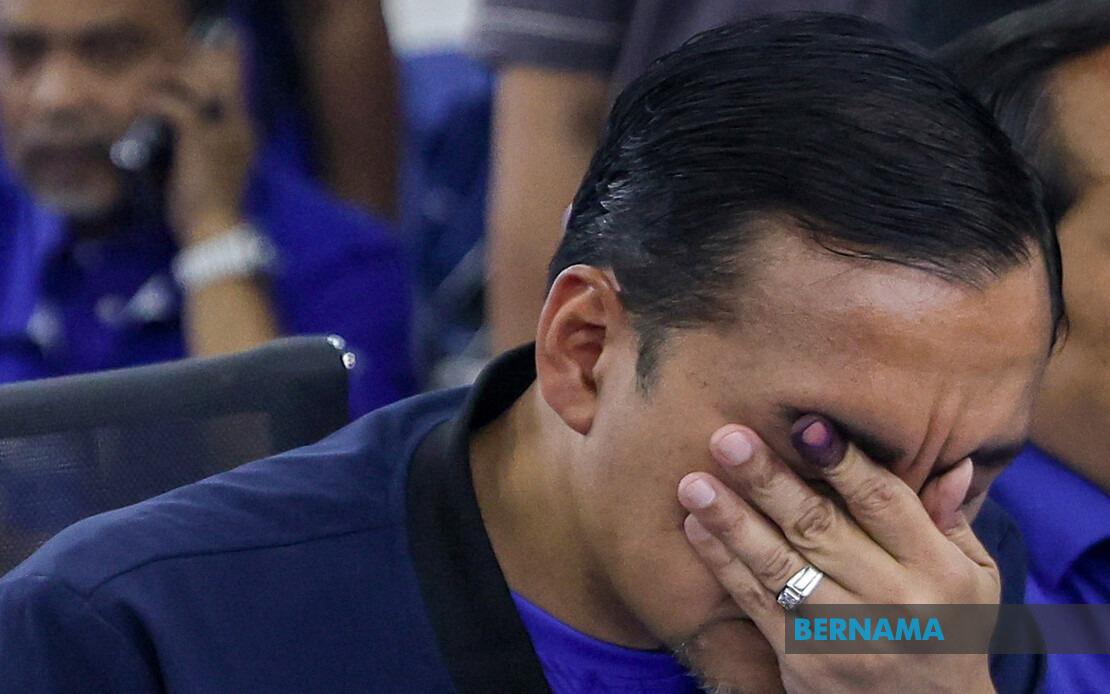
Johor Menteri Besar Datuk Onn Hafiz Ghazi has successfully retained his Machap state seat, commanding a significantly stronger mandate than in the previous election. The BN chairman secured 20,382 votes in the 16th Johor state election, eclipsing PH candidate Nur Hafiz Roslan in what proved to be a direct two-cornered battle with a decisive majority of 15,375 votes.
The outcome represents a substantial consolidation of Onn Hafiz's political standing within Machap, one of Johor's consistently competitive constituencies. His victory margin of 15,375 votes dwarfs the 6,543-vote majority he achieved in 2022, when the contest was far more fragmented. That earlier election saw him fending off challenges from multiple directions—Perikatan Nasional's Azlisham Azahar, MUDA's R. Sangaran, and PEJUANG's Sharuddin Md Salleh all contested the seat alongside him.
The shift from a four-cornered contest to a direct clash between BN and PH reflects broader electoral dynamics shaping Johor politics. The consolidation of opposition votes behind a single PH candidate, rather than distribution across multiple parties, might have been expected to strengthen the challenger's position. Instead, the result demonstrates that Onn Hafiz has broadened his appeal among Machap voters, even as the political landscape has shifted.
Onn Hafiz's strengthened position carries implications beyond Machap itself. As state BN chairman overseeing the party's fortunes across Johor, his personal electoral victory provides political capital at a critical juncture for the coalition. The magnitude of his win suggests the BN message resonated effectively with constituents, whether through his administration's track record or broader party momentum.
The 2022 Machap election had highlighted the constituency's openness to tactical voting and cross-party support. MUDA's presence as a third force in that contest drew particular attention given the party's appeal to younger, urban-leaning voters who might otherwise lean toward PH. The absence of MUDA from the 2024 contest—the party contesting instead elsewhere or withdrawing entirely—indicates shifting coalitional arithmetic across Johor.
For Packatan Harapan, the Machap result represents lost opportunity to capitalize on the 2022 baseline. While PH's aggregate performance across the state will ultimately determine overall election fortunes, losing ground in a seat where the opposition mounted a focused challenge suggests BN's organizational strength and incumbent advantage proved determinative. Nur Hafiz Roslan's campaign, whatever its merits, could not overcome the incumbent's entrenched position and political machinery.
The election commission's announcement of the official results underscores the transparency of Malaysia's electoral process, with detailed vote tallies enabling public scrutiny of outcomes. Machap's results will factor into analysis of broader Johor trends, whether BN consolidated support across the state or whether the coalition's performance varied significantly across constituencies.
Onn Hafiz's expanded majority equips him with a clearer mandate as he continues navigating Johor's complex political terrain. The state remains Malaysia's second-largest economy and a crucial component of national politics. BN's performance here carries implications for federal political dynamics, particularly given the coalition's broader repositioning since its 2018 federal election defeat.
The Machap victory comes amid wider electoral cycles affecting Malaysian politics. State-level contests serve as barometers of voter sentiment and party organizational capacity. Onn Hafiz's personal success in converting 2022's fragmented contest into a 2024 dominant performance suggests effective constituency-building or shifts in voter preference favoring the incumbent and his party.
Looking ahead, Machap will likely remain under close political observation. Whether Onn Hafiz can sustain this expanded majority in subsequent contests, and whether BN can maintain or extend its reach across other Johor seats, will shape perceptions of the coalition's electoral trajectory. For PH, understanding why the opposition failed to advance despite fielding a focused challenge in Machap will inform future strategy in Johor and beyond.

