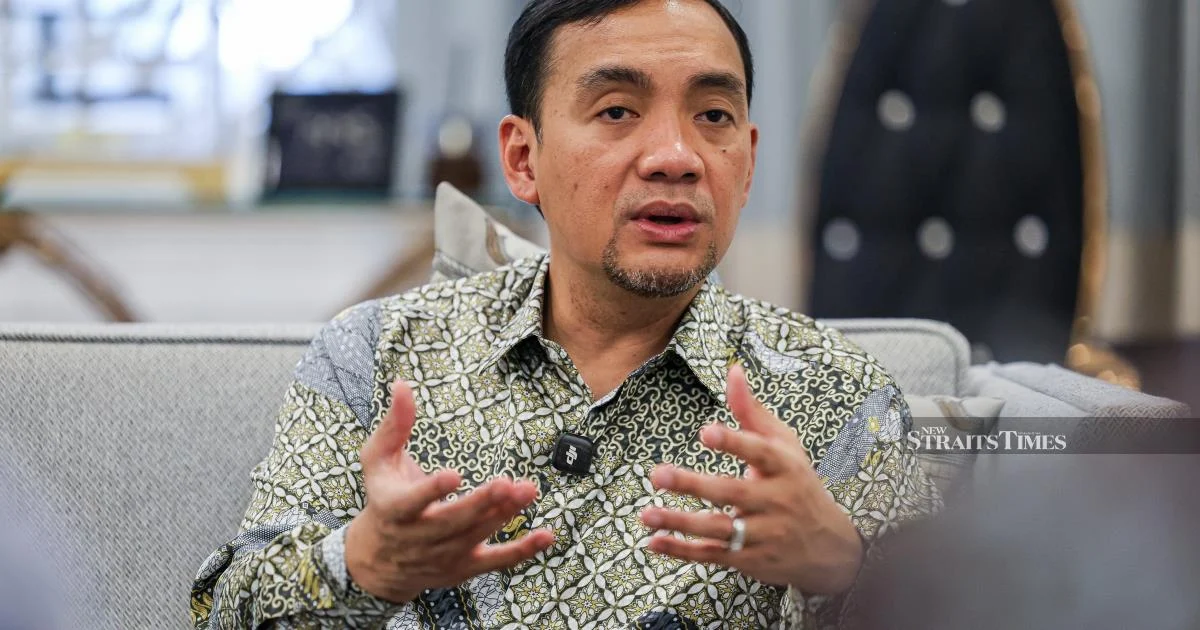
Johor's political landscape faces fresh uncertainty as caretaker Menteri Besar Datuk Onn Hafiz Ghazi has emphatically rejected any possibility of Barisan Nasional partnering with the Democratic Action Party to form a state government. Speaking in Johor Baru, the senior BN figure framed his decision as rooted in fundamental ideological differences rather than mere electoral calculation, signalling that principles—not numbers—will guide BN's coalition strategy in the state's upcoming political deliberations.
The categorical rejection carries substantial weight in Malaysia's fractious coalition politics, where pragmatic alliances have often trumped ideological coherence. By drawing a clear line against DAP collaboration, Onn Hafiz is making a statement about what Barisan Nasional represents to its base and potential voters. This positioning reflects broader anxieties within the BN coalition about straying too far from its traditional constituencies, particularly in a state like Johor where Malay-Muslim voters have historically formed the backbone of BN support.
Onn Hafiz's stance reveals the delicate balancing act that BN must perform in contemporary Malaysian politics. The coalition has faced relentless criticism from both the federal government and its own allies for perceived inconsistency in partnership choices. By establishing this clear boundary against DAP, the caretaker Menteri Besar may be attempting to restore confidence among traditional BN supporters who fear further dilution of the coalition's identity through unexpected cross-partisan arrangements.
The timing of this declaration is particularly significant, arriving at a juncture when Johor's political configuration remains malleable. Any fresh electoral mandate would require BN to assemble a governing coalition, and ruling out DAP before negotiations begin removes one potential variable from the equation. This approach differs markedly from the ad-hoc coalition-building that has characterized much of Malaysian politics in recent years, where alliances are sometimes forged only after election results emerge.
DAP's electoral performance and political positioning in Johor have evolved considerably over recent years. The party has attempted to broaden its appeal beyond its traditional Chinese urban base, which has created both opportunities and concerns among established political players. Onn Hafiz's preemptive rejection suggests that BN views DAP's expanding influence in Johor with sufficient concern to warrant preventative diplomatic messaging, even if such an alliance seemed unlikely on electoral arithmetic alone.
The invocation of ideology as the disqualifying factor deserves closer examination within Malaysia's political context. Ideological coherence has historically been elusive in Malaysian coalition politics, where ethno-religious considerations and patronage networks often override programmatic consistency. By centering ideology in his rejection, Onn Hafiz is attempting to elevate the discourse beyond transactional vote-counting and frame the decision as principled leadership responsive to core constituencies.
For Johor specifically, this statement reinforces a particular vision of governance continuity. Barisan Nasional has governed Johor continuously since independence, and the state remains one of the coalition's most reliable strongholds. Onn Hafiz's declaration that BN will govern with partners aligned to its ideological framework essentially commits the party to seeking allies within a narrower political ecosystem, likely centring on Malay-Muslim focused parties rather than multi-racial, secular-oriented alternatives like DAP.
The broader implications extend beyond Johor's borders. Malaysia's political system has grown increasingly fragmented, with voters and parties constantly reassessing alignments. Major coalitions face pressure to clearly articulate their defining principles and red lines to maintain coherence and member confidence. Onn Hafiz's intervention in this space suggests that at least some BN leaders recognize the necessity of establishing firmer ideological moorings to prevent further coalition fraying.
Regional observers will note that Johor's political health remains crucial to federal stability. As the largest and most economically significant state after Selangor, Johor's governance configuration ripples outward through Malaysian politics. A strong, coherent state government adds to BN's overall legitimacy and capacity to shape federal politics, whereas protracted negotiations or ideologically incoherent coalitions weaken BN's negotiating position with its own federal partners.
The rejection also implicitly addresses intra-BN dynamics. Other component parties within Barisan Nasional, particularly those with significant Malay-Muslim constituencies, will likely view Onn Hafiz's stance as reassuring. It signals that the coalition's senior figures remain committed to preserving the interests and worldview of its traditional supporters rather than pursuing purely numerical political advantages through increasingly diverse and ideologically divergent partnerships.
Looking forward, this declaration may constrain BN's flexibility should Johor's electoral outcome produce unexpected results. If voters deliver a fragmented mandate where no clear majority emerges, the rejection of DAP partnership—however ideologically motivated—could complicate government formation. Yet such risks appear acceptable to Onn Hafiz and his allies, suggesting they are willing to prioritize principle over tactical adaptability in this particular instance.

%22%2F%3E%3C%2Fpattern%3E%3C%2Fdefs%3E%3Crect%20width%3D%22100%25%22%20height%3D%22100%25%22%20fill%3D%22url(%23ph40buhg)%22%2F%3E%3Crect%20width%3D%22100%25%22%20height%3D%22100%25%22%20fill%3D%22url(%23ph40buhp)%22%2F%3E%3Ctext%20x%3D%2250%25%22%20y%3D%2250%25%22%20text-anchor%3D%22middle%22%20dominant-baseline%3D%22central%22%20fill%3D%22rgba(255%2C255%2C255%2C0.95)%22%20font-family%3D%22Georgia%2C%20'Times%20New%20Roman'%2C%20serif%22%20font-weight%3D%22700%22%20font-size%3D%22320%22%20letter-spacing%3D%22-0.02em%22%3EGRS%3C%2Ftext%3E%3C%2Fsvg%3E)