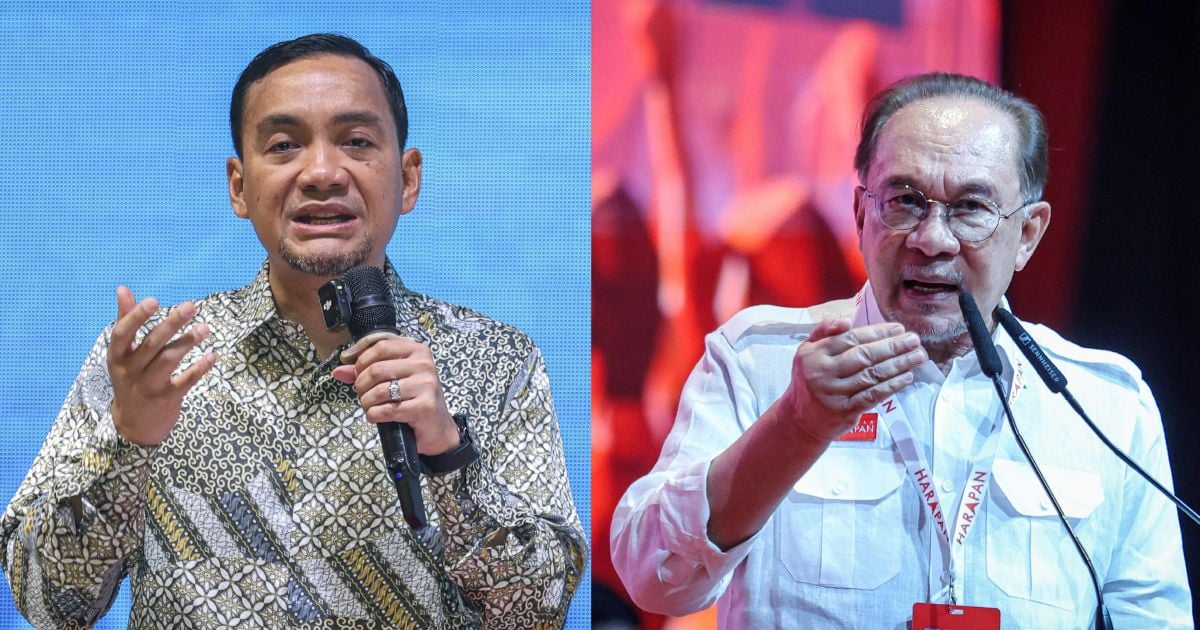
Johor's caretaker menteri besar Datuk Onn Hafiz Ghazi has mounted a robust defence of his administration's approach to governance, rejecting characterisations that the state government has been unwilling to collaborate with Putrajaya. The pointed remarks represent a significant moment in federal-state relations, touching on deeper questions about how regional administrations should balance local interests with national priorities at a time when both state and federal elections loom on the political horizon.
Onn Hafiz's defence positions the Johor government's focus on its constituents' needs as a fundamental responsibility rather than an act of defiance or political intransigence. The implicit challenge in his response—questioning whether attentiveness to Johorean concerns should be labelled arrogance—reframes the debate over state-federal cooperation in terms of democratic accountability. By inverting the criticism, he suggests that abandoning local priorities in favour of federal directives would itself represent a failure of governance, a retreat from the mandate that voters granted his administration.
The timing of these remarks carries particular significance. With electoral competition intensifying across Malaysia, state governments are increasingly asserting their distinct mandates and policy preferences, creating friction points with a federal administration operating under different political dynamics. Johor, as Malaysia's second-largest state by population and a crucial economic engine, occupies a strategically important position in this tension. The state contributes substantially to national GDP and tax revenues, yet historically faces resource constraints in development and infrastructure spending that require either federal cooperation or autonomous action.
Onn Hafiz's stance reflects a broader pattern in Malaysian federalism where state governments elected on platform-specific promises find themselves navigating between fulfilling those commitments and navigating the complexities of inter-governmental coordination. Johor's particular position is complicated by the state's historical significance to the ruling coalition and its shifting political complexion in recent electoral cycles. A state administration that prioritises local grievances and development needs may find itself at odds with federal authorities who emphasise national coherence and unified policy frameworks.
The question of cooperation versus autonomy becomes more acute when examining specific policy areas. Infrastructure development, welfare distribution, and economic management all involve layers of federal and state responsibility. When a state menteri besar champions Johorean interests intensely, federal counterparts may perceive this as obstruction rather than legitimate advocacy. Conversely, state officials who defer excessively to federal preferences risk appearing ineffectual to their electorate, potentially undermining their credibility before the next election cycle.
For Malaysian readers and policymakers, this exchange illuminates the structural challenges inherent in the country's federal system. States command significant constitutional powers over land, local government, and certain economic matters, yet depend on federal allocations for many development projects. This asymmetry creates perennial tension. A menteri besar who voices Johor's demands forcefully may be accused of uncooperativeness; one who yields readily faces accusations of surrendering state interests. Onn Hafiz's rhetorical move—converting criticism into a question about whether serving constituents constitutes arrogance—attempts to resolve this dilemma by redefining the terms of acceptable state conduct.
The defence also carries implications for Johor's relationship with its neighbours and peers in the federation. Other state governments, watching this interaction, gauge the political cost of maintaining distance from federal preferences. If federal criticism becomes too pointed or consequences too severe, states may comply more readily with Putrajaya's agenda. Conversely, if Onn Hafiz's pushback proves politically survivable or even strengthens his standing locally, other menteri besar may feel emboldened to assert state interests more boldly.
Economically, Johor's leverage in these negotiations should not be underestimated. The state hosts critical port facilities, substantial manufacturing capacity, and significant agricultural output. Federal authorities seeking cooperation on matters like revenue sharing, infrastructure investment, or regulatory alignment must acknowledge that Johor cannot be ignored or steamrolled without broader economic consequences. Onn Hafiz's defence implicitly reminds federal counterparts that a Johor government pursuing its constituents' interests energetically may prove more valuable as a partner than one rendered passive through excessive pressure.
The exchange also raises questions about how Malaysian political leaders communicate differences with their counterparts. Direct public rebuttals between state and federal officials are relatively uncommon in Malaysia's political culture, which traditionally favours behind-the-scenes negotiation and consensus-building. Onn Hafiz's willingness to engage Anwar's criticism in public forums suggests either escalating tensions or changing norms around such disputes. This transparency could either strengthen democratic discourse by airing genuine disagreements openly or destabilise inter-governmental relations if it becomes a pattern of tit-for-tat public recriminations.
Looking forward, this episode highlights how Malaysian federalism continues evolving in practice even without constitutional amendments. State and federal authorities are negotiating anew the bounds of acceptable state autonomy and the threshold at which local advocacy becomes political obstruction. Johor's assertion that listening to Johoreans deserves recognition rather than condemnation represents a bid to reset those boundaries in favour of greater state agency. Whether this reshaping persists or reverts to previous patterns will depend partly on electoral outcomes and partly on how other stakeholders respond to Onn Hafiz's challenge.

%22%2F%3E%3C%2Fpattern%3E%3C%2Fdefs%3E%3Crect%20width%3D%22100%25%22%20height%3D%22100%25%22%20fill%3D%22url(%23ph40buhg)%22%2F%3E%3Crect%20width%3D%22100%25%22%20height%3D%22100%25%22%20fill%3D%22url(%23ph40buhp)%22%2F%3E%3Ctext%20x%3D%2250%25%22%20y%3D%2250%25%22%20text-anchor%3D%22middle%22%20dominant-baseline%3D%22central%22%20fill%3D%22rgba(255%2C255%2C255%2C0.95)%22%20font-family%3D%22Georgia%2C%20'Times%20New%20Roman'%2C%20serif%22%20font-weight%3D%22700%22%20font-size%3D%22320%22%20letter-spacing%3D%22-0.02em%22%3EGRS%3C%2Ftext%3E%3C%2Fsvg%3E)