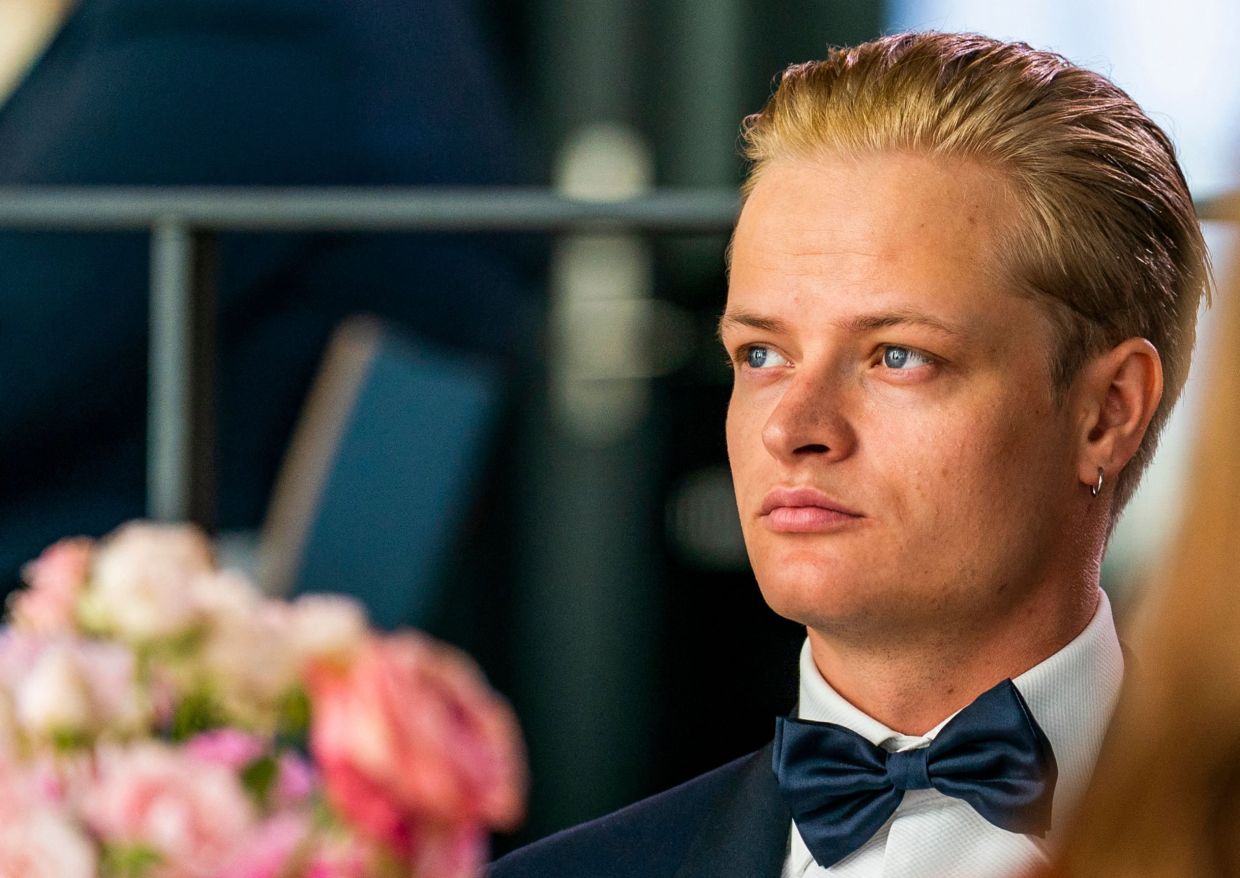
Marius Borg Høiby, the 29-year-old eldest son of Norway's Crown Princess Mette-Marit, received a four-year custodial sentence on Monday following his conviction on two rape charges, marking a significant judicial outcome in a case that has captivated international attention owing to his proximity to the Norwegian throne. The Oslo District Court verdict concluded a trial that captured headlines across Europe and beyond, with prosecutors and defence teams presenting starkly different arguments about appropriate punishment for the charges he faced.
The court found Høiby guilty of two of four rape allegations while acquitting him of the remaining pair, alongside convictions for assault and abuse within intimate relationships. Beyond the rape verdicts, he was also ordered to compensate his victims for damages sustained. The conviction stems from allegations that he sexually assaulted four women who were asleep or incapacitated between 2018 and 2024, during a period spanning six years that exposed what prosecutors characterised as a troubling pattern of predatory behaviour.
The charges against Høiby extended far beyond the rape allegations, encompassing a total of 40 criminal counts including drug-related offences, assault, and violations of restraining orders imposed against him. This broader indictment reflected the complexity of the case and the range of conduct authorities investigated. While Høiby maintained his innocence regarding the rape allegations, he acknowledged responsibility for several lesser offences, a partial admission that nonetheless fell short of accepting the most serious charges.
Prosecutorial and defence positions diverged substantially in their sentencing recommendations. The prosecution sought a punitive sentence of seven years and seven months, reflecting the gravity with which they viewed his conduct and the impact on victims. His defence team countered with a far more lenient submission, arguing for acquittal on rape charges and requesting no more than 18 months for the offences he had conceded, a position that the court ultimately rejected in favour of a middle ground.
The six-week trial that concluded in March presented extensive evidence before the court, including testimony from multiple accusers whose accounts formed the foundation of the rape convictions. Investigators presented digital evidence recovered from Høiby's mobile telephone, including messages, photographs, and video recordings that prosecutors argued corroborated victim accounts and demonstrated consciousness of guilt. This evidentiary presentation proved decisive in securing the rape convictions despite his denials.
Notably, Høiby did not physically attend Monday's verdict hearing due to unspecified health reasons, instead observing the court's reading of the sentence through a video link from his place of detention. This absence underscored ongoing health considerations affecting proceedings, a factor that has periodically influenced judicial decisions regarding his pretrial custody status. Appeals courts had previously rejected arguments that he should be released temporarily pending the verdict outcome.
The case's prominence within international media coverage reflects Høiby's unique position within the Norwegian royal household. Although he holds no official royal title and exercises no constitutional functions, his status as the son of Crown Princess Mette-Marit from a premarital relationship and his upbringing alongside Crown Prince Haakon—Norway's heir to the throne—positioned him within the royal family's orbit. This proximity transformed what might otherwise have remained a domestic criminal matter into an event commanding global journalistic attention.
Recent developments have intensified public interest in the case, particularly as Crown Princess Mette-Marit's health condition has deteriorated markedly. She is managing pulmonary fibrosis, a serious progressive lung disease, and remains on a waiting list for a lung transplant. Her compromised health status generated separate legal discussions about whether her son should receive temporary release from custody, petitions that Norwegian appellate courts consistently rejected by ruling that Høiby must remain incarcerated pending judicial resolution.
The trial occurred against a backdrop of renewed scrutiny surrounding the royal family following revelations about Mette-Marit's historical interactions with Jeffrey Epstein, the American financier convicted of sexual offences against minors before his death in custody. The crown princess subsequently issued a public apology regarding these contacts, acknowledging that her judgment in maintaining the association had been compromised. Officials have clarified that she faces no allegations of wrongdoing in connection with these interactions, but the disclosure nonetheless complicated the royal family's public standing during this period.
For Malaysian and Southeast Asian observers, the Norwegian case underscores how even constitutional monarchies in wealthy Western democracies face serious challenges regarding accountability within royal circles and the complex dynamics between judicial independence and royal privilege. The decision to prosecute vigorously and convict a member of the immediate royal family demonstrates institutional resilience in Nordic countries, though the substantial gap between prosecution and defence sentencing requests illustrates how legal systems can still accommodate significant disagreement about proportionate punishment even in rape convictions.
The verdict is not conclusive, as Høiby retains the right to pursue appeals through Norway's appellate court system, potentially extending legal proceedings further. This avenue may offer him the opportunity to challenge either his conviction or the sentence severity, though the comprehensive nature of the evidence presented during trial suggests appellate prospects remain uncertain. The case will likely remain a significant reference point in discussions of accountability within royal families and the treatment of serious sexual violence allegations within Nordic justice systems.

%22%2F%3E%3C%2Fpattern%3E%3C%2Fdefs%3E%3Crect%20width%3D%22100%25%22%20height%3D%22100%25%22%20fill%3D%22url(%23ph40buhg)%22%2F%3E%3Crect%20width%3D%22100%25%22%20height%3D%22100%25%22%20fill%3D%22url(%23ph40buhp)%22%2F%3E%3Ctext%20x%3D%2250%25%22%20y%3D%2250%25%22%20text-anchor%3D%22middle%22%20dominant-baseline%3D%22central%22%20fill%3D%22rgba(255%2C255%2C255%2C0.95)%22%20font-family%3D%22Georgia%2C%20'Times%20New%20Roman'%2C%20serif%22%20font-weight%3D%22700%22%20font-size%3D%22320%22%20letter-spacing%3D%22-0.02em%22%3EGRS%3C%2Ftext%3E%3C%2Fsvg%3E)