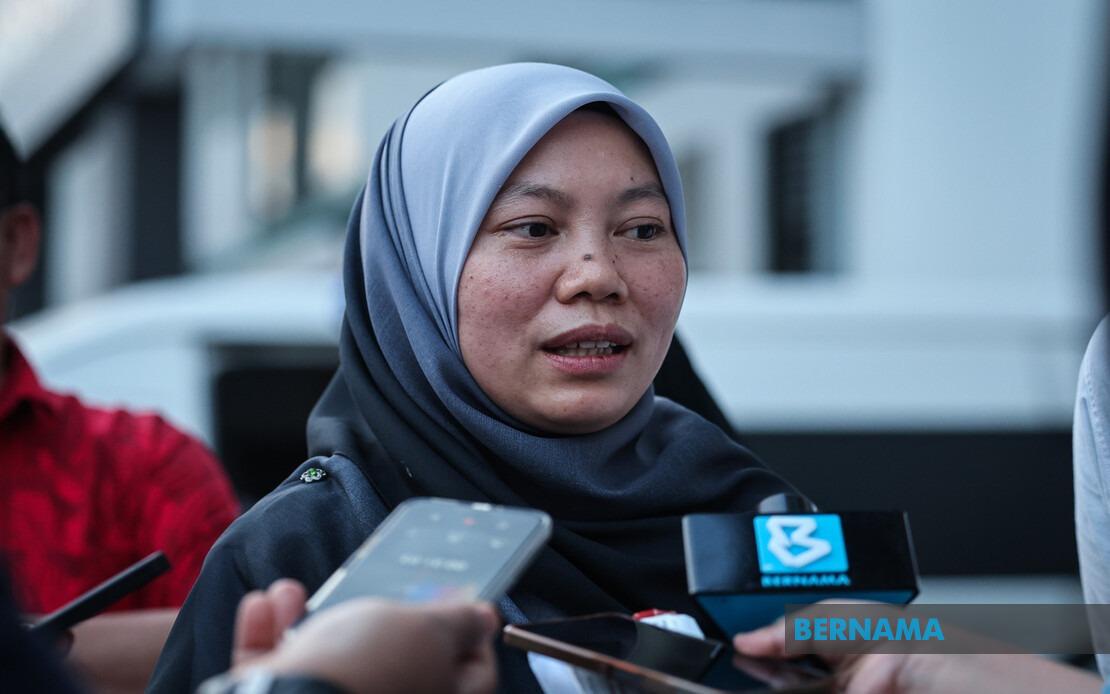
Pakatan Harapan's candidate for the Tiram state seat in Johor, Nor Zulaila Abd Ghani, is projecting confidence about her electoral prospects, bolstered by what she describes as enthusiastic responses from constituents during her campaign activities. Speaking in Pasir Gudang following a community engagement event with Entrepreneur Development and Cooperatives Minister Steven Sim Chee Keong, Nor Zulaila characterised the reception she has encountered at the grassroots level as decidedly encouraging, a sentiment she believes reflects broader support for the opposition coalition across the constituency.
The positivity surrounding her campaign stands in contrast to the occasional online criticism she has faced, which she notes remains confined to digital platforms rather than manifesting in direct confrontations during her physical outreach efforts. This distinction between social media discourse and street-level sentiment highlights a growing pattern in Malaysian electoral contests, where digital spaces often host more polarised exchanges whilst face-to-face interactions between candidates and voters tend toward civility. For Nor Zulaila, this gap suggests her message resonates more authentically when delivered directly to constituents rather than through the filtered lens of online commentary.
Her campaign methodology reflects a deliberate pivot toward youth mobilisation, recognising that younger voters represent both a demographic challenge and an untapped reservoir of electoral potential. Rather than relying exclusively on traditional stumping and public rallies, Nor Zulaila has integrated herself into recreational and sporting activities within the community, participating in sepak takraw tournaments, futsal matches, and snooker competitions alongside local residents. This approach stems from recognition that many younger Malaysians harbour scepticism toward conventional politics and may be more receptive to candidates who meet them in settings associated with leisure rather than formal political discourse.
The strategic insertion of political messaging into youth-oriented social contexts addresses a persistent challenge facing all parties contesting Johor seats: voter apathy, particularly among first-time and younger electors who question whether their participation genuinely influences policy outcomes. By normalising political conversations within the context of shared recreational experiences, Nor Zulaila attempts to reframe voting as an integral civic responsibility rather than an isolated transactional act. She emphasises to young constituents that regardless of their enthusiasm for the political process, the decisions they make—or fail to make—at the ballot box ultimately shape governmental priorities and the lifestyle implications flowing from policy implementation at both national and local levels.
This grassroots engagement strategy aligns with broader Pakatan Harapan efforts across Johor to rebuild credibility after the coalition's fractious performance in the 2022 general election and the subsequent internal disputes that weakened its standing in several state contests. The 16th Johor state election represents an opportunity for the opposition to demonstrate renewed organisational coherence and popular appeal, particularly in constituencies like Tiram where PH maintains residual strength but faces determined competition from both Barisan Nasional and Perikatan Nasional.
Nor Zulaila's campaign has not proceeded entirely smoothly, however. She recently expressed dismay over the deliberate vandalisation of her campaign billboards, an incident she framed as symptomatic of a broader concern regarding electoral conduct standards. Her public appeal for all contesting parties to maintain professional and respectful behaviour throughout the remaining campaign period underscores tensions that occasionally surface during competitive elections, particularly when partisan emotions run high or when certain factions resort to intimidation tactics to suppress opposition visibility. The emphasis on mature and harmonious electoral conduct suggests an awareness that voter perceptions of campaign integrity influence broader assessments of political legitimacy.
The timing of the Johor state election—with polling scheduled for July 11 and early voting on July 7—compresses the campaign window and intensifies competitive pressures across all contested seats. For candidates like Nor Zulaila, the abbreviated timeline necessitates maximum efficiency in voter contact and message penetration, explaining the deliberate targeting of youth through non-traditional engagement channels. Constituencies across the state are witnessing similar intensified activity, with parties mobilising resources and deploying candidates to maximise exposure and demonstrate organisational strength.
The Tiram seat specifically carries significance within the broader Johor electoral narrative, as contests in this area often presage patterns evident across the state. A PH victory here would signal restored momentum for the opposition coalition, whilst a loss would reinforce perceptions of declining influence. For Nor Zulaila, prevailing locally requires not only consolidating existing PH support but also attracting swing voters and persuading previously disengaged younger electors to participate. Her campaign strategy—blending casual community interaction with explicit voter education messaging—represents a calculated attempt to address multiple electoral challenges simultaneously.
The reported positivity of ground-level reception contrasts with broader national sentiment surrounding opposition parties, which have faced criticism regarding internal cohesion and policy differentiation from the governing coalition. Nor Zulaila's optimism, if reflective of genuine voter sentiment in Tiram, might suggest constituency-specific dynamics that buck broader trends. Alternatively, candidate-reported enthusiasm requires careful interpretation, as campaigns naturally generate selective narratives emphasising supportive encounters whilst downplaying ambivalence or opposition.
For Malaysian and Southeast Asian observers, the Johor election demonstrates the continuing vitality of electoral competition in Malaysia's federal system, alongside evolving campaign methodologies that increasingly incorporate digital engagement alongside traditional ground operations. The prominence of youth-focused strategies across all major parties indicates recognition that demographic shifts demand revised approaches to political communication and voter mobilisation. Whether Nor Zulaila's unconventional tactics—combining sports participation with civic education—resonate sufficiently to deliver electoral victory will provide insights into the effectiveness of candidate-centred localised campaigns versus party machinery and national messaging.

