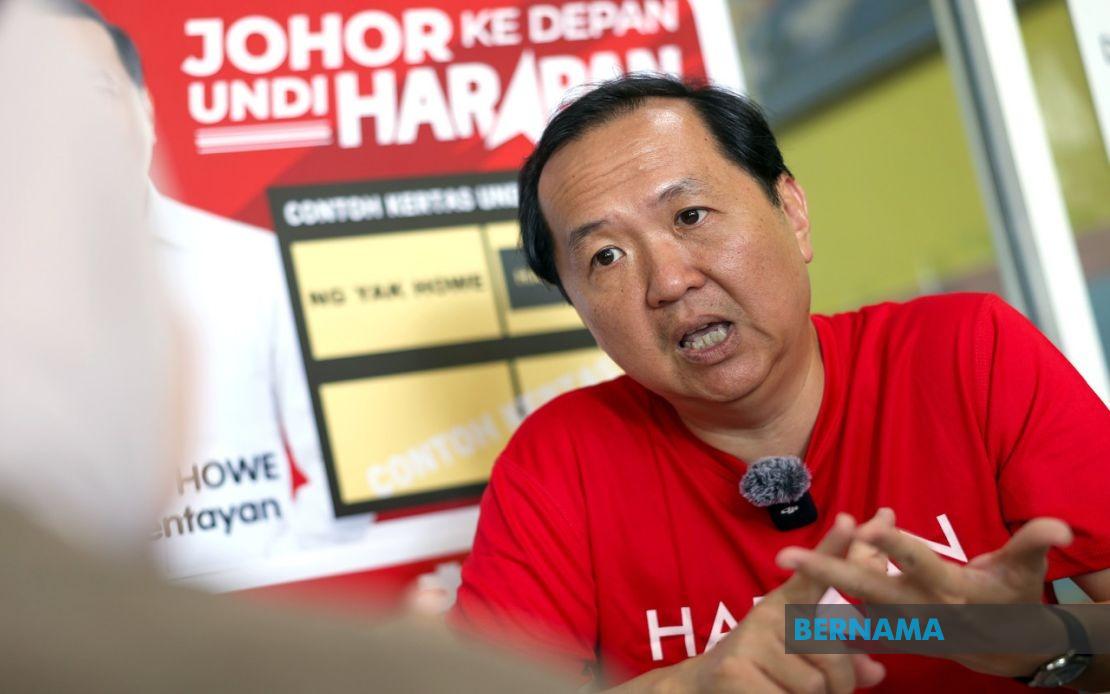
Bentayan assemblyman Ng Yak Howe has positioned the regeneration of Muar town centre as the cornerstone of his re-election bid, acknowledging a persistent challenge facing many Malaysian towns: the gradual hollowing-out of commercial cores as residents and commerce migrate to suburban peripheries. The Pakatan Harapan candidate, seeking a third consecutive term, confronts a constituency that encompasses more than half of Muar's downtown district, making its revival directly relevant to the electoral contest on July 11.
The structural problems afflicting Muar town centre exemplify broader trends reshaping Malaysian urban geography. Daytime activity remains robust as office workers and shoppers animate the streets, yet the area transforms into a subdued landscape once business hours conclude. This day-night dichotomy reflects deeper demographic shifts—families and younger professionals have progressively decamped to newer suburban developments, leaving behind ageing infrastructure, vacant shophouses, and reduced evening foot traffic. Ng's recognition of this pattern demonstrates awareness that electoral success increasingly depends on addressing quality-of-life concerns that extend beyond traditional bread-and-butter issues.
Ng's approach to reversing this trend centres on attracting younger demographics back to the town centre through targeted commercial interventions and place-making activities. His strategy acknowledges that urban decline is not inevitable but requires deliberate policy levers and coordinated effort. The emphasis on drawing the younger generation suggests recognition that demographic composition influences commercial viability—areas perceived as vibrant and contemporary attract investment, while those viewed as stale and aging struggle to retain businesses and residents alike. This represents a significant departure from purely infrastructure-focused urban renewal, embracing instead a more holistic vision of town centre vitality.
Collaborations with adjacent political leaders indicate a multi-level approach to the problem. Working alongside Tan Hong Pin, the Member of Parliament for Bakri, Ng has implemented consumer incentive schemes including cash vouchers and lucky draw campaigns designed to redirect spending toward local businesses rather than distant shopping malls. These initiatives address a fundamental challenge facing traditional town centres: competing for discretionary consumer spending against purpose-built suburban retail complexes offering abundance of parking, controlled environments, and consolidated merchant offerings. By offering financial inducements, the scheme attempts to overcome convenience and psychological barriers that have shifted shopping behaviour patterns over decades.
The scale of the challenge becomes apparent when examining the vacancy rate. With approximately 18 percent of commercial premises in the town centre remaining unoccupied, Ng's revival agenda confronts a substantial problem requiring coordinated solutions spanning multiple stakeholders. This vacancy rate, while not catastrophic, represents lost economic potential and contributes to the perception of decline that further discourages investment and foot traffic. Filling these spaces requires not only attracting established businesses but potentially nurturing new enterprises and encouraging adaptive reuse of existing structures.
Ng's own professional background as a former quality assurance engineer with over a decade of industry experience provides potential credibility in problem-solving contexts, though governance challenges are fundamentally political and social rather than technical. His quarter-century involvement in politics suggests maturity in understanding the interplay between commerce, community sentiment, and policy implementation. As a Johor DAP committee member, he represents the broader opposition coalition's push to establish urban governance alternatives to Barisan Nasional approaches that have historically emphasized large-scale infrastructure over incremental neighbourhood-scale improvements.
The Bentayan electoral contest pits Ng against Chua Lee Huat, the Barisan Nasional candidate, in what amounts to a straight fight for a seat encompassing 34,205 registered voters. The choice between candidates reflects broader questions about urban governance philosophy: whether declining town centres require piecemeal revitalization efforts or comprehensive restructuring; whether state resources should support traditional commercial areas or facilitate planned suburban expansion; and whether younger populations can be persuaded to value urban cores or inevitably prefer suburban living standards. These questions carry implications extending well beyond Muar, as dozens of Malaysian towns face similar demographic and commercial patterns.
The July 11 polling date comes as the 16th Johor state election unfolds across 16 constituencies with 172 candidates competing, creating a complex political landscape where local issues intersect with state-level partisan competition. Johor's electoral dynamics have shifted considerably since the 2018 political realignment, with both coalitions competing intensely for marginal seats where quality-of-life improvements and economic management can sway undecided voters. The prominence given to town centre revival in campaign messaging suggests candidates recognize that voters increasingly evaluate representatives based on tangible improvements in their immediate environment rather than abstract ideological appeals.
Muar town centre's revival represents a microcosm of broader Malaysian urban development challenges that will define the next political cycle. As urban migration continues and suburban sprawl accelerates, state and federal governments face mounting pressure to justify preservation and investment in traditional commercial cores. Early voting on July 7 precedes the main polling day, providing logistics advantages for working voters while potentially altering turnout patterns. Ng's pledge to revitalize the town centre through coordinated merchant support, consumer incentives, and place-making activities offers one vision of how traditional towns might compete in twenty-first-century Malaysian urbanism—not through grand schemes but through persistent, community-oriented efforts to restore vibrancy and economic function.

