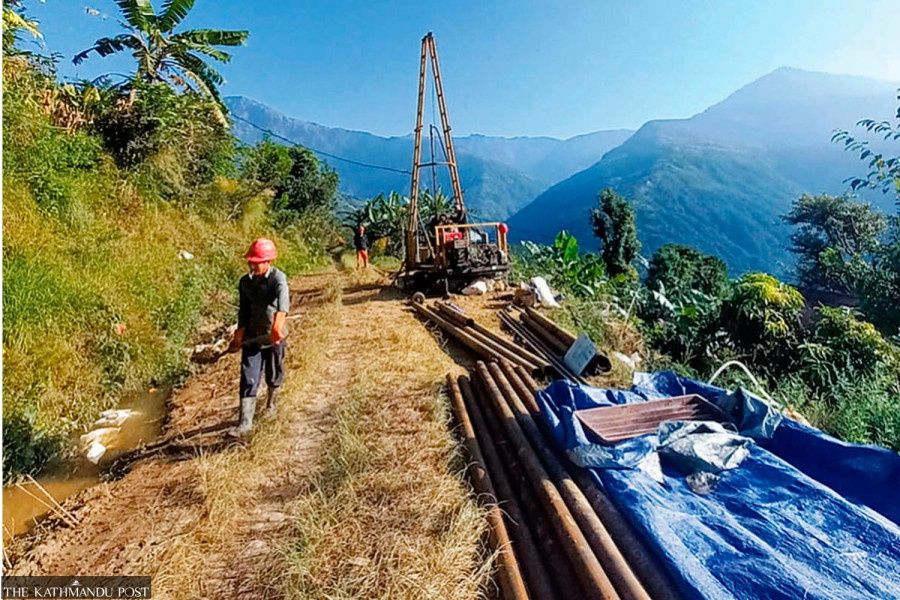
Nepal's freshly minted government is moving swiftly to position the Himalayan nation as an investment destination, with Foreign Minister Shishir Khanal declaring during a visit to China this week that his administration intends to harness Beijing's technological capabilities while simultaneously working to attract investors who have historically shied away from the country's political turbulence. The remarks, delivered to Reuters on Tuesday during what Khanal described as his inaugural overseas mission, reveal a governing coalition determined to translate the anti-corruption and stability platform that captured 182 of 275 parliamentary seats in March into concrete economic achievements.
The government that claimed power in the recent election emerged from a wave of youth-driven discontent that had destabilized the previous administration. In September of the previous year, Gen Z-led demonstrations against corruption and institutional dysfunction left 76 people dead and created the political opening that Prime Minister Balen Shah, a 36-year-old former hip-hop musician, and his Rastriya Swatantra Party have now seized. The election itself represented a striking departure from Nepal's recent history of governmental instability, with the nation having cycled through 32 different governments in the preceding 35 years—a pattern that has devastated investor confidence and hampered long-term economic planning.
Khanal's framing of Nepal's economic ambitions illuminates the balancing act his administration must perform. The Foreign Minister emphasized that while Nepal desperately needs to expand exports and attract foreign investment to create domestic employment, the country simultaneously harbours a cavernous trade imbalance with China that has persisted despite Beijing offering tariff-free market access for over 8,000 Nepalese products into its US$20 trillion economy. The untapped nature of this opportunity—rooted in the political dysfunction that has characterized recent years—suggests that stability alone could unlock significant commercial gains if the new government can deliver on its pledges.
During his meetings with Chinese Foreign Minister Wang Yi and senior Communist Party official Wang Huning, Khanal outlined potential cooperation spanning agriculture, healthcare, tourism, and scientific research partnerships. These sectors reflect Nepal's comparative advantages and development priorities, though analysts note that infrastructure megaprojects previously undertaken within Beijing's Belt and Road framework have encountered financing obstacles and implementation delays. The Chinese side responded by reaffirming its commitment to expanding Nepal's physical infrastructure through power stations, road networks, and aviation facilities—investments that would theoretically complement the trade relationships Khanal seeks to deepen.
Yet the Foreign Minister's diplomatic choreography reveals deeper strategic complexities that should concern Beijing's policymakers. Khanal explicitly framed Nepal's approach to international relationships as individually calibrated rather than aligned, describing India specifically as a potential market for Nepalese energy exports while reserving China's role primarily to tourism. More provocatively, the government has already hosted at least three American officials since April, and Khanal chose to make his first bilateral journey to India rather than China—a sequencing that signals New Delhi's continuing salience in Kathmandu's strategic calculations despite Beijing's intensive courtship efforts.
The telecommunications dimension of Nepal's opening adds another layer of geopolitical intrigue. Khanal confirmed that his government is conducting active negotiations with both Elon Musk's Starlink and Chinese telecommunications giant Huawei regarding broadband service provision, with no final decision yet made and regulatory frameworks still under development. Notably, Khanal reported that China has raised no objections to Starlink's deployment across its border with Nepal—a surprising posture given Beijing's vocal complaints about the satellite system at international forums. This apparent acquiescence may reflect either strategic calculation by Chinese officials or, conversely, their confidence that other factors will ultimately determine Nepal's technological trajectory.
Analysts tracking China's regional diplomacy suggest that Beijing may harbour reservations about Nepal's political transition. Eric Olander, co-founder of the China-Global South Project, a media research organization focused on Beijing's developing-world engagement, argued that the Communist Party leadership tends to view unexpected electoral outcomes with suspicion, particularly when popular movements displace incumbent administrations. His assessment implies that while China will continue investing in Nepal's infrastructure and seeking economic influence, the surprise arrival of a Gen Z-influenced government that emerged from grassroots protest creates uncertainty about long-term alignment with Beijing's strategic preferences.
For Malaysia and other Southeast Asian nations, Nepal's diplomatic recalibration carries instructive implications. The Himalayan country's simultaneous cultivation of relationships with China, India, and the United States demonstrates that smaller states wedged between major powers can maintain strategic autonomy through careful messaging and judicious timing of diplomatic overtures. Nepal's emphasis on investment, technology transfer, and infrastructure development as the legitimate basis for foreign engagement offers a template that might appeal to other developing economies seeking to extract maximum benefit from great power competition.
The success of Khanal's strategy will ultimately depend on whether his government can translate diplomatic opening into actual capital flows and technological partnerships that register measurable gains in employment and growth. Nepal's trade deficit with China, despite decades of preferential access, underscores the reality that tariff elimination alone cannot compensate for weak institutional capacity, inadequate infrastructure outside megaprojects, and persistent governance challenges. The new administration's ability to address these foundational obstacles while simultaneously managing competing interests from Beijing and New Delhi will determine whether the youthful coalition can deliver on its campaign promises of stability and prosperity.

%22%2F%3E%3C%2Fpattern%3E%3C%2Fdefs%3E%3Crect%20width%3D%22100%25%22%20height%3D%22100%25%22%20fill%3D%22url(%23ph40buhg)%22%2F%3E%3Crect%20width%3D%22100%25%22%20height%3D%22100%25%22%20fill%3D%22url(%23ph40buhp)%22%2F%3E%3Ctext%20x%3D%2250%25%22%20y%3D%2250%25%22%20text-anchor%3D%22middle%22%20dominant-baseline%3D%22central%22%20fill%3D%22rgba(255%2C255%2C255%2C0.95)%22%20font-family%3D%22Georgia%2C%20'Times%20New%20Roman'%2C%20serif%22%20font-weight%3D%22700%22%20font-size%3D%22320%22%20letter-spacing%3D%22-0.02em%22%3EGRS%3C%2Ftext%3E%3C%2Fsvg%3E)