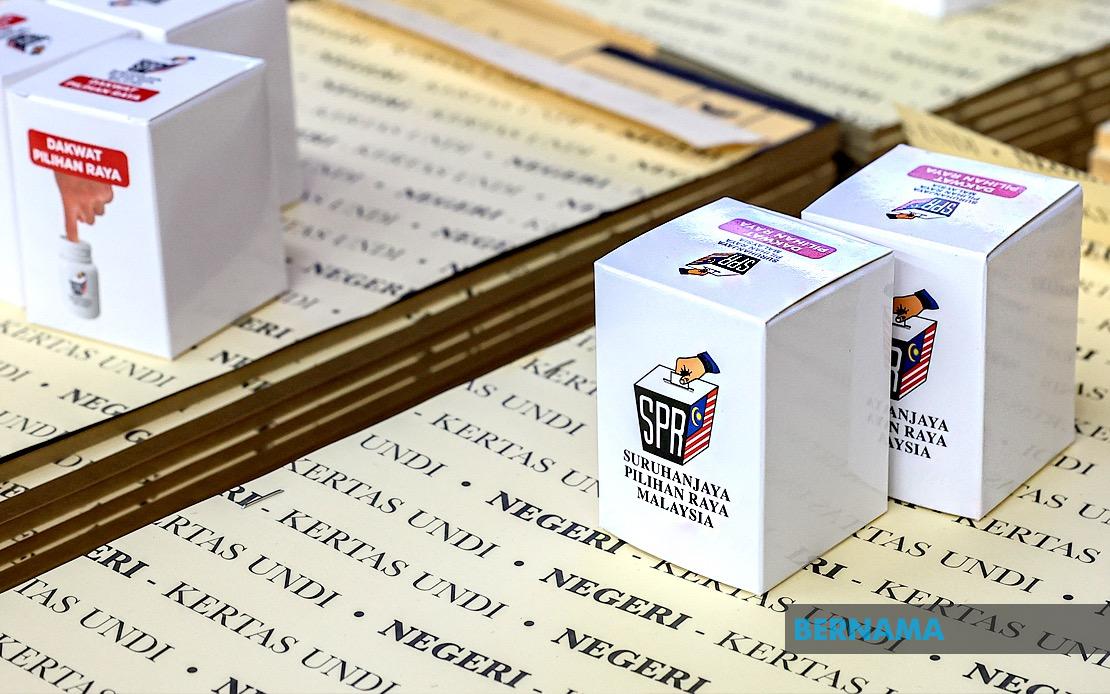
Nearly 25,000 security force members and their dependents will participate in early voting for Johor's 16th state election tomorrow, exercising their franchise at 64 dedicated polling centres spread throughout the state. The early voting mechanism allows personnel who may be on duty or deployed during Saturday's main polling day to cast their ballots in advance, ensuring their voices are heard in what observers view as a significant electoral event for the southern state.
The voting contingent divides evenly between two institutions. Military personnel and their spouses number 12,041, while police officers and their families account for 12,710 voters. This bifurcation reflects the constitutional accommodation made for uniformed services, whose operational demands during election periods necessitate alternative voting arrangements. The distinction also underscores how election commissions in Malaysia coordinate across agencies to maximise participation from those in national service.
Polling infrastructure has been deliberately decentralised to facilitate voter convenience. Eleven centres will cater exclusively to military voters, whilst 53 centres accommodate police personnel. Doors across all locations will unlock simultaneously at 8 am, ensuring standardised commencement and reducing administrative complications. The staggered closing schedule—between noon and 6 pm depending on venue size—reflects a pragmatic approach to early voting management, allowing smaller polling stations with minimal voter numbers to shut earlier whilst busier facilities remain open longer.
For police voters specifically, the arrangement combines in-person and postal voting mechanisms. Approximately 12,067 police personnel and spouses will physically present themselves at designated centres, whilst a smaller cohort of 643 have elected postal voting. This dual-track system acknowledges that some eligible voters, particularly those stationed in remote locations or with exceptional operational requirements, may find physical attendance impractical. The postal option represents a flexibility measure that balances security force operational integrity with democratic participation rights.
Extensive security preparations underscore the sensitive nature of election management in Malaysia. Some 3,565 police personnel have been deployed specifically to manage early voting procedures. This workforce comprises 647 commissioned officers, 2,806 rank-and-file personnel, and 112 civilian administrative staff. Their multifaceted responsibilities encompass security perimeter management, armed escort duties for ballot boxes during transport, vehicular traffic coordination around polling centres, preventive patrols addressing crime risks, operations room staffing for real-time incident response, and strategic location monitoring to ensure voter safety and electoral integrity throughout the voting period.
The distribution of voters across facilities reveals significant disparities in centre sizes, illustrating how electoral geography shapes operational planning. Three particularly small polling stations—Buloh Kasap Police Station in Segamat, Tenang Police Station in Labis, and Bandar Penawar Police Station—each hosting between six and 28 registered voters will close at midday. Conversely, the Federal Reserve Unit Hall No 2 at Johor Police Headquarters, serving the Stulang state constituency, represents the largest police voting centre with 1,338 registered voters. The KEMAS Preschool at the 6th General Operations Force Battalion in Bakri, designated for Bukit Naning constituency voters, ranks second with 927 registered participants. This variation necessitates flexible staffing and adaptive logistics across the 53 police voting venues.
Weather considerations have prompted meteorological monitoring as polling day approaches. The Malaysian Meteorological Department has issued forecasts predicting morning rainfall in several districts including Batu Pahat, Muar, Pontian, and Tangkak, whilst fair weather is anticipated elsewhere throughout the state. Such meteorological intelligence informs contingency planning, particularly regarding voter turnout expectations and field personnel deployment decisions. Rain-related disruptions, whilst manageable for logistics, can marginally depress participation rates, especially in areas where voters must travel distances to reach polling centres.
The early voting process represents merely the preliminary phase of a broader electoral exercise. The comprehensive 16th Johor State Election features 172 candidates competing for 56 assembly seats across the state. With the main polling day scheduled for Saturday, July 11, this early voting window accommodates an estimated 5 percent of total eligible voters—primarily security personnel whose operational commitments restrict their flexibility on election day itself. The scale of candidate involvement and seat distribution demonstrates Johor's significance within Malaysia's federal system, with the state's electoral outcome carrying implications for both regional governance and potentially federal-level political dynamics.
From a broader electoral perspective, the accommodation of early voting for security forces reflects evolving democratic practices in Malaysia. International democratic standards increasingly expect governments to facilitate universal suffrage without imposing operational burdens on essential services. Johor's early voting framework exemplifies this principle, ensuring that military and police personnel—often among the busiest public servants during elections—retain meaningful franchise participation. This system balances national service obligations against fundamental democratic rights, demonstrating institutional maturity in electoral administration. As Malaysia continues refining its electoral processes, such mechanisms may serve as models for other states seeking to optimise participation rates whilst maintaining operational readiness across security establishments during election periods.

