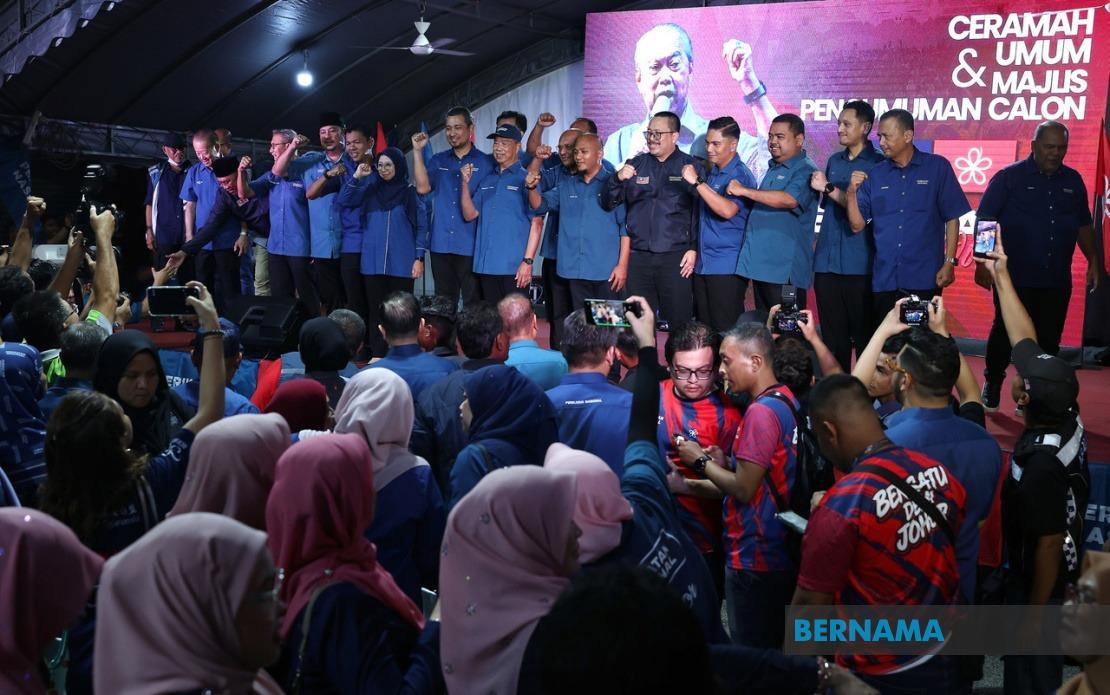
Parti Pribumi Bersatu Malaysia (Bersatu) president Tan Sri Muhyiddin Yassin has officially unveiled the party's roster of 16 candidates for the upcoming 16th Johor State Election. The announcement took place at a candidates presentation and public forum held at the Pagoh Parliamentary Service Centre in Taman Pagoh Jaya, Muar, bringing to a close weeks of speculation over the party's electoral strategy in the state.
The timing of the announcement reflects the accelerated pace of electoral activities following the dissolution of the Johor State Assembly on June 1. With the Election Commission having set June 27 as nomination day, parties across the political spectrum have been racing to finalize their candidate lists and campaign machinery. The polling itself is scheduled for July 11, giving candidates and voters a compressed window of less than three weeks to engage in the election process.
Bersatu's participation in the Johor contest represents a significant chapter in the party's political trajectory within the state. As a component of the Perikatan Nasional coalition, Bersatu has been positioning itself as a viable alternative to the long-dominant Barisan Nasional in Johor, historically considered a political stronghold where opportunities for opposition progress have been limited. The announcement of 16 candidates signals the party's intention to contest across a substantial portion of the state assembly seats, suggesting ambitions beyond a token electoral presence.
The party's approach to candidate selection in this election cycle reflects internal party dynamics and coalition considerations. Muhyiddin's decision to personally lead the announcement underscores the political importance Bersatu places on the Johor contest, positioning the party leader as central to the campaign narrative. Such high-profile candidate launches have become standard practice among major parties seeking to generate media coverage and voter attention during the crowded pre-election period.
For Malaysian political observers, Bersatu's performance in Johor will carry implications beyond state-level implications. The party has undergone considerable transformation since its formation, and electoral results in major states like Johor serve as bellwethers for the broader coalitional landscape. Success or failure in attracting voter support could influence Bersatu's positioning within Perikatan Nasional and its negotiating power in future federal arrangements.
The Johor election has historically been competitive at the state level, despite Barisan Nasional's historical dominance. Recent electoral cycles have demonstrated growing voter willingness to support opposition-aligned parties, particularly in urban constituencies where demographic changes and evolving political preferences have created new opportunities. Bersatu's 16-candidate slate suggests the party believes it can capitalize on shifting electoral sentiments, particularly if they can consolidate opposition votes effectively.
Coalition dynamics will be crucial in determining how effectively Bersatu can translate candidate participation into seat wins. The relationship between Perikatan Nasional partners, particularly between Bersatu and PAS (Parti Islam Se-Malaysia), has been subject to both cooperation and tension in various state contests. How these parties coordinate their campaigns, manage overlapping constituencies, and present a unified opposition message will significantly influence their combined electoral performance in Johor.
The compressed campaign timeline following the June 1 dissolution means that candidates have had relatively limited time to establish grassroots campaign infrastructure compared to elections where dissolution announcements provide longer notice periods. This accelerated schedule may advantage parties with stronger existing ground networks and candidate familiarity within constituencies, potentially affecting how effectively newer or lesser-known Bersatu candidates can penetrate their respective electoral areas.
From a regional Southeast Asian perspective, the Johor election takes on added significance as Malaysia's largest state by population and economic output. The state's political direction carries implications for Malaysia's broader governance trajectory and coalition stability. International observers monitoring Malaysian political developments often track Johor contests as indicators of whether opposition coalitions can effectively challenge entrenched ruling structures, a question relevant across the region where questions of electoral competition and democratic vitality remain pertinent.
The nomination of Mohd Idzharruddin Mohd Nasirruddin in the Bukit Pasir (N8) seat exemplifies how Bersatu has allocated candidates across different constituency categories and demographic profiles. Understanding the party's candidate distribution—whether concentrating resources in particular regions or spreading candidates thinly across the state—reveals strategic calculations about where Bersatu believes it has the strongest prospects and where coalition partners may be designated as primary contenders.
Voter sentiment in the weeks between announcement and July 11 polling will be shaped by campaign intensity, candidate performance in public forums and debates, and broader national political developments that may influence state-level voting decisions. Malaysian voters frequently cite both state-specific issues and federal political considerations when casting ballots in state elections, meaning national party dynamics and coalition positioning will intersect with local constituency concerns during the campaign period.
The success or otherwise of Bersatu's 16-candidate strategy will become apparent on July 11, but the groundwork laid through this public announcement establishes the party's electoral ambitions for the contest. How Muhyiddin's party translates candidate presence into legislative representation will provide important data for assessing opposition coalition effectiveness in challenging established political orders within major Malaysian states.

