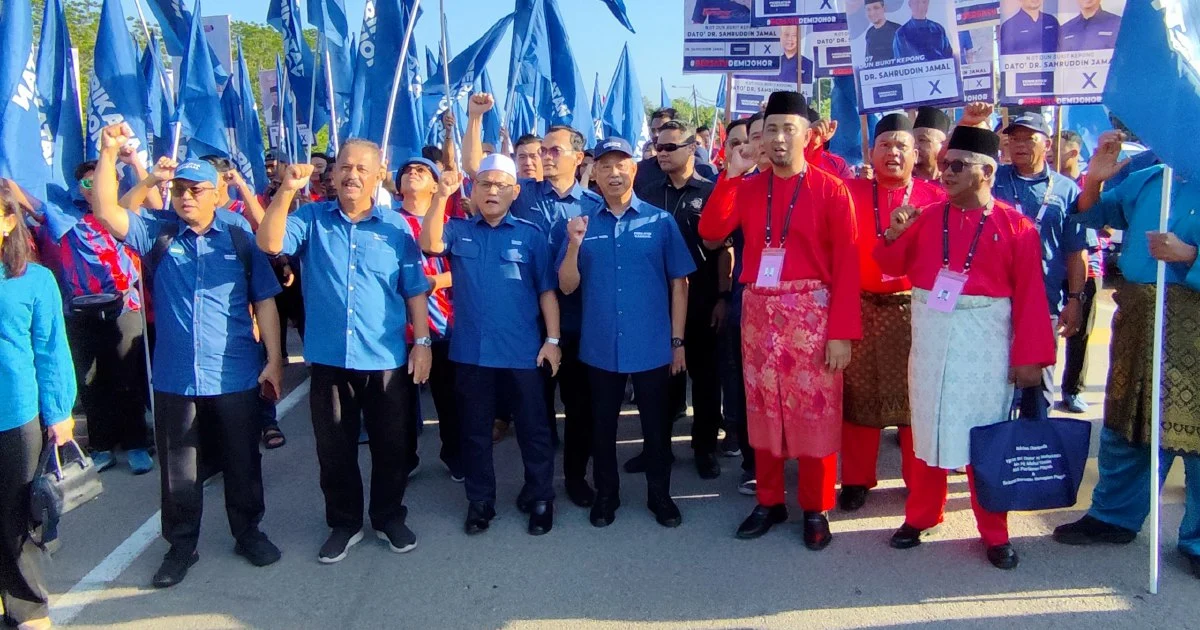
Tan Sri Muhyiddin Yassin, the president of Bersatu, made an early appearance at the nomination centre in Pagoh, arriving at 8.45 am on Tuesday to demonstrate his party's consolidated support for its candidate in one of Johor's keenly contested seats. The Bersatu leader's presence at the Pagoh Sports Complex Hall underscored the significance of the Bukit Kepong electoral battleground in the state's political landscape and reflected the party's determination to mount a competitive campaign across multiple constituencies.
The decision by Muhyiddin to personally accompany Sahruddin to the nomination centre carried symbolic weight in the broader context of Johor's state elections. Such high-profile endorsements serve not merely as ceremonial gestures but as tactical moves designed to energise party workers, reassure grassroots supporters, and project an image of internal party cohesion to voters. For Bersatu, a party that has undergone considerable political realignments in recent years, demonstrating unified leadership backing for its candidates remains crucial to maintaining momentum and credibility at the ballot box.
The Pagoh nomination process represented a key procedural milestone in the election calendar. Candidates across all competing parties formalised their entries into the race during this phase, transforming the electoral competition from theoretical positioning into concrete candidacy. The gathering of party leaders and supporters at nomination centres like the one in Pagoh generated grassroots energy and created opportunities for candidates to interact directly with their communities on issues affecting daily life.
Bukit Kepong has traditionally occupied an important position within Johor's political hierarchy, reflecting the demographic diversity and economic significance of the constituency. The seat encompasses urban and semi-rural communities, appealing to various voter segments with differing priorities regarding employment, education, healthcare infrastructure, and economic development. Understanding the composition of the electoral base has become increasingly important for all contesting parties seeking to craft messaging that resonates across such mixed demographics.
Bersatu's electoral strategy in Johor appears focused on leveraging its existing grassroots organisations and attempting to consolidate support among voters who may have felt disillusioned with alternative political options. The party's performance in recent elections has demonstrated both resilience and vulnerability, making candidate selection and high-level party support mechanisms essential components of its overall campaign architecture. Muhyiddin's visible involvement in key nomination events communicates prioritisation of specific constituencies to both internal party structures and external observers monitoring the political contest.
The presence of party leadership at nomination centres also serves practical organisational functions beyond mere symbolism. Senior figures can assess candidate readiness, gauge local campaign infrastructure, identify potential resource gaps, and provide direct encouragement to campaign teams. Such interactions between national party leadership and local campaign operations help ensure alignment between broader party strategy and ground-level tactical implementation across different constituencies.
Johor's state elections operate within a complex political ecosystem shaped by multiple competing coalitions, traditional voting patterns, and shifting demographic trends. The state has historically served as a bellwether for national political sentiment, with electoral outcomes in Johor often influencing calculations among political actors at the federal level. Consequently, performance in constituencies like Bukit Kepong carries implications extending beyond purely local considerations, contributing to narratives about which political forces can mobilise voters effectively.
The nomination process itself generates considerable media and public attention, as it crystallises political competition and establishes the formal framework for electoral combat. Voters in constituencies like Bukit Kepong gain clarity regarding their actual choices during this phase, moving beyond speculation about potential candidates to confirmed knowledge of who will contest their votes. This transition from possibility to actuality often prompts renewed consideration of candidates' credentials, track records, and policy positions.
For Malaysian political observers and Southeast Asian analysts tracking developments in major state elections, the dynamics unfolding in Johor merit close attention. The state's size, economic importance, and diverse population make it a significant testing ground for political messaging, coalition-building strategies, and voter mobilisation techniques. Results from Johor elections frequently inform broader assessments of political trends affecting Malaysia's trajectory.
As the campaign period unfolds following nominations, the level of party leadership engagement evident in Johor will likely intensify across multiple constituencies. Bersatu's commitment to competitive positioning in seats like Bukit Kepong suggests the party expects to play a meaningful role in shaping the state's post-election political configuration. The coming weeks will reveal whether this visible leadership support translates into actual electoral gains or whether competing parties have successfully cultivated stronger connections with voters in this keenly contested constituency.

