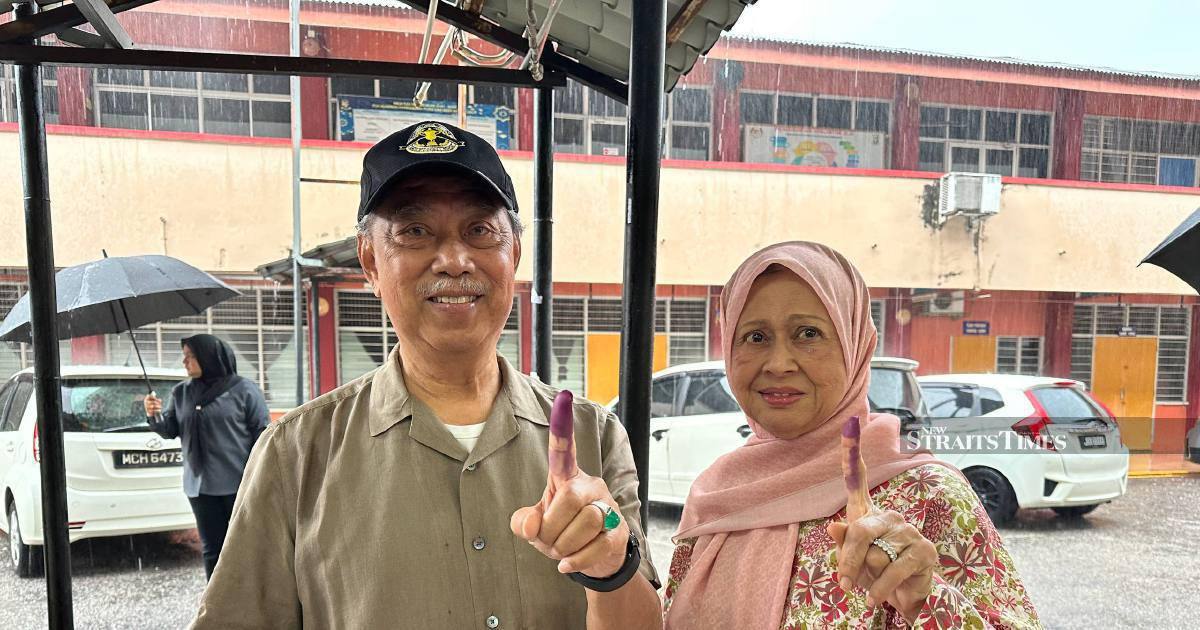
The Johor state election unfolded under challenging meteorological circumstances on Wednesday, with Bersatu expressing optimism that voter participation would surpass 70 per cent despite widespread rainfall sweeping across multiple districts. Party officials, led by Muhyiddin Yassin, remained upbeat about the electoral prospects even as inclement weather threatened to disrupt polling day operations and discourage some voters from visiting polling stations.
The rainfall presented a tangible test for electoral engagement in the southern Malaysian state. Heavy downpours concentrated in several districts created logistical challenges for both election management bodies and voters navigating to ballot stations. Weather-related disruptions have historically affected turnout in Southeast Asian elections, with transportation difficulties and safety concerns keeping some eligible voters at home. The prevalence of morning rain suggested sustained moisture throughout the day, potentially extending voter suppression effects beyond the early hours.
Bersatu's confidence in achieving the 70 per cent threshold reflected internal party assessments regarding voter motivation and underlying support structures. The target itself carries significance in Malaysian electoral contexts, where turnout levels above 70 per cent typically indicate strong grassroots engagement and legitimacy for subsequent government mandates. Party strategists apparently calculated that existing enthusiasm for Bersatu-backed candidates would overcome weather-related friction, demonstrating their confidence in campaign groundwork and voter mobilisation mechanisms deployed across Johor's constituencies.
The timing of the election in the context of broader Malaysian politics added complexity to turnout considerations. Johor has traditionally represented a crucial electoral battleground, with results carrying implications extending beyond state-level governance to influence national political calculations and coalition dynamics. Voter turnout in the state would serve as a barometer for public engagement with the political process and could shape perceptions of legitimacy surrounding whoever emerged victorious from the electoral contest.
Muhyiddin's public statements about turnout expectations served multiple communicative functions simultaneously. By articulating an ambitious target despite obvious weather constraints, the Bersatu leader signalled confidence while simultaneously preparing ground for potential explanations should participation fall short of projections. Political analysts frequently monitor such pre-election positioning, as it often precedes post-election narratives about electoral legitimacy and mandate strength.
The practical implications of heavy rain extended beyond simple voter inconvenience. Election officials needed to maintain polling station operations in potentially hazardous conditions, including managing flooded access routes, protecting ballot materials from water damage, and ensuring voter safety while queuing. Some constituencies in flood-prone areas of Johor might face particularly severe disruptions, necessitating contingency arrangements and potentially extended voting hours to accommodate delayed participation.
Voter behaviour research from previous Malaysian elections suggested that rainfall's impact on turnout varies significantly by demographic group and constituency type. Rural areas typically experience greater turnout suppression during adverse weather compared to urban centres with superior transportation infrastructure. Johor's mixed rural-urban composition meant that some constituencies would almost certainly record turnout reduction attributable to weather, while others might maintain relatively normal participation levels.
The 70 per cent benchmark represented an aspiration rather than a guarantee, particularly given meteorological circumstances beyond any party's control. Election Commission data from previous Johor contests provided historical context, indicating whether current weather conditions represented an anomaly or aligned with seasonal patterns. Bersatu's optimism suggested internal polling and ground intelligence indicating sufficient voter motivation to overcome environmental obstacles, or alternatively, a deliberate strategy to maintain public confidence despite acknowledged challenges.
Regional observers noted that Johor's electoral significance extended throughout Southeast Asia's political economy, given the state's economic importance and its historical role in Malaysian coalition-building. Turnout levels would influence international assessments of political stability and democratic engagement in Malaysia, with ramifications potentially extending to investor confidence and regional political analysis. Foreign observers monitoring Malaysian electoral processes frequently highlighted participation rates as indicators of democratic health and systemic legitimacy.
The election's conduct under adverse conditions would ultimately provide substantial data regarding Malaysian voter commitment and electoral resilience. Whether turnout exceeded, met, or fell short of the 70 per cent target would generate interpretations extending far beyond simple participation statistics. The eventual outcome would likely feature prominently in post-election political discourse, framing narratives about electoral mandates, voter preference intensity, and the strength of competing political coalitions vying for Johor's governance.
Weather-related challenges to electoral administration represent recurring obstacles in tropical Southeast Asia, where rainfall and flooding periodically disrupt polling operations. The Johor election thus contributed to ongoing regional experience regarding adaptive electoral management and voter behaviour under environmental stress. These practical experiences gradually inform election commissions' evolving protocols for managing weather-disrupted voting, ultimately strengthening electoral resilience across the region.

