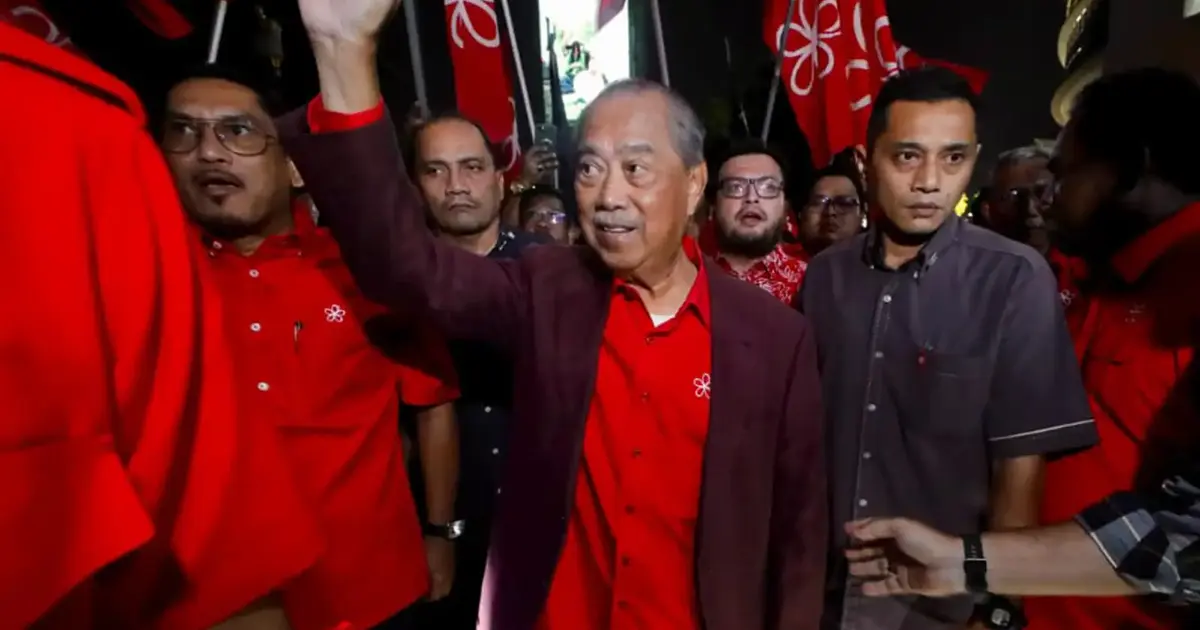
Bersatu chairman Muhyiddin Yassin drew backing from over 200 party members in a show of force ahead of a significant internal gathering scheduled to address the party's strategic direction. The demonstration of grassroots support underscores persistent factional dynamics within the Islamist-leaning party as it navigates critical political decisions in the coming months.
The upcoming meeting carries substantial weight for Bersatu's trajectory, with deliberations focused on readying the party machinery for state elections in Johor and Negeri Sembilan. These contests represent important tests of electoral strength, particularly given Bersatu's positioning as part of the Perikatan Nasional coalition that has sought to challenge the dominance of Barisan Nasional and Pakatan Harapan in various states. Success or setback in either state would have cascading effects on the party's influence in parliament and its bargaining power within its broader political alliance.
Equally significant are anticipated discussions regarding Bersatu's relationship with PAS, the Pan-Malaysian Islamic Party with which it has maintained a complex partnership. The two parties have worked together under the Perikatan Nasional umbrella but have periodically experienced tension over strategic priorities, resource allocation, and ideological emphasis. How these dynamics develop will shape not only Bersatu's internal cohesion but also the stability of the broader coalition structure that opposes the current government.
Muhyiddin's ability to gather such visible support suggests that despite occasional reports of internal disagreements, he retains considerable backing within the party's membership base. This matters considerably in Malaysian politics, where public demonstrations of loyalty often translate into legitimacy in intra-party negotiations and decision-making forums. The gathering thus functions as both a statement of current support and a positioning mechanism ahead of potentially contentious discussions.
For Malaysian political observers, the timing of this rally carries implications extending beyond Bersatu alone. The party's strategic choices—particularly regarding electoral positioning and coalition partnerships—influence the broader opposition landscape and affect the government's parliamentary calculations. Should Bersatu strengthen its hand in either Johor or Negeri Sembilan, the implications would ripple through the wider political ecosystem.
The question of Bersatu's coordination with PAS deserves particular scrutiny given the electoral mathematics involved. Both parties compete for overlapping voter bases and territorial influence, yet they also need each other to challenge the incumbent coalitions effectively. The meeting represents an opportunity to clarify respective roles and reduce zero-sum competition that might benefit neither party. Conversely, failure to reach workable understandings could fragment the opposition's efforts.
Johor's political importance cannot be overstated, as the state has long served as a barometer of national sentiment and traditional Umno stronghold. Any significant challenge mounted by Perikatan Nasional parties would signal substantial shifts in voter preferences. Negeri Sembilan, meanwhile, offers a smaller but strategically symbolic arena where the coalition could demonstrate competitive viability. Both contests therefore merit intensive preparation and resource mobilization from participating parties.
The nature of discussions regarding PAS coordination will likely focus on seat-sharing arrangements, campaign coordination, and messaging alignment. These operational matters often prove more contentious than broader ideological agreement, as they involve concrete allocation of opportunities and campaign resources. How effectively Bersatu and PAS resolve such practical questions will substantially influence their combined effectiveness in forthcoming elections.
Muhyiddin's consolidation of party support ahead of this meeting also reflects the competitive internal dynamics that characterize Bersatu since its formation. The party has grappled with balancing its Malay-Muslim focus with broader political ambitions, and internal voices occasionally advocate for different strategic directions. By visibly strengthening his position, Muhyiddin likely aims to ensure that his preferred approaches prevail in the meeting's deliberations.
Regional perspectives matter as well, given that Southeast Asian politics increasingly feature coalition-based governance and opposition dynamics. Malaysia's experience with managing multi-party coalitions and inter-party tensions offers lessons—both positive and cautionary—for other nations in the region navigating similar complexities. The coming elections will test whether Bersatu and its allies have developed effective coordination mechanisms.
Looking forward, the outcomes of these state elections could reshape electoral expectations heading toward future national contests. Whether Perikatan Nasional's component parties succeed in translating organizational work into electoral gains will influence their confidence and leverage in subsequent negotiations. For Malaysian political participants and observers alike, the decisions made in this meeting carry significance well beyond the immediate calendar.

%22%2F%3E%3C%2Fpattern%3E%3C%2Fdefs%3E%3Crect%20width%3D%22100%25%22%20height%3D%22100%25%22%20fill%3D%22url(%23ph40buhg)%22%2F%3E%3Crect%20width%3D%22100%25%22%20height%3D%22100%25%22%20fill%3D%22url(%23ph40buhp)%22%2F%3E%3Ctext%20x%3D%2250%25%22%20y%3D%2250%25%22%20text-anchor%3D%22middle%22%20dominant-baseline%3D%22central%22%20fill%3D%22rgba(255%2C255%2C255%2C0.95)%22%20font-family%3D%22Georgia%2C%20'Times%20New%20Roman'%2C%20serif%22%20font-weight%3D%22700%22%20font-size%3D%22320%22%20letter-spacing%3D%22-0.02em%22%3EGRS%3C%2Ftext%3E%3C%2Fsvg%3E)