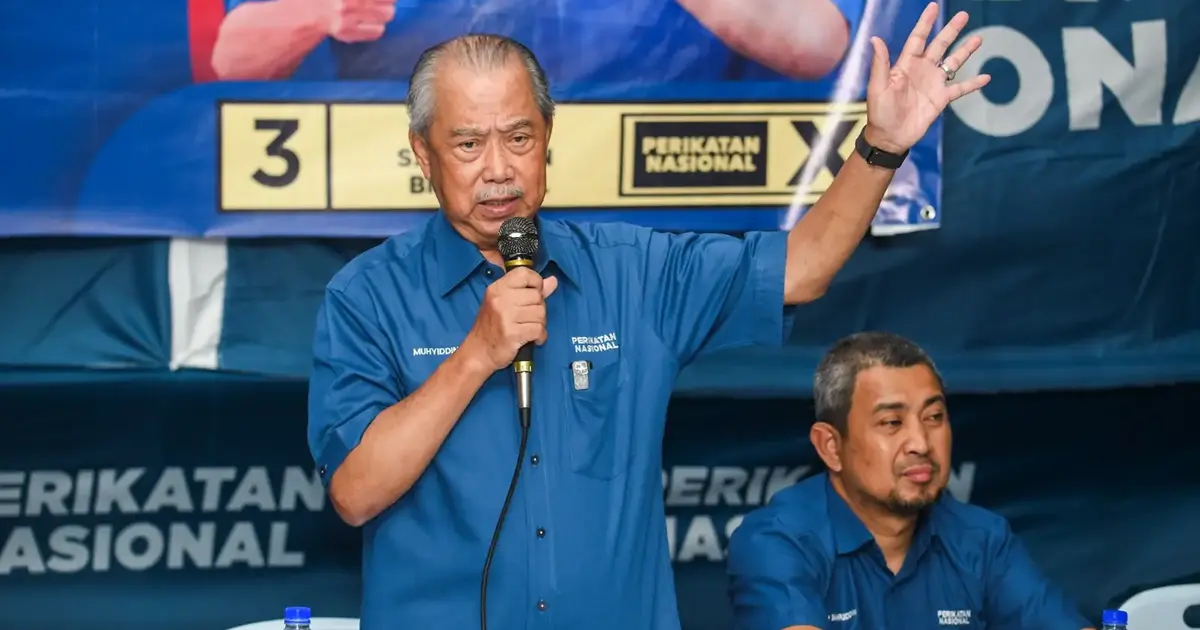
Bersatu president Muhyiddin Yassin has raised questions about the timing and politics surrounding former prime minister Najib Razak's potential release, suggesting it may be intertwined with calculations ahead of the Johor state election. Speaking publicly about the matter, Muhyiddin emphasised that Najib remains a convicted individual, underscoring the significance of any move to alter his legal status or custodial arrangements.
The observation by the Bersatu chief reflects broader anxieties within Malaysia's political establishment about the intersection of judicial matters and electoral strategy. Such concerns gain particular weight given Johor's significance as a traditionally strong coalition state and the forthcoming electoral cycle there. Muhyiddin's comments suggest that high-level political actors view developments involving Najib's case not merely as legal proceedings but as moves with potentially consequential electoral ramifications.
Najib's 2023 conviction on multiple counts of abuse of power and money laundering, stemming from the 1Malaysia Development Berhad scandal, represents one of Malaysia's most prominent corruption cases. His legal troubles, which have spanned years and involved numerous trials, captured intense domestic and international attention. The former premier has maintained various appeals and legal challenges to his convictions, with ongoing proceedings in the courts.
The political dimension of Najib's case has consistently attracted scrutiny given his former position as prime minister and his continuing influence within UMNO, Malaysia's largest Malay-Muslim party. Though no longer holding elected office, his symbolic importance within the party establishment remains substantial. Any judicial intervention or executive action affecting his status would inevitably carry political significance, particularly for parties contesting the Johor election.
Muhyiddin's intervention into this discussion adds complexity to an already layered situation. As a former prime minister himself and current leader of Bersatu, a splinter party formed by defectors from UMNO, Muhyiddin occupies a unique vantage point in observing the calculations of other major players. His willingness to publicly link electoral and legal considerations suggests confidence that such connections reflect genuine concerns shared within the broader political community.
Johor's upcoming election matters significantly within Malaysia's federal structure and coalition dynamics. The state has long been a coalition stronghold, and maintaining dominance there remains crucial for the ruling coalition's overall positioning. Any suggestion that electoral considerations might influence decisions about a prominent party member's legal status could intensify scrutiny of the government's actions and motivations, particularly among voters already concerned about governance standards.
The broader context involves sustained public discourse about judicial independence and the separation between legal proceedings and political interests. Malaysia has experienced episodes where critics alleged that cases against opposition figures proceeded at accelerated pace while cases against government-aligned figures moved slowly. These perceptions, whether or not empirically substantiated in each instance, have shaped public skepticism about whether the courts operate free from political influence.
Muhyiddin's framing of Najib as "already convicted" carries legal and rhetorical weight. It establishes as irreversible fact the judicial determination of guilt, making any subsequent alteration of Najib's status appear less like the normal operation of appeals processes and more like a political intervention in judicial outcomes. This distinction matters for public interpretation of government actions and the credibility of institutions involved.
For Malaysian readers following these developments, the implications extend beyond one individual's legal status. They touch upon fundamental questions about how democratic institutions function when political and legal spheres intersect. The approach taken by the government toward Najib's case, particularly if it coincides with significant electoral periods, will send signals about the relative importance the administration places on judicial finality versus political accommodation.
Southeast Asian observers also follow Malaysian political developments closely, as Malaysia's governance choices influence regional perceptions of institutional strength and democratic maturity. Decisions about handling high-profile criminal cases involving former leaders contribute to the broader regional reputation of Malaysian institutions and the quality of governance in the region.
The reference to an approaching Johor election suggests that timing itself becomes a political variable in how these matters unfold. Electoral cycles create windows when certain policy changes or judicial interventions might occur, as different actors calculate electoral impacts. Muhyiddin's public observation helps focus attention on these temporal dimensions and the political arithmetic that may underlie ostensibly technical legal decisions.
Moving forward, scrutiny will intensify on any developments affecting Najib's status, with political observers interpreting actions through the lens Muhyiddin has highlighted. Whether his comments prove prescient or overread will depend on whether the Johor election and decisions about Najib's case actually synchronise. Either way, his intervention has made explicit what many observers suspected: that in Malaysian politics, major legal cases and electoral contests do not operate in separate spheres but remain deeply connected.

