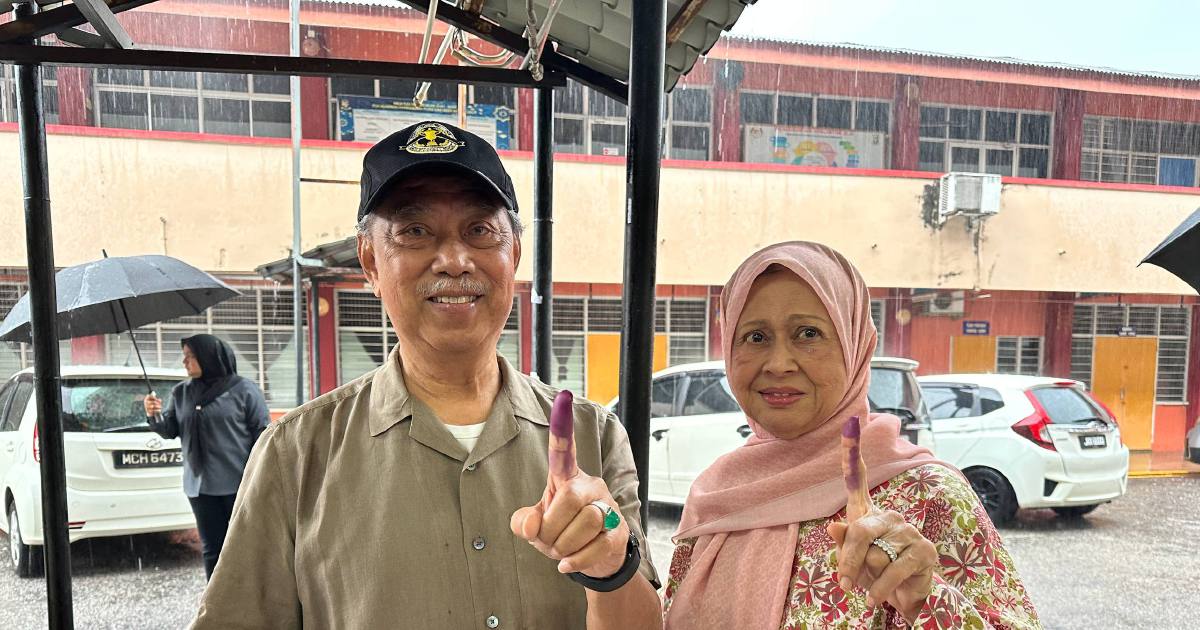
Bersatu president Muhyiddin Yassin has expressed confidence that the Johor state election will draw strong voter participation, with the party hoping for a turnout exceeding 70 per cent despite adverse weather conditions affecting the voting process. Rain struck several districts across the state during the morning hours, presenting a logistical challenge that could potentially discourage some eligible voters from casting their ballots.
The threshold of 70 per cent represents a meaningful participation rate for state elections in Malaysia, where turnout levels often fluctuate based on factors including campaign intensity, local sentiments, and external conditions such as weather. In Johor's case, the presence of significant rainfall early in polling day underscored the importance of voter motivation and the accessibility of polling stations, as wet conditions can discourage participation among elderly voters and those with mobility concerns.
Muhyiddin's optimism reflects Bersatu's assessment that despite the inclement weather, voters demonstrate sufficient engagement with the electoral process to overcome such obstacles. The statement came as voting commenced across constituencies throughout the state, with election officials and party observers monitoring both turnout rates and weather impacts in real time. Early indications from affected districts would provide crucial insight into whether the unfavourable conditions would significantly suppress voter participation.
Historical context matters considerably when evaluating such projections. Johor has traditionally demonstrated respectable turnout rates in state elections, reflecting the state's electoral culture and its significance within Malaysia's political landscape. The state's large population base and diverse demographic composition create varying levels of electoral enthusiasm across different regions and communities, making overall turnout predictions inherently uncertain.
Weather patterns during polling day function as an underestimated variable in electoral analysis. While advanced democracies have studied weather's correlation with turnout, Malaysia's tropical climate presents unique challenges. Heavy rain can disrupt transportation networks, reduce visibility, and create general discomfort that sways marginal voters—those least committed to participating—toward non-participation. Conversely, motivated voters typically endure such inconveniences to fulfil their civic duty.
Bersatu's targeting of 70 per cent turnout suggests the party operates with realistic expectations grounded in recent electoral performance data and internal party assessments. This figure exceeds typical turnout rates for some local elections but remains achievable given sufficient voter motivation and accessibility. The party's public statement of this target also serves a strategic purpose, potentially mobilising supporters and demonstrating confidence that resonates with undecided voters who may draw conclusions about election competitiveness from such projections.
For Malaysian voters and observers, understanding turnout dynamics holds importance beyond mere statistics. Higher turnout generally increases democratic legitimacy for election outcomes, distributes power more equitably across constituencies, and reflects genuine public engagement with governance decisions. Conversely, low turnout can produce results that, while numerically clear, enjoy limited popular mandates and potentially amplify polarisation if participation concentrates among specific demographic or ideological groups.
The Johor election's significance extends beyond local state governance. Johor holds strategic importance within Malaysia's broader political economy and demographic representation, making its electoral outcomes nationally resonant. The state's results will influence perceptions of different political coalitions' strength, generate momentum for or against particular leaders, and potentially reshape coalition dynamics heading into future national political contests. Turnout becomes a key variable shaping these interpretations, as commentators assess not merely which party won, but with what degree of popular endorsement.
Rain during polling represents just one of numerous logistical challenges election commissions manage. Poll workers must maintain ballot paper integrity despite moisture, voters require clear pathways to voting booths, and election officials oversee compliance with COVID-19 protocols or other health measures simultaneously. The weather thus ripples across the entire electoral apparatus, affecting not only voter willingness but also election administration efficiency.
Bersatu's public positioning around the 70 per cent target implicitly acknowledges that weather conditions matter enough to discuss openly. By setting expectations beforehand rather than offering post-election excuses, the party attempts to frame whatever turnout materialises within a context of reasonable expectation-setting. Should turnout exceed 70 per cent despite rain, Bersatu gains both satisfaction of strong participation and narrative advantage. Should it fall short, the party possesses a documented mitigating factor in weather conditions.
As polling progressed through the day, real-time turnout figures from early voting patterns in different districts would accumulate, providing increasingly accurate pictures of whether Bersatu's optimism proved justified. Election observers from various parties and independent monitors tracked these metrics alongside weather updates, building comprehensive understanding of how external conditions translated into voter behaviour across Johor's diverse constituencies.

