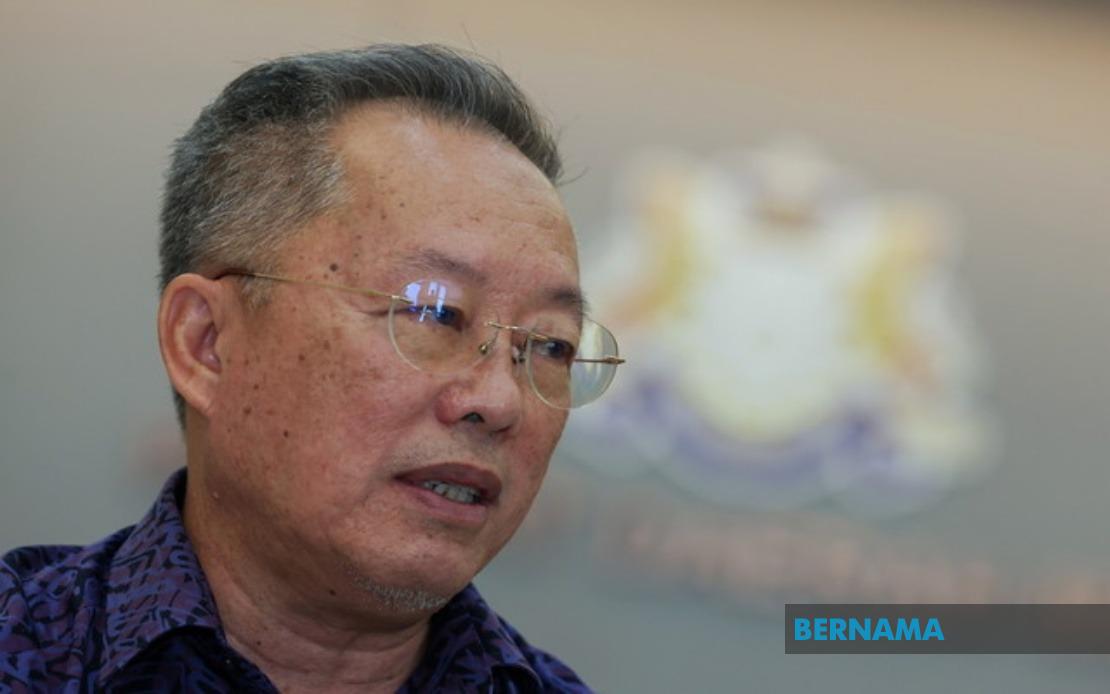
The Muar District Office has pushed back against suggestions it prevented Prime Minister Datuk Seri Anwar Ibrahim from holding a public engagement in the area, instead stating that the June 15 programme was simply moved to an alternative location due to administrative protocols. District Officer Zainal Eran made the clarification in response to controversy surrounding the relocation of the community outreach initiative, emphasising that the decision stemmed from principles governing the appropriate use of state-owned facilities rather than any desire to obstruct the premier's activities.
The original plan called for Anwar's engagement to take place at the Sungai Balang Mukim Penghulu Complex, a government building in Muar. Following discussions between the Muar District Administration and the Johor State Development Office, organisers instead held the event at Pantai Leka Food Court Square. Zainal stressed that by moving the programme away from a government structure, the district administration sought to uphold the principle that public buildings should not serve as venues for political activities or partisan campaigning.
Zainal's explanation provides insight into the delicate balance Malaysian authorities must maintain during election cycles. With the Johor state election scheduled for July 11 and early voting set for July 7, officials face heightened scrutiny over whether government resources are being deployed neutrally across all political contestants. The decision to relocate the prime minister's event reflects concern about optics, even when the sitting premier exercises conventional duties engaging constituents. This sensitivity underscores broader debates in Malaysian governance about distinguishing between legitimate ministerial functions and political campaign activities.
The district officer also cited procedural grounds for requesting the relocation. The event had not been notified through formal early application channels, and fewer than 24 hours' notice made it challenging for the district administration to arrange proper logistical coordination. These operational constraints, combined with the neutrality principle, formed the basis for the request to change venues. The explanation suggests that even high-profile events involving the prime minister are expected to navigate standard administrative processes, a point the district office underscores to demonstrate consistency in its approach.
Crucially, the event did proceed successfully at the alternative venue, drawing participation from federal government leaders, state officials and local residents. The fact that the programme went ahead despite the relocation contradicts the characterisation that authorities had blocked or prevented it entirely. Zainal highlighted this outcome as evidence of good faith cooperation, arguing that the administration worked constructively to accommodate the engagement while addressing its institutional concerns. The strong turnout at the substitute location further suggests that the change of venue did not materially undermine the prime minister's ability to connect with the public.
However, Zainal revealed that inspection teams discovered political party flags already lining the area around the new venue on the morning of the event, despite the official campaign period for the Johor state election not having commenced. This observation appears to have vindicated the district office's concerns about maintaining the apolitical character of the proceedings. The presence of partisan symbols suggested that the programme could easily be perceived as a campaign activity, making the relocation to a non-government location a protective measure for state asset integrity.
The timing and context of the event make the venue decision particularly significant for Malaysian readers. Major state elections like Johor's command enormous political attention and competition between ruling and opposition coalitions. Prime ministerial appearances at community events naturally attract media coverage and can influence electoral sentiment, making the distinction between official duties and campaign activities a matter of genuine constitutional importance. Election commission guidelines and parliamentary conventions in Malaysia emphasise that public resources must not be deployed to advantage any political contestant.
Zainal's appeal for all parties to avoid politicising the matter reflects frustration that what he frames as a routine administrative adjustment had become contentious. His position holds that the Muar District Administration acted reasonably within its mandate to protect government facilities from partisan use. The officer's public statement aims to reset the narrative from one of obstruction to one of procedural compliance and institutional neutrality. Whether this reframing gains acceptance likely depends on perspectives among opposition parties and observers monitoring the Johor election.
The incident illustrates recurring tensions in Malaysia's political system between executive convenience and institutional safeguards. Prime ministerial office holders have legitimate reasons to engage communities and publicise government programmes; simultaneously, electoral bodies and administrative agencies must police the boundary between these functions and campaign behaviour. The Muar relocation represents how such competing demands play out at the district level, where frontline officials must make judgment calls with imperfect information and tight timelines.
Looking ahead to the July 11 Johor election, cases like this may influence how quickly government agencies process event approvals involving senior leaders. Perceived delays or relocations could fuel accusations of bias, while overly accommodating stances risk charges that state facilities are being misused for political advantage. The Muar District Office's detailed public explanation, while defensive in tone, attempts to establish a precedent of transparent reasoning that other district administrations across Malaysia might reference in their own election-period decisions.
The episode also highlights the importance of advance coordination between event organisers and administrative authorities during election campaigns. Zainal's remarks about the lack of formal early application and the compressed timeline suggest that clearer communication protocols could reduce friction. As Malaysia heads into what observers expect to be a period of heightened electoral activity, both government and opposition figures would benefit from understanding and respecting administrative processes designed to maintain institutional impartiality.

