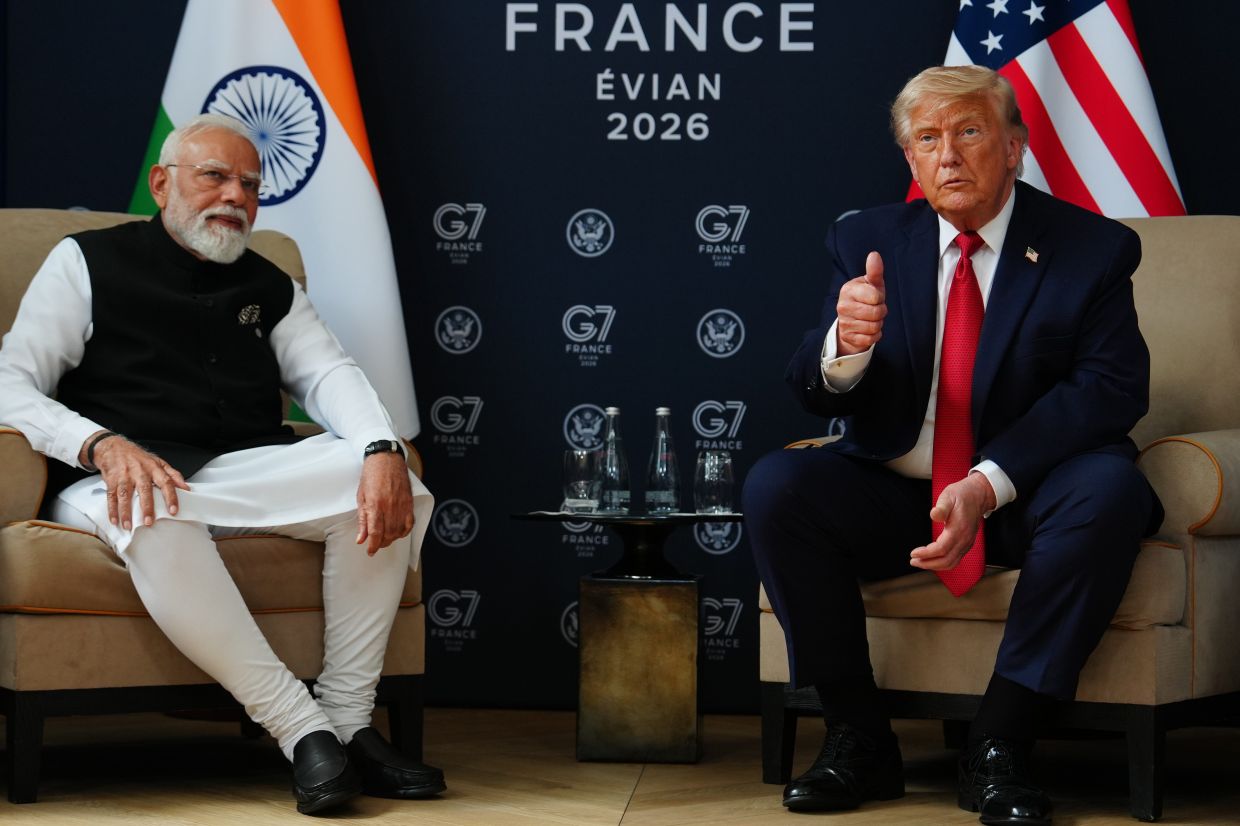
The long-stalled commercial dialogue between India and the United States has entered a critical final phase following a high-level meeting between Prime Minister Narendra Modi and President Donald Trump at the G7 summit in Evian, France. In remarks delivered Thursday following their Wednesday encounter, Modi characterised negotiations as having achieved "significant progress", while Trump told reporters that the two nations had drawn "very close" to a comprehensive agreement. This represents a pivotal moment in bilateral relations, coming eighteen months after the two leaders last convened face-to-face in Washington in February 2025, when they had already reached an initial understanding that has since undergone extensive refinement.
The formal Indian government readout of the meeting provided fresh momentum to what has been a protracted and occasionally contentious negotiating process. A statement from the Ministry of External Affairs emphasised that both leaders had "noted with particular satisfaction" the considerable distance already travelled in drafting an interim bilateral trade agreement. Crucially, Modi and Trump have instructed their respective officials to accelerate work towards finalising what both capitals are now describing as a "commercially meaningful agreement at the earliest", signalling political determination to break through any outstanding impediments. This directive from the top carries considerable weight in bureaucratic systems on both sides, effectively elevating the negotiations beyond routine technical discussions into a matter of presidential and prime ministerial priority.
The ambitious commercial architecture being negotiated reflects the strategic importance both nations attach to deepening economic ties. Washington and New Delhi have committed to expanding bilateral trade to US$500 billion by 2030, a target that would more than triple current volumes and position India among America's most significant trading partners. Achieving this magnitude of growth requires not merely the removal of tariff barriers but also structural reforms addressing regulatory divergence, intellectual property protections, and market access in sensitive sectors including agriculture, pharmaceuticals, and defence manufacturing. The interim agreement now being finalised represents the first major component of this broader long-term vision.
India's Commerce Minister Piyush Goyal provided a more granular assessment of progress in early June, indicating that negotiators had resolved approximately ninety-nine percent of outstanding issues in the first tranche of negotiations. This remarkable claim—suggesting that only marginal differences remain—must be viewed against the context of what has proven to be a technically demanding process involving multiple government agencies and competing domestic interests. Agricultural interests in the United States and pharmaceuticals and technology sectors in India have each lobied intensively for favourable terms, and Goyal's statement likely reflects progress in merging these competing demands rather than genuine resolution of all contentious points.
The trajectory of these negotiations has not been linear. An initial breakthrough was achieved in February 2025, but momentum subsequently dissipated when the Trump administration's sweeping tariff measures faced legal challenge in the US Supreme Court. After the court invalidated those provisions, the administration pivoted to launching investigations into unfair trade practices targeting multiple countries including India, whilst simultaneously imposing a blanket ten percent tariff on all imports. For New Delhi, this created an awkward negotiating environment where concurrent tariff threats complicated discussions about reducing bilateral barriers. That both sides have nonetheless pressed forward through this period of uncertainty underscores their commitment to concluding a durable agreement.
US Trade Representative Jamieson Greer is scheduled to travel to India next week to participate in what officials are characterising as the next substantive round of talks. This visit carries considerable symbolic weight, indicating that American negotiating authority is being focused directly on resolution. The decision to dispatch the nation's chief trade negotiator—rather than delegating discussions to subordinate officials—reflects the strategic significance attached to the India relationship within the Trump administration's broader trade portfolio. Whether Greer's engagement will prove sufficient to resolve any final outstanding disputes remains to be seen, but the schedule announcement signals confidence that a deal remains achievable within a compressed timeframe.
Trump's public characterisation of Modi provided an unusual window into personal rapport between the two leaders, notwithstanding the president's somewhat eccentric rhetoric. Describing the Indian Prime Minister as both "the most beautiful looking man" and "a killer" at the negotiating table, Trump was attempting to convey respect for Modi's toughness whilst simultaneously suggesting personal affinity. In diplomatic contexts, such informal observations often indicate that relationship-level factors are facilitating progress on substantive issues. The fact that Trump felt comfortable offering such unfiltered remarks suggests he views the Indian relationship as sufficiently secure to accommodate unconventional communication styles.
Beyond commercial considerations, Modi raised security and humanitarian concerns with Trump during their bilateral meeting. The Prime Minister specifically urged the American administration to ensure the safety of Indian seafarers as part of implementing arrangements related to the Iran-US deal designed to de-escalate Middle Eastern tensions. This request was prompted by the killing of three Indian sailors in a US military strike against a commercial vessel operating off Oman on June 10, an incident that highlighted the vulnerability of Indian maritime workers to regional instability. The incorporation of seafarer safety into bilateral discussions demonstrates how security, humanitarian, and commercial issues have become inextricably linked in US-India engagement.
For Southeast Asia and the broader Indo-Pacific region, the progress towards an India-US trade deal carries significant implications. An enlarged Indian-American economic partnership strengthens what Washington sees as a counterbalance to Chinese regional influence, whilst offering New Delhi expanded access to the world's largest consumer market. However, Modi's warnings about the continuing impact of Middle Eastern disruption on global energy, fertiliser, and food supply chains carry direct relevance to the region. The Iranian closure of the Strait of Hormuz has created bottlenecks affecting Southeast Asian economies equally, and Modi's emphasis that these disruptions will "continue to impact the Global South for a considerable period" reflects the protracted nature of regional instability beyond the immediate conflict zone.
For Malaysian policymakers and businesses, the significance of the Modi-Trump trade negotiations extends beyond bilateral commercial relations. India's deepening trade integration with the United States could reshape regional supply chains and investment flows, potentially creating new commercial opportunities but also introducing competitive pressures. Malaysian companies operating across technology, pharmaceuticals, and manufacturing sectors will need to monitor how the emerging trade framework affects tariffs, rules of origin, and market access across the region. The trajectory of US-India trade policy will influence Washington's approach to broader Indo-Pacific commercial architecture, including potential frameworks affecting Malaysia and other Association of Southeast Asian Nations members.
The timeline for finalising negotiations remains deliberately vague, with both sides acknowledging imminent conclusion without specifying precise dates. The deployment of Greer to India next week suggests that substantive discussions will occur within days rather than weeks, and the political commitment evident from Modi and Trump's statements indicates neither side wishes to allow bureaucratic inertia to delay resolution. For businesses in both countries and across the region watching these developments, the probability of a major bilateral trade agreement being announced within the coming months has increased substantially following this G7 summit encounter.
%22%2F%3E%3C%2Fpattern%3E%3C%2Fdefs%3E%3Crect%20width%3D%22100%25%22%20height%3D%22100%25%22%20fill%3D%22url(%23ph40buhg)%22%2F%3E%3Crect%20width%3D%22100%25%22%20height%3D%22100%25%22%20fill%3D%22url(%23ph40buhp)%22%2F%3E%3Ctext%20x%3D%2250%25%22%20y%3D%2250%25%22%20text-anchor%3D%22middle%22%20dominant-baseline%3D%22central%22%20fill%3D%22rgba(255%2C255%2C255%2C0.95)%22%20font-family%3D%22Georgia%2C%20'Times%20New%20Roman'%2C%20serif%22%20font-weight%3D%22700%22%20font-size%3D%22320%22%20letter-spacing%3D%22-0.02em%22%3EGRS%3C%2Ftext%3E%3C%2Fsvg%3E)