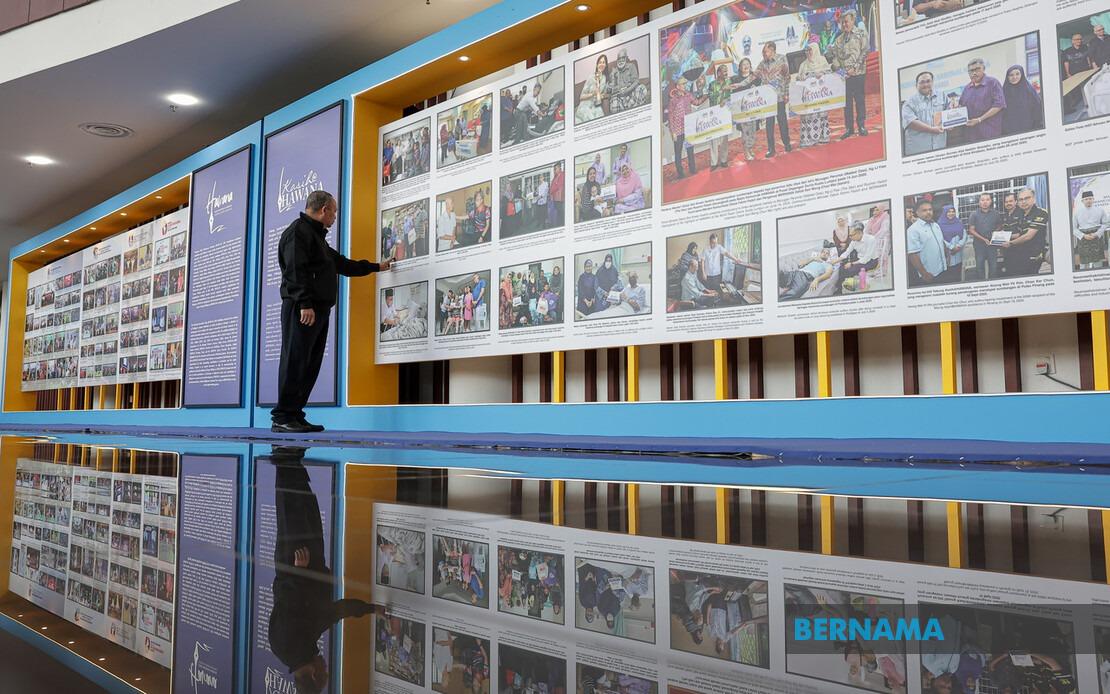
The National Journalists' Day (HAWANA) 2026 celebration taking place in Butterworth, Penang is establishing itself as a critical gathering for the Malaysian media industry, with a comprehensive slate of programmes designed to elevate professional standards and tackle emerging sector challenges. Anchored by the overarching theme of "Media Integrity, Foundation of Credibility," the event represents a significant moment for the nation's journalism community to collectively examine its trajectory and responsibilities in an increasingly complex information ecosystem.
Leading up to the main ceremony scheduled for tomorrow, the Penang venue has hosted a series of substantive forums that reflect the profession's evolving concerns. The Malaysia Media Retreat 2.0, organised by the Malaysian Federation of Media Clubs (GKMM), assembled journalists from 15 media organisations nationwide, creating a rare opportunity for cross-industry dialogue and collaboration. This gathering holds particular significance as it coincides with an assessment of GKMM's development and institutional growth since its formal establishment in October 2022, marking nearly four years of consolidating media clubs under a unified organisational structure.
According to Mohamad Fauzi Ishak, president of GKMM, the retreat serves multiple strategic purposes beyond surface-level networking. It functions as a genuine mechanism for strengthening professional bonds across traditionally competitive news organisations, while simultaneously providing a platform for the federation to evaluate its trajectory and organisational achievements. The gathering also precedes GKMM's third annual general meeting, a procedural milestone notable for proceeding without an election component, suggesting a degree of organisational stability and continuity in leadership among Malaysia's media club network.
The retreat was officiated by Communications Minister Datuk Fahmi Fadzil and included participation from senior editorial figures including Bernama Chief Executive Officer Datin Paduka Nur-ul Afida Kamaludin and Editor-in-Chief Arul Rajoo Durar Raj. The presence of ministerial support underscores the government's acknowledgement of journalism's institutional importance to Malaysia's democratic and information infrastructure, signalling official recognition that professional media development warrants high-level political engagement and resources.
Parallel to the retreat, the Malaysian Press Institute (MPI) convened a town hall session at Han Chiang University College of Communication (HCUC) titled "2035: Will Journalists Still Exist?" This provocatively framed discussion directly confronted one of the profession's most pressing anxieties—the potential obsolescence of traditional journalism roles in an era dominated by artificial intelligence, rapid digitalisation, and fundamental shifts in how audiences consume news. Rather than avoiding difficult questions, the industry appears committed to confronting these structural transformations head-on.
The town hall featured MPI president Datuk Yong Soo Heong alongside prominent editorial voices including Farrah Naz Abd Karim, deputy group managing editor for News and Current Affairs at New Straits Times Press (NSTP), and Azhari Muhidin, representing Media Prima's news operations. The participation of these high-ranking editorial figures demonstrates that this conversation about journalism's future is not marginal but sits at the heart of how major Malaysian news organisations are strategically positioning themselves for the next decade.
Scheduled for tomorrow alongside the main ceremony, the Malaysian Media Council (MMC) will facilitate additional engagement sessions and networking opportunities specifically targeting journalists from the northern region. This regional focus acknowledges the distinct characteristics and challenges of media ecosystems outside Kuala Lumpur, recognising that press infrastructure and professional concerns vary considerably across different parts of Malaysia. Such inclusive programming suggests an institutional commitment to representing the entire national media landscape rather than concentrating attention on the capital.
The centrepiece of HAWANA 2026 will be the official ceremony presided over by Prime Minister Datuk Seri Anwar Ibrahim at PICCA @ Butterworth Arena, drawing approximately 1,000 media practitioners from domestic and international organisations. This scale of attendance indicates that HAWANA has established itself as Malaysia's premier platform for acknowledging media contributions and professionalising the journalism sector at the national level. The event's positioning as the highest recognition platform for media professionalism gives weight to the conversations and decisions made during the festival's duration.
The Communications Ministry, implementing the event through Bernama, has structured HAWANA 2026 as a comprehensive celebration of journalism as an essential institutional practice. The chosen theme of media integrity as the foundation of credibility addresses a fundamental challenge facing news industries globally—rebuilding and maintaining public trust in journalistic institutions amid waves of misinformation, disinformation, and declining audience confidence in traditional media. By foregrounding integrity, the event acknowledges that technical competence and ethical standards remain journalism's core professional assets.
Accompanying the formal proceedings is the three-day RIUH @ HAWANA Carnival at the PICCA Convention Centre, which commenced today. This carnival component suggests an effort to make HAWANA accessible and engaging beyond industry professionals, incorporating entertainment and educational elements that might appeal to broader audiences and potentially cultivate public appreciation for journalism's societal role. The carnival format transforms what might otherwise be a purely professional gathering into a public-facing celebration of media culture.
For Malaysian journalists and media organisations, HAWANA 2026 arrives at a moment of significant professional introspection. The combination of established industry associations reassessing their institutional trajectories, substantive forums examining artificial intelligence's implications for journalism roles, and high-level political endorsement suggests the sector is moving beyond reactive crisis management toward more proactive strategic planning. Whether the outcomes will translate into concrete structural changes, investment in digital transformation, or revitalised commitments to investigative journalism and public-interest reporting remains to be seen, but the seriousness with which the industry is convening around these questions indicates genuine concern about journalism's future relevance and viability in Malaysia.
%22%2F%3E%3C%2Fpattern%3E%3C%2Fdefs%3E%3Crect%20width%3D%22100%25%22%20height%3D%22100%25%22%20fill%3D%22url(%23ph4fp9sg)%22%2F%3E%3Crect%20width%3D%22100%25%22%20height%3D%22100%25%22%20fill%3D%22url(%23ph4fp9sp)%22%2F%3E%3Ctext%20x%3D%2250%25%22%20y%3D%2250%25%22%20text-anchor%3D%22middle%22%20dominant-baseline%3D%22central%22%20fill%3D%22rgba(255%2C255%2C255%2C0.95)%22%20font-family%3D%22Georgia%2C%20'Times%20New%20Roman'%2C%20serif%22%20font-weight%3D%22700%22%20font-size%3D%22320%22%20letter-spacing%3D%22-0.02em%22%3EKTMB%3C%2Ftext%3E%3C%2Fsvg%3E)