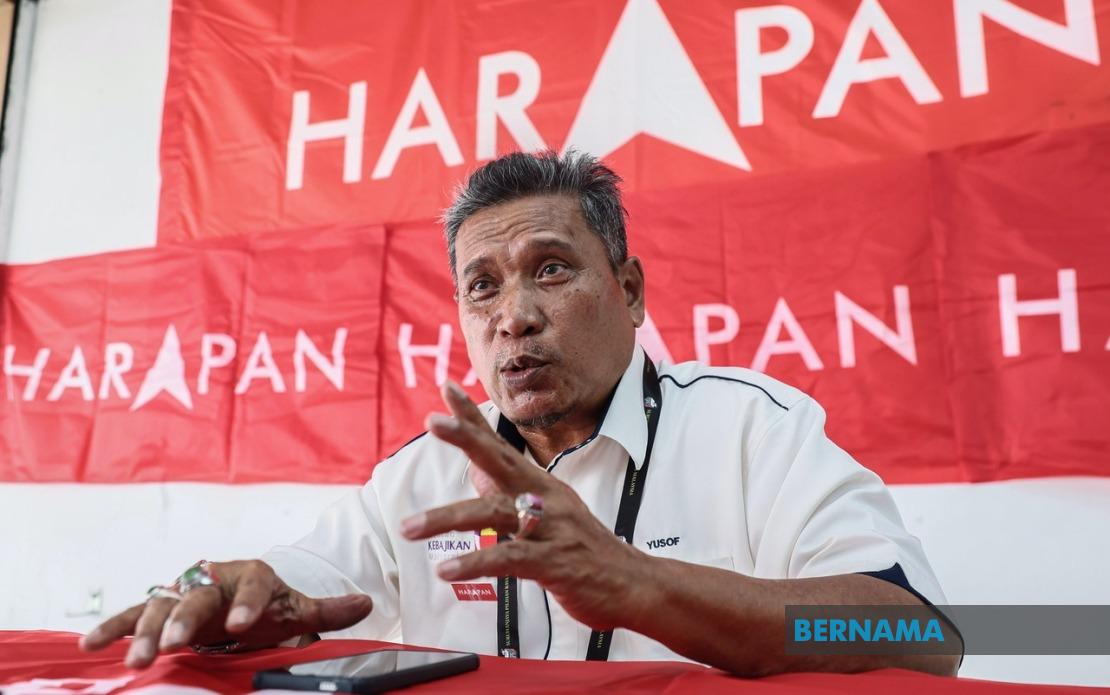
Tenggaroh's Pakatan Harapan candidate Md Yusof Dawam has positioned housing for the next generation of Felda settlers and economic revitalisation as the centrepieces of his campaign strategy ahead of the 16th Johor state election. Speaking during a campaign visit to Mersing, the 64-year-old retired educator articulated a comprehensive vision that goes beyond traditional rural development rhetoric, instead targeting the structural challenges that have prompted young residents to seek opportunities in urban centres.
The core of Md Yusof's platform addresses a crisis quietly unfolding across Malaysia's Felda schemes: the inability of second-generation settlers to establish themselves within their communities. He described a systematic failure of planning that has forced adult children to remain in their parents' homes despite limited economic prospects, effectively trapping them within a demographic spiral that threatens the long-term viability of these settlements. This phenomenon represents a critical policy gap, as Felda communities were originally conceived as intergenerational assets designed to provide economic security across generations.
Md Yusof's proposal centres on designating 10 to 20 acres within the Tenggaroh Felda scheme for planned second-generation settlements, a modest intervention that nonetheless signals recognition of how inadequate planning has compounded rural-to-urban migration. His framing transcends mere housing provision, positioning such development as essential infrastructure for preserving family-owned oil palm plantations as productive assets. Without a mechanism enabling the next generation to remain and invest in their family enterprises, he suggests, these holdings risk either deterioration or acquisition by external entities—outcomes that would fundamentally alter Felda's character as a settler-based institution.
Beyond housing, Md Yusof has identified the retail sector as another domain frozen in time, with commercial infrastructure in Tenggaroh essentially unchanged since the 1980s. His proposal to modernise the retail landscape through systematic land grants for contemporary business premises reflects an understanding that physical environment shapes economic vitality. The 70-kilometre distance from Tenggaroh to Mersing town currently forces residents to seek basic services and conveniences elsewhere, draining local purchasing power and discouraging entrepreneurial activity. By creating a functional "small town" commercial hub within the scheme, he argues, economic circulation can be kept within the community rather than leaking outward.
Tourism represents a third pillar of his economic strategy, with particular emphasis on Mersing's island attractions. Pulau Besar, Pulau Tinggi, and Pulau Aur have emerged as sought-after filming locations for international production companies, yet this economic opportunity remains largely unexploited by local residents. Md Yusof identifies a crucial gap: while foreign entities derive value from these locations, the absence of locally-operated tourism and maritime transport businesses prevents wealth generation at the community level. This mismatch between external commercial interest and local participation exemplifies how resource-rich regions can remain economically marginalised without appropriate institutional frameworks.
The candidate's background substantially informs his platform. With 16 years of service as an educator in Felda Nitar and four decades of residency in the Mersing area, Md Yusof represents the educated professional class that emerged from Felda communities. His career trajectory reflects both the opportunities that early Felda development created and the limited economic diversification that has subsequently constrained growth. This positioning allows him to speak with credibility about challenges facing settler communities, as his lived experience encompasses the aspirations and constraints facing multiple generations.
Campaign methodology further underscores Md Yusof's approach. Rather than pursuing conventional mass rallies, he has adopted intimate small-group meetings designed to generate genuine dialogue about community aspirations. This "personal touch" strategy reflects confidence in direct engagement and potentially signals a departure from more formulaic political outreach. For rural constituencies where personal relationships and trust remain pivotal, such methodology may resonate more effectively than centrally-coordinated messaging.
Md Yusof's platform arrives at a significant juncture for Felda settlements across Malaysia. These schemes, once flagship poverty-alleviation initiatives, have grappled for decades with economic stagnation, demographic pressure, and limited sectoral diversification. Many schemes remain economically dependent on commodities subject to volatile global pricing, rendering residents vulnerable to market shocks. The migration of young people to urban centres accelerates social decline, as communities lose productive workers and human capital while ageing populations become increasingly dependent on limited services.
The Tenggaroh vision, if genuinely implemented, could establish precedents applicable across Felda constituencies. Second-generation housing schemes, modernised commercial infrastructure, and tourism development frameworks all represent replicable interventions that directly address documented challenges. However, these initiatives would require sustained political commitment, adequate budgetary allocation, and coordination with state and federal agencies responsible for land administration and economic development. Equally important, such programmes would need regular evaluation to ensure they deliver intended community benefits rather than creating new layers of bureaucratic inefficiency.
The competitive landscape in Johor comprises 172 candidates across 56 state seats, reflecting intense political contestation in a state traditionally significant for national political dynamics. Tenggaroh's specific contest will partly reflect broader calculations about Felda constituencies as a voting bloc, as these settlements have demonstrated capacity to shift political allegiances based on perceived government responsiveness to material concerns. Md Yusof's emphasis on tangible economic initiatives rather than abstract political messaging reflects understanding of these dynamics.
Looking ahead, the polling scheduled for July 11 will determine whether Tenggaroh voters endorse Md Yusof's platform. Beyond this individual contest, his articulated vision represents broader questions about rural development strategy in Malaysia. As urban-rural disparities widen and younger rural residents increasingly perceive limited futures in their communities, political platforms addressing structural economic challenges through concrete institutional reform may prove more resonant than conventional patronage-based appeals. The Tenggaroh campaign thus offers a microcosm through which to examine evolving rural political consciousness and voter expectations regarding governmental economic responsiveness.

