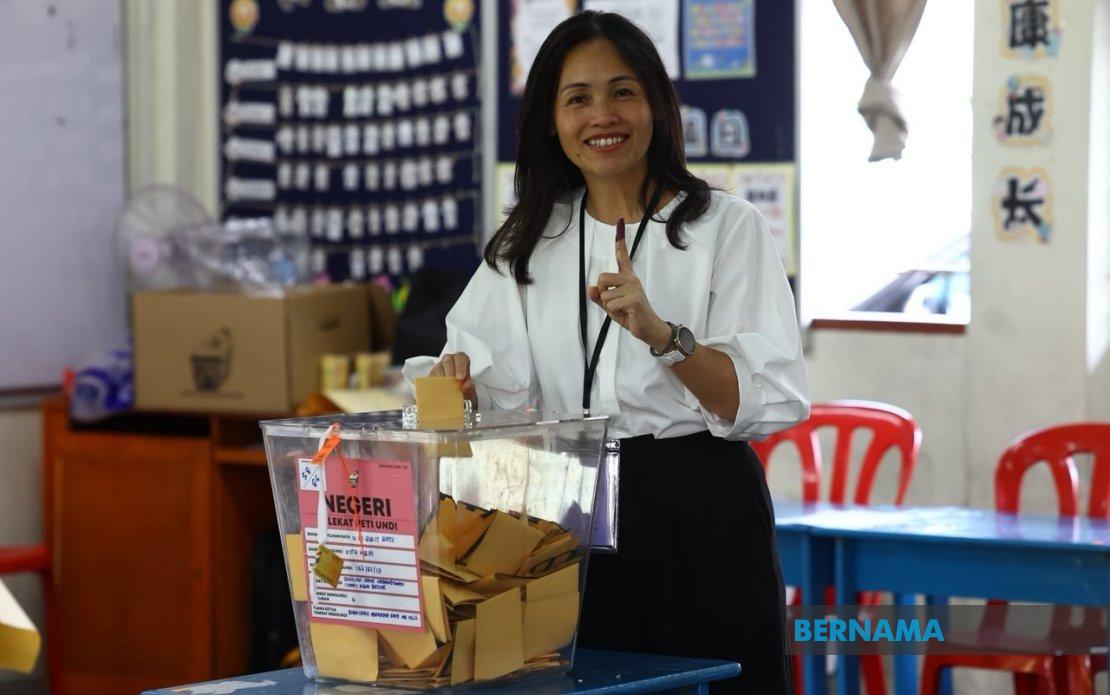
The Malaysian Communications and Multimedia Commission documented a relatively modest volume of problematic online content during the campaign for the 16th Johor state election, according to Deputy Communications Minister Teo Nie Ching. Speaking after casting her ballot in Kulai on July 11, Teo disclosed that the MCMC had fielded 29 grievances spanning fake news, hate speech and various scams circulated across digital platforms throughout the polling period.
The breakdown of these complaints reveals the varied nature of online misconduct during the election cycle. Seventeen reports targeted the spread of unverified or deliberately false information, constituting the largest category of violations. Eleven separate complaints addressed hate speech content, while a single report documented instances of fake account creation and impersonation of legitimate users or public figures. This distribution underscores the multifaceted challenge authorities face in maintaining a clean electoral information environment as campaigns increasingly shift online.
Within the hate speech category, a significant proportion touched on sensitive societal fault lines. Nine of the eleven hate speech complaints centred on racial issues, reflecting persistent tensions that periodically surface during high-stakes political contests. Two remaining cases divided evenly between religious content and messaging touching on the institution of the monarchy, together classified under the regulatory framework governing 3R violations—race, religion and royalty. This classification system represents Malaysia's established approach to protecting national cohesion during periods when public discourse intensifies.
Teo's remarks underscored the necessity for citizens to develop stronger critical thinking skills when encountering online political messaging. She appealed directly to the public, particularly those exercising voting rights, to exercise heightened vigilance against unverified claims and to resist the persuasive pull of deliberately misleading narratives or inflammatory statements. The deputy minister's exhortation moved beyond mere complaint statistics to address the underlying vulnerability that allows falsehoods and divisive content to gain traction during elections.
The appeal for digital literacy takes on particular significance in the Malaysian context, where internet penetration has created a vast new arena for political mobilization yet significant segments of the population lack training in identifying misinformation. Teo positioned media literacy not merely as an individual responsibility but as a prerequisite for sound democratic participation. Her framing suggests that voters equipped with critical skills can navigate the information landscape more effectively and make electoral choices based on substantive policy considerations rather than emotional manipulation or false claims.
As Kulai's Member of Parliament in addition to her ministerial role, Teo also extended gratitude to polling personnel charged with administering the election across Johor. This acknowledgment reflected appreciation for the logistical and administrative machinery required to conduct democratic exercises smoothly, a component of electoral integrity that operates somewhat independently from the content regulation dimension she had just addressed. The smooth execution of voting procedures represents a separate but complementary pillar of electoral credibility.
The 16th Johor state election encompassed a substantial democratic exercise, with 172 candidates competing for representation across 56 State Legislative Assembly seats. The contest mobilized voter participation from a registered electorate exceeding 2.6 million individuals. The scale of the election meant that regulatory agencies like the MCMC operated within a high-stakes environment where the volume and velocity of online content could significantly influence public perception and voter sentiment.
From a regional perspective, Johor's election experience provides insight into how Southeast Asian democracies grapple with online disinformation during polling periods. The relatively contained number of complaints—29 across an entire state campaign spanning millions of voters—might suggest either effective deterrence, limited reporting of violations, or that most online political discourse remained within acceptable parameters. Malaysia's regulatory approach, implemented through the MCMC with guidance from communications ministers, sits within a broader spectrum of regional responses to election-related digital content, ranging from stricter monitoring in some jurisdictions to more permissive frameworks elsewhere.
The categorization of complaints illuminates the specific vulnerabilities of Malaysian electoral discourse. The concentration of hate speech complaints on racial matters reflects historical sensitivities enshrined in constitutional provisions protecting interethnic relations. The presence of 3R-related complaints indicates that regulatory frameworks remain vigilant about content touching the monarchy and religious institutions, even during political campaigns where normal competitive tensions might be elevated. These priorities reveal official priorities regarding which forms of online expression pose the greatest threat to national cohesion.
Looking forward, Teo's emphasis on voter digital literacy suggests that regulatory authorities recognize limits to top-down content moderation. Rather than relying exclusively on complaint mechanisms and regulator interventions, the communications ministry appears to favour building resilience among citizens themselves. This approach acknowledges that no regulatory apparatus can catch all problematic content in real time, particularly given the volume and variety of information circulating through encrypted messaging applications and closed social media groups that fall partially outside formal oversight. Consequently, empowering voters to recognize manipulation attempts addresses a structural gap in regulation-only strategies.
The election results and subsequent analysis may reveal whether the 29 documented complaints represented the full scope of problematic online content or whether significant violations escaped formal reporting. Voters' subjective experience of the information environment during the campaign might diverge from the official complaint tally. Nevertheless, the MCMC's documentation provides a concrete benchmark for assessing online electoral conduct in Johor and contributes to an emerging data foundation for understanding disinformation patterns across Malaysian elections.

