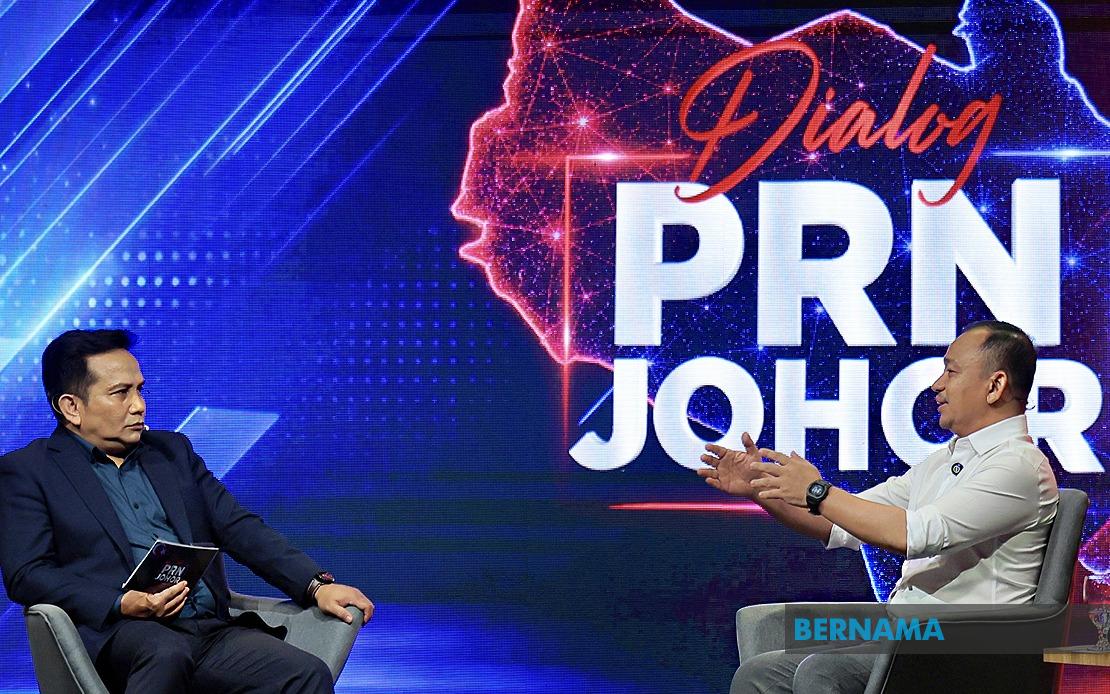
Dr Maszlee Malik, the Pakatan Harapan candidate contesting the Puteri Wangsa state seat, has expressed optimism that public dialogue initiatives can catalyse a cultural shift towards more substantive political discourse in Malaysia. Speaking in Johor Bahru following a televised election forum, the former education minister outlined his vision for an electorate that exercises voting choices based on rational evaluation rather than emotional appeals, signalling a broader concern among political leaders about the tenor of contemporary Malaysian politics.
The dialogue session, which drew participation from Communications Minister Datuk Fahmi Fadzil and took place at the Permata Sari Auditorium under the Johor State Broadcasting Department, represented a collaborative effort by RTM, Astro AWANI, and Sinar Harian to create structured platforms for electoral engagement. Such initiatives reflect an acknowledgment across Malaysia's political spectrum that the quality of public debate directly influences voter decision-making and ultimately shapes governance outcomes. For voters in Malaysia, where information consumption patterns remain fragmented across traditional and digital channels, these forums serve as crucial touchpoints for evaluating candidate platforms.
Maszlee's emphasis on evidence-based political culture addresses a persistent challenge in Southeast Asian democracies, where populist messaging and identity-based appeals frequently overshadow policy substance. By advocating for discourse grounded in "arguments, facts and evidence," he articulates a position increasingly shared by reformist elements within both government and opposition coalitions. This positioning becomes particularly significant during state elections, which often function as barometers for national political sentiment and serve as testing grounds for campaign strategies subsequently deployed at federal level.
The timing of these remarks during the final weeks of the Johor campaign underscores the strategic importance Pakatan Harapan assigns to voter engagement quality. With polling day set for July 11 and early voting having commenced, the party's operational focus has shifted towards maximizing turnout, particularly among out-of-town voters. Maszlee articulated this clearly, emphasizing that elevated voter participation yields stronger democratic legitimacy for whichever administration emerges victorious. This calculation reflects a broader understanding that electoral mandates derive not merely from vote share but from the proportion of the eligible population actively participating in the democratic process.
The mechanics of voter mobilisation during the Johor election reveal operational sophistication within Malaysian party structures. Encouraging geographically dispersed voters to return for in-person voting, rather than relying on postal ballot mechanisms, suggests campaign strategists believe direct voting presence generates momentum and signals voter commitment. For Malaysian observers familiar with urban-rural political divides, such initiatives highlight parties' recognition that participation patterns themselves constitute meaningful data about electoral health and campaign effectiveness.
The dialogue framework adopted during this election cycle reflects international trends toward deliberative democracy practices, wherein voters engage with candidates across structured formats rather than through fragmented social media encounters. Communications Minister Fahmi Fadzil's participation signals government endorsement of this approach, positioning the ruling coalition as committed to institutionalizing political discourse quality. This positioning holds particular importance given the controversial nature of Malaysian politics during the preceding decade, when questions about electoral integrity, political funding transparency, and campaign ethics generated substantial public scepticism.
Maszlee's reference to cultivating "a culture of dialogue" extends beyond immediate electoral considerations to address longer-term democratic development. Malaysian political culture has historically oscillated between confrontational positioning and collaborative engagement, influenced by shifting coalition dynamics and electoral outcomes. By framing dialogue as foundational to voter maturity, Maszlee implicitly critiques previous campaign cycles that prioritized rhetorical aggressiveness over substantive policy differentiation. Such framing resonates particularly with urban, educated voters increasingly drawn to candidates offering sophisticated policy alternatives.
The governance implications of successfully elevating political discourse merit consideration for Malaysian policymakers. States and federal governments that emerge from elections featuring robust public dialogue often experience shorter honeymoon periods but more durable legislative support, as constituencies possess clearer expectations regarding implementation of articulated commitments. Conversely, elections dominated by emotional appeals frequently generate disappointed constituencies when elected officials confront resource constraints and competing priorities that campaign rhetoric overlooked.
For the broader Southeast Asian region, Malaysia's ongoing evolution toward more deliberative electoral practices carries significance beyond its borders. As democracies across the region navigate tensions between populist pressures and institutional reform, Malaysia's experience with dialogue initiatives provides instructive precedent. The Johor election, occurring within Malaysia's federal system where state governments retain substantial policy autonomy, offers a particularly relevant case study for neighboring countries evaluating deliberative democracy mechanisms.
The structural support from broadcast media organizations represents a notable development warranting analysis. RTM, Astro AWANI, and Sinar Harian collectively reach diverse Malaysian audiences across socioeconomic and geographic segments. Their coordination in hosting election dialogues suggests media sector recognition that information quality during electoral periods carries democratic significance. This stands in contrast to historical patterns wherein Malaysian media institutions approached electoral coverage with considerable caution regarding editorial positioning.
As the Johor campaign enters its final phase, Maszlee's emphasis on voter-focused dialogue establishes a template potentially applicable to future state and federal elections. Whether Malaysian voters ultimately reward candidates emphasizing evidence-based discourse with electoral support remains an open question, but the structural availability of such platforms itself represents measurable democratic progress. The outcomes of the July 11 polling will provide empirical data regarding voter responsiveness to this approach, offering insights into broader Malaysian electoral evolution.

