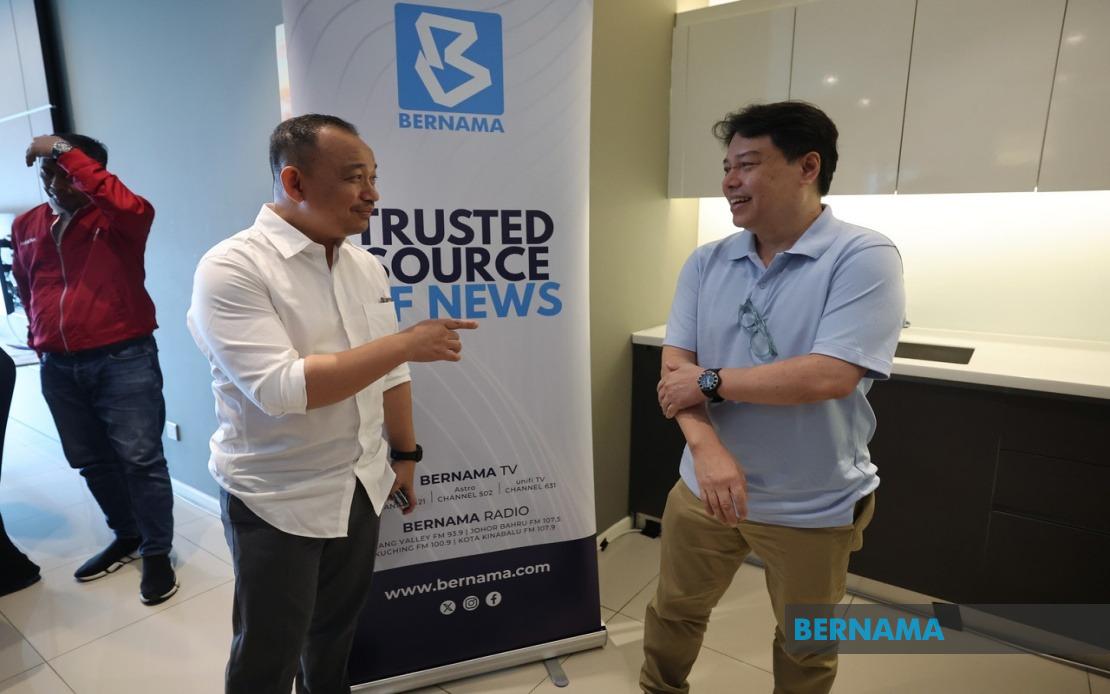
Pakatan Harapan candidate Dr Maszlee Malik responded to an unusual challenge from social media users in Johor Bahru by taking the wheel of a Perodua Myvi to traverse the notoriously problematic routes between Kampung Melayu Tebrau and Ulu Tiram. The exercise, undertaken ahead of the Johor state election on July 11, was designed to give the former education minister direct exposure to the infrastructure grievances that have accumulated in the constituency over years of rapid urbanisation without corresponding infrastructure investment.
The challenge itself carries symbolic weight in Malaysian electoral politics, where candidates increasingly find themselves held accountable through grassroots social media campaigns rather than traditional campaign structures. By accepting this test, Maszlee demonstrated a willingness to engage with voter frustrations through unconventional means, though critics might view it as performative engagement rather than substantive commitment. The choice of the Perodua Myvi, a vehicle with a colloquial reputation as the "King of the Road", suggested netizens selected a car expected to handle rough terrain well, implying that if even a Myvi struggles, the road conditions must be severe.
During the drive, Maszlee encountered precisely the conditions residents had documented online. The uneven road surfaces caused vehicles to bounce and sway dramatically, while traffic congestion—particularly acute during peak hours—created bottlenecks at several points including Taman Daya, Taman Pelangi Indah, and multiple locations around Tebrau. His description of the experience as akin to "riding a boat in Tanjung Surat" or travelling in a traditional wooden boat captured the visceral frustration residents experience during routine commutes. The vivid analogy suggests Maszlee recognised not merely that roads are damaged, but that the cumulative effect on daily life has become genuinely unbearable.
The infrastructure crisis confronting Puteri Wangsa reflects a broader Southeast Asian challenge: rapid urban development that outpaces planning capacity. The constituency houses 128,723 registered voters across areas that have experienced explosive residential and commercial expansion, yet the underlying road network largely predates this growth surge. Maszlee attributed congestion patterns specifically to developments in Taman Daya, Taman Pelangi Indah, and surrounding zones that were not accompanied by proportionate expansion of transport infrastructure. This mismatch between development intensity and road capacity creates a feedback loop where congestion worsens, property values fluctuate unpredictably, and resident satisfaction erodes.
Maszlee's proposed solution emphasises coordination between multiple government agencies, specifically naming the Public Works Department (JKR) as a critical partner. This acknowledgment reflects understanding that road problems rarely stem from single-agency failure but rather from fragmented responsibilities across federal works departments, state planning authorities, and municipal bodies. In the Malaysian context, where jurisdictional boundaries sometimes obscure accountability, a candidate's explicit recognition that cross-agency collaboration is necessary signals either genuine sophistication or savvy political messaging. His emphasis on "long-term planning" and "active engagement with the local community" suggests awareness that quick fixes are unlikely and that sustainable solutions demand sustained commitment beyond campaign season.
The Puteri Wangsa seat itself presents a complex electoral puzzle, with five candidates competing in what polling analysts expect to be a closely contested race. Beyond Maszlee, the field includes Rashifa Aljunied representing the newer opposition movement MUDA, Teow Chia Ling from the Barisan Nasional coalition, Nicholas Paul Vincent of Parti Bersama Malaysia, and independent candidate Wang Wee Siong. This fragmentation means that road infrastructure—a tangible, constituency-specific issue affecting daily life—could prove decisive for swing voters. Unlike abstract policy differences, residents can directly assess whether their roads have improved or deteriorated under respective administrations.
Maszlee's background as a former Member of Parliament for Simpang Renggam and brief tenure as education minister provides both advantages and potential vulnerabilities. His ministerial experience suggests capability to navigate bureaucratic processes and manage large-scale initiatives, yet his previous electoral defeat and cabinet removal during the 2020 government transition may suggest to some voters a lack of sustained political viability. By grounding his campaign in tangible local grievances rather than national political narratives, he attempts to reset his political relevance at the state level where municipal infrastructure directly touches voters' daily routines.
The timing of this challenge, occurring during the official campaign period shortly before polling on July 11, indicates Maszlee's campaign strategy prioritises visibility and direct engagement over traditional advertising. Early voting scheduled for July 7 means that persuadable voters are actively making electoral decisions even as candidates conduct final outreach. A candidate driving a Myvi along infamous pot-holed streets generates organic social media discussion, multiplying message reach beyond paid media budgets. Whether this translates to actual electoral support depends on whether voters perceive genuine commitment or merely campaign theatre.
For Malaysian voters monitoring the Johor election, the Puteri Wangsa contest exemplifies how infrastructure governance intersects with electoral outcomes. The Johor state government's role in coordinating with federal authorities on road development and traffic management will face scrutiny, particularly from constituencies where congestion has become chronic. Winning candidates will inherit constituencies where residents have explicitly documented grievances and demonstrated willingness to hold representatives accountable through social media mobilisation. The challenge Maszlee accepted suggests future Malaysian electoral campaigns may increasingly feature candidates confronting voter-identified problems in visceral, documented ways rather than relying solely on policy announcements.
The broader implication for Malaysian electoral politics extends beyond Johor. As digital connectivity enables rapid documentation and sharing of infrastructure failures, candidates increasingly cannot dismiss local complaints as isolated or exaggerated. A potholed road photographed, tagged with location data, and circulated widely becomes a campaign issue that demands public acknowledgment. Maszlee's acceptance of the Myvi challenge recognises this political reality: in an age where residents conduct their own fact-checking through lived experience shared online, candidates must demonstrate willingness to verify claims personally rather than dismissing them from air-conditioned offices.

