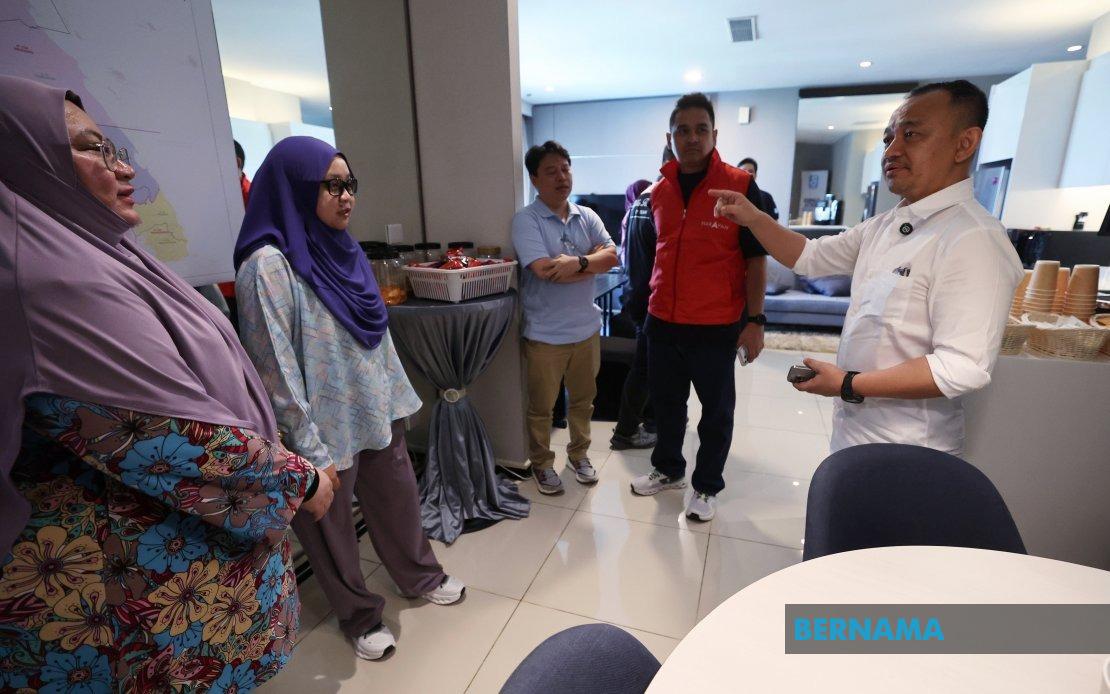
As the Johor state election enters its final stretch, Pakatan Harapan's candidate for Puteri Wangsa, Dr Maszlee Malik, is positioning himself as a technologically savvy representative committed to modernising how local elected officials interact with residents. His proposal centres on launching a dedicated mobile application designed to facilitate direct reporting of neighbourhood grievances and enable residents to lodge formal complaints without navigating traditional bureaucratic channels.
The strategic importance of this pledge becomes clear when examining Puteri Wangsa's characteristics. The constituency encompasses a remarkably heterogeneous population spread across a substantial geographic footprint, encompassing both privileged enclaves such as Austin Heights and rural Felda Ulu Tebrau settlements. This demographic and spatial diversity presents a genuine challenge for conventional door-to-door campaigning and traditional town-hall formats, which may inadvertently favour certain voter groups while excluding others. Maszlee's technology-centred approach directly addresses this structural limitation, recognising that no single engagement method can effectively serve the full spectrum of constituents.
Beyond serving as a communication tool, the proposed application would function as a data-gathering instrument for identifying populations facing systemic disadvantages. Single mothers and persons with disabilities frequently qualify for assistance programmes yet fail to access them due to information gaps, complicated application procedures, or simple unawareness of entitlements. By centralising complaint and request submissions through a user-friendly interface, Maszlee argues the application could surface overlooked vulnerable groups and flag eligibility gaps within government service delivery structures.
The intellectual foundations for this proposal draw partly from international experience. Maszlee has cited New York City Mayor Zohran Mamdani's community engagement methodology as a source of inspiration, specifically Mamdani's deployment of digital platforms combined with social media channels to harvest constituent feedback organically. This international reference suggests Maszlee's team has conducted deliberate research into comparative governance models rather than operating within purely local frameworks, potentially signalling a more sophisticated approach to technological integration than rival campaigns might offer.
However, Maszlee has been careful to present the mobile application not as a silver bullet but as one component within a broader constituent-service architecture. His campaign roadmap encompasses sustained partnerships with community-based organisations, residential associations, and government agencies across multiple tiers. Periodic town-hall gatherings would complement digital channels, ensuring that residents without smartphone access or digital literacy face no barriers to participation. This layered strategy acknowledges that technological solutions, however well-designed, cannot entirely displace face-to-face democracy in culturally and socioeconomically diverse constituencies.
A particularly astute dimension of Maszlee's campaign strategy addresses the limitations and peculiarities of social media as a political medium. Algorithmic filtering and echo-chamber effects can inadvertently restrict message reach to already-sympathetic audiences, potentially creating self-reinforcing constituencies that lack breadth. Rather than accepting these constraints passively, his campaign deliberately tailors messaging across multiple dimensions. Content is customised for distinct geographic localities, crafted with sensitivity to varying socioeconomic statuses, and calibrated for ethnic and demographic specificity.
The targeted demographic universe includes Generation Z voters, Malaysians employed in Singapore who retain voting eligibility in Johor, professionals with limited availability for conventional campaign engagement, and residents in non-urban areas. The Singapore-based Malaysian workforce represents a particularly significant constituency segment—geographically dispersed, temporally constrained, and traditionally underserved by conventional political outreach. By leveraging social media's asynchronous communication properties, Maszlee's campaign can reach these workers during morning commutes, lunch breaks, or evening downtime when personal meet-and-greets prove impractical.
The Chinese community within the Singapore-Malaysian worker population receives special campaign attention, reflecting both demographic significance and strategic calculation. Chinese voters across Johor have demonstrated shifting allegiances across recent electoral cycles, creating genuine competitive opportunity rather than safe demographic terrain. This granular approach to messaging differentiation—rather than broadcasting identical content universally—presupposes detailed voter intelligence about which issues resonate across community lines and how messaging must be adjusted to address authentic concerns rather than relying on stereotyped assumptions.
Maszlee's campaign strategy implicitly critiques the homogenising tendencies of mass-broadcast political communication. Different communities possess demonstrably different priorities shaped by their lived experiences, economic circumstances, and historical contexts. Urban professionals concerned with transport and housing affordability face fundamentally distinct challenges from rural dwellers preoccupied with agricultural market access and rural infrastructure. Felda residents navigate distinct institutional relationships compared to residents of planned suburban developments. Rather than treating these differences as obstacles to unified messaging, Maszlee's approach positions differentiated communication as essential democratic practice.
The Puteri Wangsa contest itself reflects broader competitive dynamics reshaping Johor politics. The five-candidate field includes Rashifa Aljunied representing the Malaysian United Democratic Alliance (MUDA), Teow Chia Ling from the Barisan Nasional establishment coalition, Nicholas Paul Vincent of Parti Bersama Malaysia, and independent candidate Wang Wee Siong. This fragmented candidate field suggests neither incumbent nor challenger possesses commanding local dominance, creating genuine openness about electoral outcomes. In such competitive circumstances, campaign sophistication and voter engagement innovation may determine margins.
The July 11 polling date and July 7 early voting schedule compress the remaining campaign timeline substantially. For candidates like Maszlee, rapid scaling of digital infrastructure becomes urgent. Mobile application development, content creation across multiple platforms, and demographic targeting all require accelerated execution compared to typical campaign timelines. The campaign's readiness to deploy technological solutions before polling day will partly determine whether the digital strategy functions as genuine competitive advantage or remains aspirational proposal.
For Malaysian voters increasingly distributed across geographic boundaries and economic positions, Maszlee's emphasis on technology-enabled constituent service represents a significant departure from traditional political engagement models. Whether this approach successfully bridges the communication divides inherent in diverse constituencies will carry implications extending beyond Puteri Wangsa. As Malaysian politics continues evolving alongside digital adoption patterns, early implementations of technology-centred governance models may establish templates that rival campaigns and future representatives examine and potentially replicate across other constituencies.

