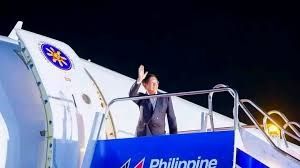
Philippine President Ferdinand R. Marcos Jr departed Manila late Tuesday evening bound for Kazan, Russia, to represent Southeast Asia at a historic summit celebrating three and a half decades of regional partnership with Moscow. The presidential delegation took off from Villamor Airbase in Pasay City shortly after 11:55 pm, embarking on a journey that, despite consuming 26 hours of travel time, would keep the President in Russia for roughly 38 hours. The visit carries added significance beyond the diplomatic calendar, marking not only the 35th anniversary of Asean-Russia relations but also coinciding with the Philippines and Russia's golden anniversary of formal diplomatic ties, which were established on June 2, 1976.
Presidente Marcos framed the summit as a pivotal moment for Southeast Asia to deepen its strategic engagement with Russia at a time when regional leaders are increasingly navigating complex geopolitical realities. Speaking before his departure, the President emphasised that his participation as chair of the Association of Southeast Asian Nations would position the bloc to produce substantive outcomes that reinforce its partnership with Moscow while simultaneously reinforcing Asean's commitment to regional stability and collective prosperity. This diplomatic exercise comes against a backdrop of heightened global tensions that have exposed vulnerabilities in energy markets and food supply chains, issues that resonate acutely across Southeast Asia where vulnerability to external shocks remains a persistent challenge.
The Asean-Russia Commemorative Summit, scheduled for June 17 and 18 in Kazan, represents a formal stocktaking of cooperation spanning three decades. The gathering will see regional leaders and Russian President Vladimir Putin engage in substantive discussions covering multiple dimensions of bilateral and multilateral relations. Anticipated topics span peace and security arrangements, trade and investment frameworks, food security and energy cooperation, scientific and technological collaboration, digital transformation initiatives, educational partnerships, tourism promotion, and cultural exchanges between peoples. This broad agenda reflects the complexity of modern regional relationships and the expectation that partnerships must address not only traditional security concerns but also contemporary challenges affecting economic resilience and citizen welfare.
On the margins of the summit, Marcos will hold separate bilateral discussions with Putin, conversations that will concentrate on areas of mutual strategic interest. Energy security and food security have been identified as focal points for these talks, reflecting both nations' recognition that these sectors directly impact development trajectories and citizen stability. For the Philippines, this emphasis is particularly meaningful given its island geography and dependence on maritime trade routes for essential imports. The conversations will occur against the backdrop of ongoing global supply chain disruptions and geopolitical tensions that have kept commodity markets volatile and prices elevated, creating economic headwinds for developing economies throughout Southeast Asia.
The Philippines' stewardship of the Asean chair positions Manila at the centre of regional diplomacy during a period of significant geopolitical recalibration. Under the chairmanship theme "Navigating Our Future, Together," the Philippines has committed to championing Asean unity, centrality, and solidarity while promoting an open, inclusive, and rules-based regional architecture grounded in international law. This positioning reflects a careful balancing act, as Southeast Asian nations attempt to maintain productive relationships across the geopolitical spectrum while protecting their strategic autonomy and insisting on adherence to international legal principles. The Kazan summit provides an opportunity to articulate these principles clearly while simultaneously demonstrating practical commitment to substantive cooperation with Russia.
For Malaysian observers and policymakers, the summit's outcomes merit close attention. Southeast Asia's ability to maintain constructive engagement with major powers while preserving internal cohesion represents a fundamental challenge to the region's security architecture. The summit documents expected to emerge from Kazan will signal whether Asean can deepen partnerships with Russia without creating divisions within the bloc or appearing to take sides in broader strategic competitions. Malaysia, as a fellow Asean member with its own Russia connections and long-standing policies of pragmatic engagement, will be watching closely how the Philippines manages this diplomatic balancing act and what precedents get established for future major-power engagement.
First Lady Liza Araneta-Marcos underscored the practical significance of this diplomatically dense visit, noting that the compressed timeline and substantial travel burden reflect the importance of addressing issues that directly touch Filipino households. Her observation that every hour of conversation matters when discussing food and energy security highlights how abstract diplomatic engagement connects to concrete concerns about food prices, energy costs, and fuel expenses affecting ordinary families. This framing acknowledges that in Southeast Asia, as elsewhere in the developing world, foreign policy legitimacy ultimately depends on demonstrating tangible benefits for citizens navigating economic challenges in their daily lives.
The timing of the summit intersects with a particular moment in global energy markets and food security discussions. Governments worldwide continue managing the aftermath of pandemic-related disruptions, the impacts of the Ukraine conflict on commodity supplies, and structural shifts in energy demand driven by climate transitions and development trajectories. Russia's role in global energy markets, particularly in oil and natural gas, makes it a crucial interlocutor for energy-dependent developing nations. Similarly, Russia's historical role as a major grain exporter means that engagement with Moscow necessarily features in any serious discussion of food security in regions vulnerable to supply disruptions.
The summit also provides Asean an opportunity to demonstrate its collective voice and unified approach to major-power relations. Rather than individual nations negotiating separately with Moscow, the bloc's organised engagement through the summit format reinforces Asean's institutional role and collective bargaining position. This collective approach has traditionally been central to Asean's strategy for maintaining relevance and protecting smaller members' interests in a system dominated by larger powers. The success or failure of this summit in producing meaningful forward movement on energy cooperation, investment frameworks, and other areas will partially determine whether Asean's institutional mechanisms can effectively serve member interests in an increasingly contested regional environment.
President Marcos' decision to undertake this exhausting journey despite the punishing travel schedule reflects the Philippines' assessment that this summit warrants high-level presidential presence and direct engagement with Putin. The decision sends a signal about Manila's valuation of the relationship and its commitment to Asean's Russia policy. For the broader region, the summit represents a test case in how Southeast Asian nations can engage productively with major powers while maintaining strategic flexibility and commitment to rules-based international order. The outcomes will likely influence how other Asean members calibrate their own Russia engagement in coming months.

%22%2F%3E%3C%2Fpattern%3E%3C%2Fdefs%3E%3Crect%20width%3D%22100%25%22%20height%3D%22100%25%22%20fill%3D%22url(%23ph40buhg)%22%2F%3E%3Crect%20width%3D%22100%25%22%20height%3D%22100%25%22%20fill%3D%22url(%23ph40buhp)%22%2F%3E%3Ctext%20x%3D%2250%25%22%20y%3D%2250%25%22%20text-anchor%3D%22middle%22%20dominant-baseline%3D%22central%22%20fill%3D%22rgba(255%2C255%2C255%2C0.95)%22%20font-family%3D%22Georgia%2C%20'Times%20New%20Roman'%2C%20serif%22%20font-weight%3D%22700%22%20font-size%3D%22320%22%20letter-spacing%3D%22-0.02em%22%3EGRS%3C%2Ftext%3E%3C%2Fsvg%3E)