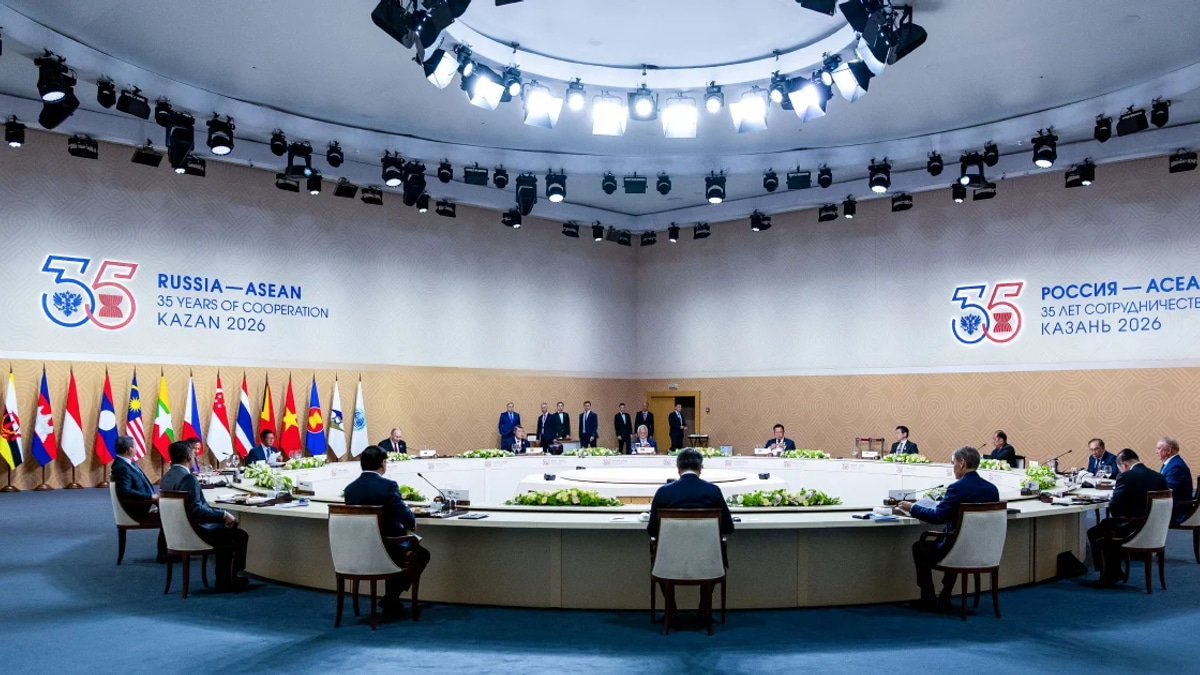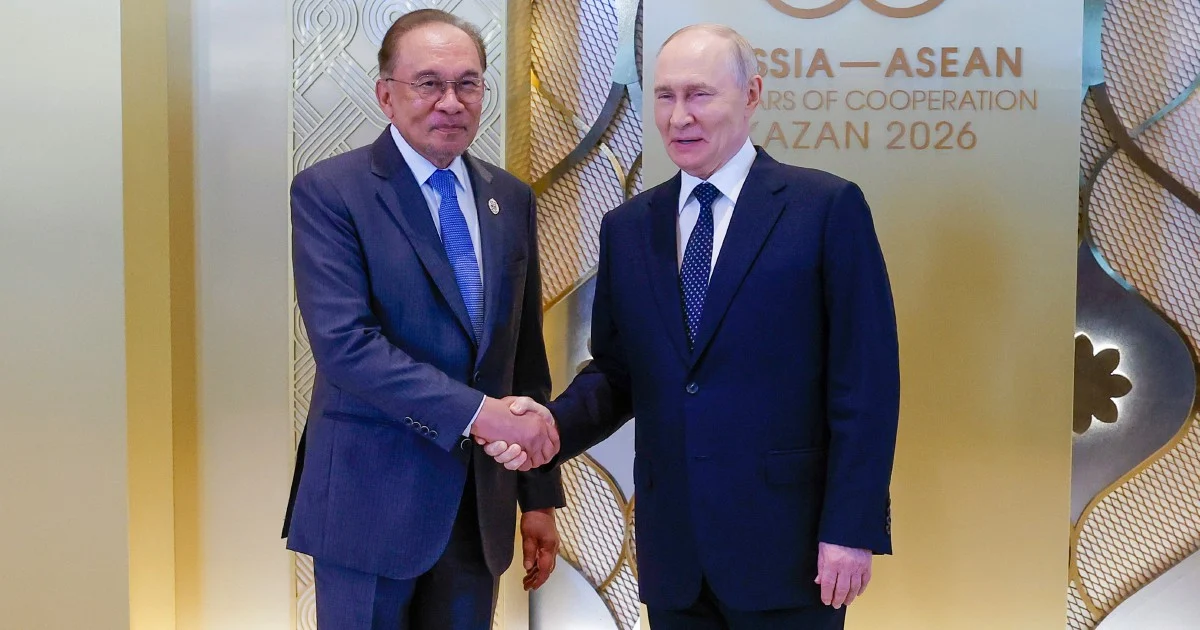
Prime Minister Datuk Seri Anwar Ibrahim's recent official visits to Russia and Turkmenistan represent a calculated recalibration of Malaysia's energy strategy, with significant implications for the nation's long-term security and economic positioning in an increasingly multipolar world. The two trips, welcomed by BRICS International Malaysia, underscore Kuala Lumpur's determination to secure stable energy supplies while expanding its circle of strategic economic partners beyond conventional Western-aligned frameworks.
Malaysia's energy sector faces mounting pressures from multiple directions. Domestic oil and gas production has been declining for years, with reserves expected to deplete within the coming decades if extraction patterns remain unchanged. The nation's power generation capacity, while substantial, relies heavily on fossil fuels, and electricity demand continues climbing as economic growth and urbanisation accelerate across the peninsula and East Malaysia. In this context, opening fresh diplomatic channels to major energy suppliers becomes strategically essential rather than merely opportunistic.
Russia's energy sector, despite international sanctions imposed following its 2022 invasion of Ukraine, remains one of the world's most significant producers of oil and natural gas. The country possesses proven reserves that dwarf most other nations, and its export infrastructure, though challenged by Western restrictions, continues functioning through alternative channels and markets. For Malaysia, establishing deeper ties with Russian energy suppliers could diversify sources beyond traditional Middle Eastern partners while reducing exposure to supply chain disruptions concentrated in single regions.
Turkmenistan's significance lies in its substantial natural gas reserves and its geographic position as a bridge between Central Asian energy resources and global markets. The country has emerged as an increasingly important player in global energy trade following the expansion of pipeline infrastructure connecting Central Asia to Asia-Pacific markets. Strengthening bilateral cooperation with Ashgabat provides Malaysia with potential access to stable, long-term gas supply arrangements that could cushion against price volatility and supply constraints.
The timing of Anwar's visits carries particular weight given regional geopolitical shifts. Southeast Asia has become an arena where major powers compete for influence and economic advantage. Malaysia's approach of maintaining pragmatic relationships across ideological and political divides reflects a sophisticated understanding of the region's strategic autonomy. Rather than aligning exclusively with Western-led frameworks or Chinese-centric arrangements, Kuala Lumpur cultivates relationships with multiple poles of power, maximising its leverage and reducing dependence on any single patron.
Energy security represents far more than mere commodity procurement. It touches upon national economic competitiveness, industrial capacity, and social stability. Countries dependent on unreliable or politically volatile energy sources face vulnerabilities that extend into manufacturing costs, electricity pricing, and ultimately, citizens' quality of life. Malaysia's current reliance on regional suppliers and some dependence on long-distance maritime routes creates exposure to disruptions beyond its direct control. Diversifying supply sources and establishing direct bilateral relationships with producers creates redundancy and negotiating leverage.
The oil and gas cooperation frameworks being explored likely encompass multiple dimensions: potential spot market purchases, longer-term supply contracts, joint ventures in exploration and production, and technology transfer arrangements. Such partnerships could generate employment opportunities in Malaysia's energy sector, strengthen technical capacity within national oil company Petronas, and create downstream opportunities in petrochemicals and refining industries that depend on stable feedstock availability.
Beyond pure energy considerations, these visits establish broader economic partnerships that extend into finance, trade, and technological collaboration. Russia possesses significant expertise in energy infrastructure development and extraction technologies suited to challenging environments. Turkmenistan brings experience managing complex gas export projects and pipeline diplomacy across multiple jurisdictions. Knowledge-sharing in these domains could enhance Malaysia's institutional capacity and technical sophistication.
The diplomatic dimension merits consideration equally with commercial factors. Malaysia's ASEAN membership and position as a moderate, Muslim-majority nation give it particular credibility in bridging conversations between different regional and ideological blocs. Strengthening ties with Russia and Turkmenistan enhances Malaysia's capacity to engage constructively with diverse stakeholders while maintaining its non-aligned positioning that has characterised Malaysian foreign policy for decades.
From a Southeast Asian perspective, Malaysia's energy diplomacy carries spillover effects. Malaysia's experience developing reliable supply relationships with non-traditional partners provides lessons for other regional nations facing similar pressures. Vietnam, Indonesia, and Thailand all confront energy security challenges that could benefit from similar diversification strategies. ASEAN's collective energy independence strengthens regional resilience against external coercion or manipulation through resource dependency.
However, enhanced engagement with Russia specifically must navigate international complications. Sanctions regimes and Western pressure on nations maintaining normal relations with Moscow create diplomatic complications. Malaysia's strategy appears to involve pursuing legitimate commercial relationships while maintaining balanced positioning that respects international law and ASEAN's commitment to regional peace and stability. This balancing act requires careful diplomatic navigation.
The fundamental insight underlying these visits is that Malaysia recognises energy security as foundational to all other strategic objectives. Without reliable, affordable power, economic growth stalls, inflation pressures intensify, and social cohesion weakens. By cultivating relationships with multiple energy suppliers and expanding the geographic scope of potential partnerships, Malaysia strengthens its resilience against future disruptions while positioning itself as an attractive partner for global energy companies seeking diversified market access.
Looking forward, these diplomatic initiatives will likely develop into concrete frameworks governing bilateral energy trade, infrastructure investment, and technical cooperation. The success of Anwar's visits will ultimately be measured not by rhetoric but by actual energy supplies reaching Malaysian consumers and businesses at stable, competitive prices while generating employment and technical advancement within Malaysia's energy sector.