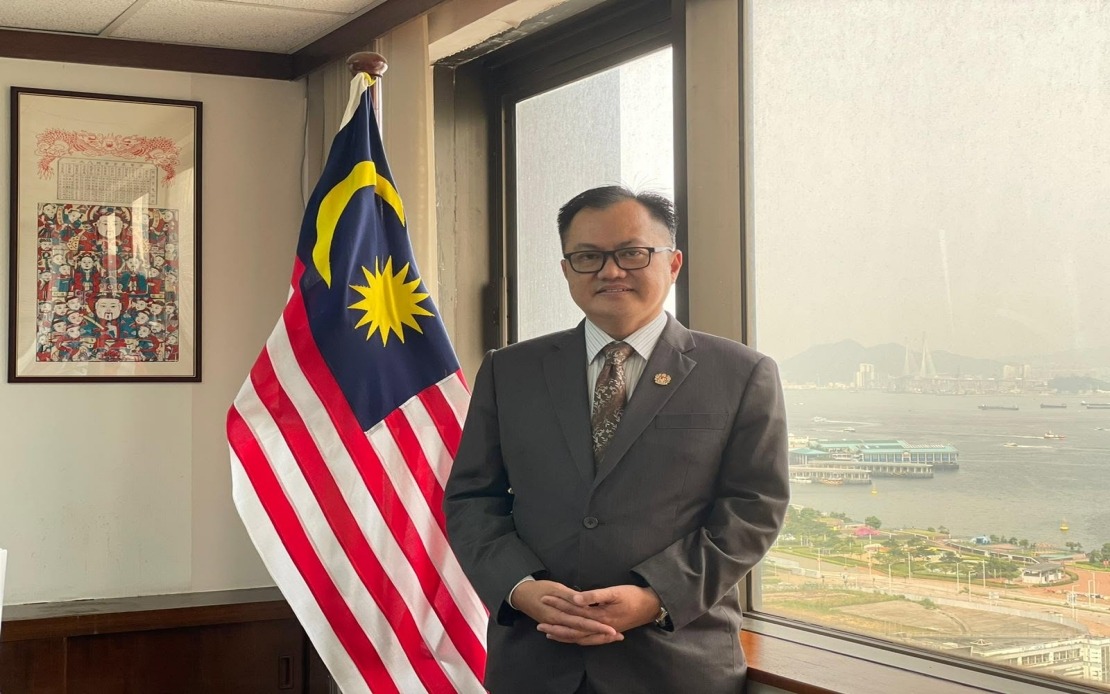
The Consulate General of Malaysia in Hong Kong has defended its handling of voter engagement during the recent Johor state election, contending that it implemented a comprehensive communication strategy to keep Malaysian expatriates informed about participation opportunities. In a statement responding to media coverage, Consul General Muzambli Markam outlined the mission's efforts to publish regular guidance and procedural information across official diplomatic platforms, while also maintaining active coordination with the Malaysian Association of Hong Kong to broadcast registration deadlines and voting details.
The consul general's remarks address a report published by the South China Morning Post on July 9, which suggested that Malaysians residing in Hong Kong encountered significant barriers to participating in the Johor elections owing to inadequate publicity and compressed voting timelines. Muzambli emphasised that characterising overseas Malaysian voters as uninformed fundamentally misrepresents both the diplomatic mission's ground-level engagement and the broader infrastructure established to facilitate their involvement in democratic processes.
A key point of contention centres on the newspaper's framing of the consulate's inability to provide voter participation figures. Rather than viewing this as an operational gap, Muzambli reframed the situation as an intentional design choice reflecting modernisation efforts by Malaysia's Election Commission. The centralised MySPR online portal now enables Malaysians abroad to register and submit voting applications directly to the electoral database without requiring consular intermediation, he explained, positioning this approach as evidence of streamlined administration rather than administrative weakness.
Muzambli indicated that before publication, the diplomatic mission had explicitly communicated details of its proactive outreach strategy to the SCMP journalist, yet the resulting article excluded this contextual information. He argued that this omission created a fundamentally misleading narrative that undersold both the Election Commission's modernisation initiatives and the government's commitment to supporting overseas voting rights. The consul general took particular issue with the article's headline, asserting that it mischaracterised official efforts and painted an inaccurate picture of Malaysia's electoral accessibility.
For Malaysian expatriates in Hong Kong and across Southeast Asia, these developments carry practical significance. The transition to digital-first registration systems reflects a broader regional trend toward online voting infrastructure, as governments seek to balance accessibility with security and efficiency. Malaysia's approach of bypassing consular gatekeeping potentially reduces administrative delays that might otherwise prevent time-sensitive registrations, though it simultaneously means overseas missions play a more limited role in the voting process itself.
The exchange also illuminates ongoing tensions between Malaysian diplomatic missions and international media covering Malaysian affairs. Consulates and embassies frequently argue that journalists underreport official outreach efforts, while news organisations contend that diplomatic communications sometimes lack transparency or fail to highlight genuine structural challenges. In this instance, Muzambli's response suggests the Hong Kong mission invested considerable effort in reaching its constituency, yet questions remain about whether such efforts sufficiently penetrate expatriate communities that may not actively monitor official government channels.
The timing of the Johor election during mid-2024 provided a test case for Malaysia's overseas voting system as electoral participation among diaspora populations grows. With Malaysia hosting significant numbers of workers, students, and long-term residents across multiple countries, the mechanisms supporting their voting rights carry increasing electoral weight. The Hong Kong consulate's emphasis on digital registration aligns with broader government efforts to harness technology for more inclusive democratic participation.
Meanwhile, the substance of the debate touches on deeper questions about information accessibility among overseas Malaysian communities. Professional expatriates with strong institutional ties, such as those connected to business chambers or established community associations like MAHK, likely received voting information efficiently. However, Malaysian workers in less formal employment sectors or newly arrived residents might operate outside existing information networks, potentially explaining why some observers detected awareness gaps despite official outreach efforts.
Muzambli's statement reaffirms Malaysia's diplomatic commitment to supporting citizen participation in electoral processes, positioning overseas voting as an integral component of national democratic life rather than a peripheral concern. The government's investment in digitalised registration infrastructure demonstrates recognition that modern expatriate communities require systems designed for their operational realities—time constraints, geographic dispersion, and varying institutional connections.
Looking forward, the incident suggests Malaysia could benefit from more granular data about overseas voter awareness and participation rates, helping future electoral cycles identify where communication strategies require strengthening. The tension between the consulate's self-reported outreach and media accounts of voter confusion underscores the importance of independent verification when assessing how effectively government information actually reaches target populations across diverse diaspora communities.

