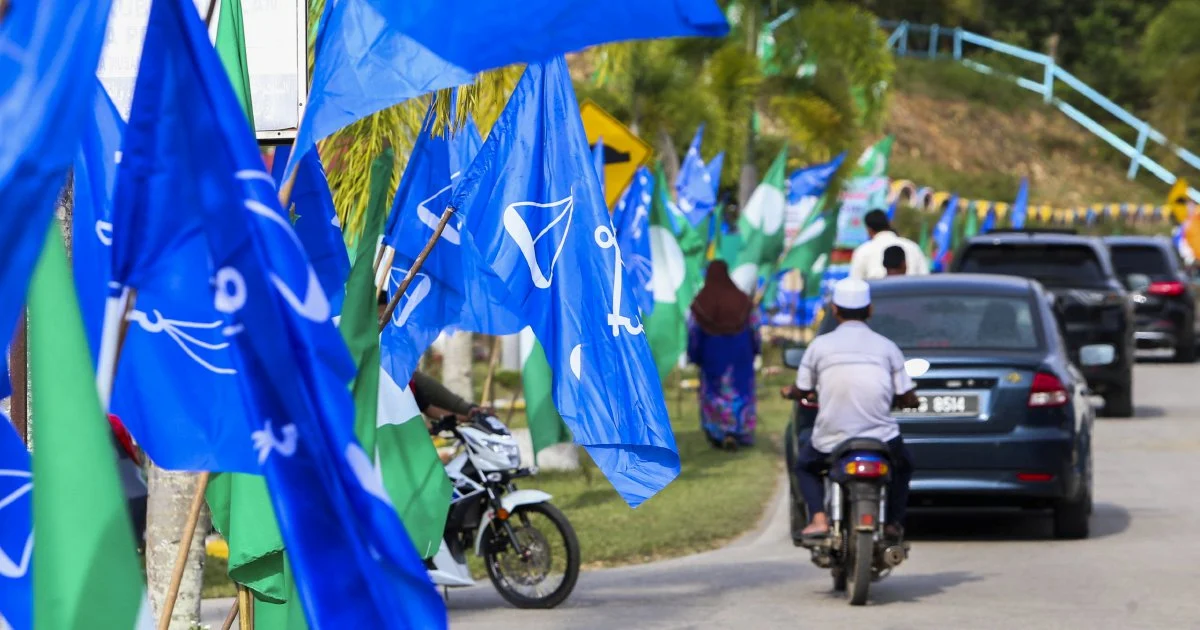
Datuk Mohd Amar Nik Abdullah, the deputy president of Pas, has offered one of the most concrete forecasts yet regarding the timing of Malaysia's 16th general election, projecting that polling day will arrive sometime in the final two months of this year. Speaking in Kota Baru, the PAS leader outlined expectations that the election will materialise between late October and November, a window that aligns with previous speculation from political observers and ruling coalition insiders.
The pronouncement carries particular weight given the position of Pas within Malaysia's political architecture. As a significant component of the federal government coalition, the party's assessment of electoral timing reflects internal discussions and strategic planning at the highest levels. Unlike speculation from opposition figures or independent analysts, statements from coalition members are typically informed by access to decision-making circles and governmental machinery.
For Malaysian voters and political stakeholders, the suggested timeframe carries substantial implications. An October-November election would mark a crucial juncture for the administration to consolidate support or face a reckoning from the electorate. The timing also creates strategic considerations for opposition parties, businesses planning investments, and civil society organisations preparing for the transition period that invariably accompanies a general election cycle.
The prediction also reflects broader calculations about Malaysia's economic and political landscape. Holding elections in the final quarter of the year could allow a newly mandated government to present spending plans and policy initiatives in the 2025 budget framework, establishing momentum in the opening months of a fresh parliamentary term. This sequencing has historically been favoured by ruling administrations seeking to maximise their legislative agenda immediately following electoral victory.
From a regional perspective, Malaysia's electoral calendar influences Southeast Asian politics. A successful transition or change of government becomes a reference point for democratic processes across the region, particularly given Malaysia's status as a constitutional monarchy with a functioning parliamentary system. The timing of GE16 will intersect with electoral cycles in several neighbouring countries, creating a complex regional political environment throughout 2024.
Pas, as one of the three primary components of the ruling Pakatan Harapan coalition alongside PKR and DAP, occupies a unique position bridging urban and rural constituencies, particularly across Northern Malaysia and Kelantan. The party's assessment of electoral readiness therefore encompasses considerations beyond simple political preference—it encompasses organisational capacity, ground organisation in key marginal seats, and broader coalition cohesion.
The October-November window suggested by Datuk Mohd Amar also avoids several potential complications. Scheduling the election before the year's end circumvents the Chinese New Year period in February, when voter turnout historically declines, and the Islamic fasting month of Ramadhan, which presents logistical challenges for campaign activity and polling operations. A late-2024 election would essentially close out the current parliamentary cycle cleanly, allowing a new Dewan Rakyat to convene in early 2025 with a fresh five-year mandate.
However, the timing remains subject to numerous contingencies. Constitutional conventions grant the Prime Minister considerable discretion in advising the Yang di-Pertuan Agong on the dissolution of Parliament, and unforeseen circumstances—from economic disruptions to international developments—could alter calculations. Nonetheless, the consistency with which PAS and other coalition figures have recently emphasised an impending election suggests genuine preparation rather than loose speculation.
The announcement assumes particular significance given ongoing consolidation within Malaysia's ruling coalition. Recent months have witnessed continued tension between component parties regarding seat allocations, ministerial positions, and policy direction. An election called within the timeframe Datuk Mohd Amar has identified would represent a test of coalition unity and public confidence in the current government's stewardship of the economy and social agenda.
For opposition coalitions, including the Perikatan Nasional bloc and scattered independent factions, the signalled timing offers a known target for campaign preparation. Political strategists across the spectrum will begin calibrating messaging, candidate selections, and resource allocation based on these clearer indications of when voters will next be summoned to the polls.
The broader implications extend to institutional readiness as well. The Election Commission would require adequate preparation time to revise electoral rolls following boundary delineation exercises, conduct voter registration drives, and establish logistics for polling day operations across all 222 parliamentary constituencies. A late October or November election provides sufficient runway for these preparations to conclude properly.
Datuk Mohd Amar's assessment ultimately reflects growing consensus among political insiders that GE16 has transitioned from theoretical possibility to practical certainty within a defined timeframe. Whether the election transpires precisely as forecast or undergoes adjustment, the statement signals that Malaysia's political system is entering a pre-electoral phase characterised by intensifying campaign activity, strategic repositioning, and citizen engagement with the democratic process.

%22%2F%3E%3C%2Fpattern%3E%3C%2Fdefs%3E%3Crect%20width%3D%22100%25%22%20height%3D%22100%25%22%20fill%3D%22url(%23ph40buhg)%22%2F%3E%3Crect%20width%3D%22100%25%22%20height%3D%22100%25%22%20fill%3D%22url(%23ph40buhp)%22%2F%3E%3Ctext%20x%3D%2250%25%22%20y%3D%2250%25%22%20text-anchor%3D%22middle%22%20dominant-baseline%3D%22central%22%20fill%3D%22rgba(255%2C255%2C255%2C0.95)%22%20font-family%3D%22Georgia%2C%20'Times%20New%20Roman'%2C%20serif%22%20font-weight%3D%22700%22%20font-size%3D%22320%22%20letter-spacing%3D%22-0.02em%22%3EGRS%3C%2Ftext%3E%3C%2Fsvg%3E)