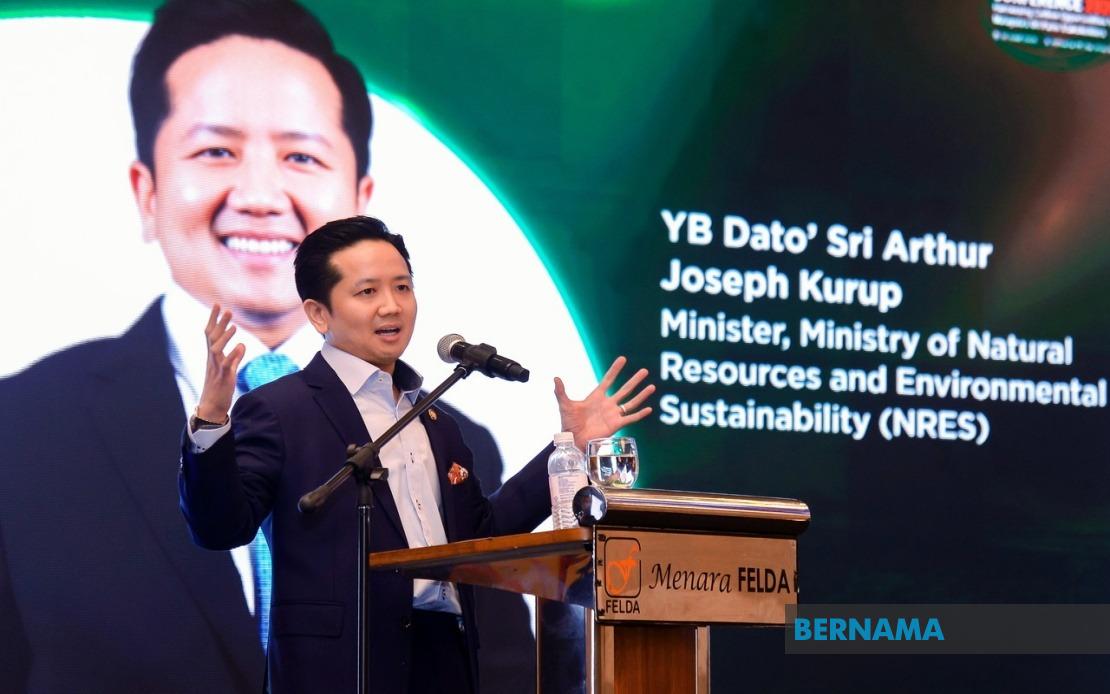
The Malaysian government remains committed to introducing a carbon tax mechanism, though officials are still working through the technical and policy details required for its rollout. Natural Resources and Environmental Sustainability Minister Datuk Seri Arthur Joseph Kurup made this clear while addressing attendees at the Malaysia Palm Carbon Conference (MPC) 2026 in Kuala Lumpur on June 16, emphasizing that implementation would proceed once preparations were complete, despite ongoing refinement of the framework.
In his remarks, Arthur stressed that the government's approach to the carbon tax reflects careful consideration of industry conditions and the broader economic environment. Rather than rushing forward with a punitive regime that might undermine competitiveness, policymakers are calibrating the mechanism to support rather than burden Malaysian businesses and consumers. This measured approach signals recognition that carbon pricing must be implemented thoughtfully if it is to win acceptance across the economy while still advancing climate objectives.
The government has been explicit that revenue collected through the carbon tax would not simply disappear into general treasury coffers. Officials are actively examining mechanisms to ensure funds support climate-related initiatives that benefit the nation. Potential uses under consideration include channelling money towards climate adaptation projects, forest conservation efforts, and sustainable land management programmes. This circular approach—where carbon revenues directly fund climate action—helps justify the tax to industry and the public by demonstrating tangible environmental returns.
Arthur underscored that the carbon tax should be understood as an incentive mechanism rather than a penalty system. By making carbon-intensive activities more expensive, the tax encourages businesses to invest in cleaner technologies and processes, creating competitive advantage for early movers in green innovation. This framing aligns Malaysia's carbon policy with successful international models where pricing mechanisms have driven genuine emissions reductions while spurring technological development.
The timing of implementation remains flexible. In April, Arthur had indicated that the government would reassess when to introduce the tax, acknowledging that pressing geopolitical tensions and global energy supply challenges warranted caution. The original plan called for the tax to take effect during 2024, targeting specific industrial sectors including steel, cement, and construction. However, authorities recognized that layering new costs onto these industries during a period of international instability risked deterring investment and straining supply chains at a moment when the Malaysian economy needed stability.
This cautious recalibration reflects broader tensions in climate policy globally. Nations struggle to balance climate commitments with economic realities, particularly when trading partners and competitors are moving at different speeds. Malaysia, as a major exporter and manufacturing hub, must ensure that unilateral carbon policies do not push investment and jobs to jurisdictions with weaker environmental rules. The extended development timeline for the carbon tax mechanism demonstrates policymakers grappling with this genuine complexity.
Beyond the carbon tax itself, the government is advancing another significant climate governance initiative. The National Climate Change Bill is slated for tabling in the Dewan Rakyat during the current parliamentary session. This legislation would establish a stronger legal and institutional foundation for Malaysia's climate action, consolidating various environmental responsibilities and creating clearer pathways for enforcement and accountability. For businesses operating in Malaysia, the bill represents a signal that climate governance will become increasingly embedded in regulatory frameworks.
For Southeast Asia more broadly, Malaysia's deliberate approach to carbon taxation carries implications. The region includes some of the world's most vulnerable economies to climate impacts, from sea-level rise threatening coastal populations to threats to agricultural productivity. Yet the region is also home to energy-intensive industries and developing economies where rapid decarbonization could disrupt livelihoods. Malaysia's effort to design a carbon tax that encourages green transition while respecting industry realities offers lessons for other regional economies contemplating similar measures.
The involvement of the Federal Land Development Authority (Felda), represented at the conference by chairman Datuk Seri Ahmad Shabery Cheek, underscores that carbon policy intersects with land use and agriculture—sectors central to Malaysia's economy and rural development. Land use change, particularly deforestation, remains a significant source of Malaysia's greenhouse gas emissions. Any carbon tax framework must account for these sectors, which explains why policymakers are taking time to ensure mechanisms are workable for agricultural stakeholders.
For multinational corporations with operations in Malaysia, clarity on the eventual carbon tax rate, scope, and revenue use will be essential for capital planning. Companies invest based on predictable policy environments, and extended development periods, while frustrating for those wanting certainty, ultimately allow better calibration of rules. The government's willingness to consult and refine suggests the eventual tax will reflect industry input, potentially yielding more durable policy.
The Malaysian experience illustrates a broader reality in climate governance: moving from political commitment to effective implementation requires sustained technical work and stakeholder engagement. Carbon pricing, while economically elegant, involves complex design choices affecting competitiveness, employment, and energy affordability. The government's transparent acknowledgment that this work remains ongoing, rather than announcing a fixed implementation date, may ultimately produce a more robust and sustainable climate policy.


%22%2F%3E%3C%2Fpattern%3E%3C%2Fdefs%3E%3Crect%20width%3D%22100%25%22%20height%3D%22100%25%22%20fill%3D%22url(%23ph40buhg)%22%2F%3E%3Crect%20width%3D%22100%25%22%20height%3D%22100%25%22%20fill%3D%22url(%23ph40buhp)%22%2F%3E%3Ctext%20x%3D%2250%25%22%20y%3D%2250%25%22%20text-anchor%3D%22middle%22%20dominant-baseline%3D%22central%22%20fill%3D%22rgba(255%2C255%2C255%2C0.95)%22%20font-family%3D%22Georgia%2C%20'Times%20New%20Roman'%2C%20serif%22%20font-weight%3D%22700%22%20font-size%3D%22320%22%20letter-spacing%3D%22-0.02em%22%3EGRS%3C%2Ftext%3E%3C%2Fsvg%3E)