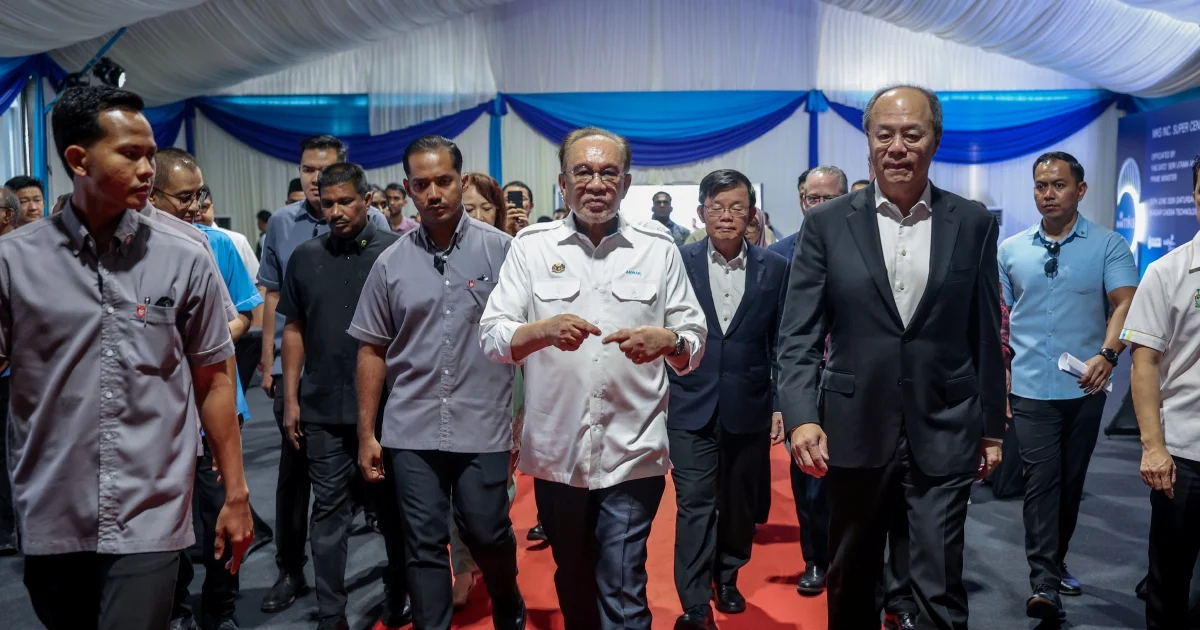
Prime Minister Datuk Seri Anwar Ibrahim has articulated how the nation's approach of maintaining strategic autonomy while cultivating diplomatic relations across the geopolitical spectrum is becoming a significant draw for international investors seeking stable, reliable operating environments. Addressing the matter in Batu Kawan, Anwar emphasised that Malaysia's refusal to align exclusively with any single power bloc positions the country as an attractive business destination amid broader international tensions and economic uncertainties. This multilateral engagement strategy reflects a deliberate calculus to insulate the domestic economy from polarising international disputes while remaining open to partnerships that serve Malaysian interests.
The Prime Minister's remarks come at a critical juncture when Southeast Asian nations face mounting pressure to choose sides amid United States-China competition and the broader reconfiguration of global supply chains. Malaysia's positioning as a nation committed to non-alignment while maintaining pragmatic ties with major trading partners and investment sources offers a compelling proposition to multinational enterprises evaluating regional headquarters locations and manufacturing hubs. Companies operating across multiple markets increasingly value jurisdictions that can maintain stable relations with diverse global stakeholders, reducing regulatory risk and potential sanctions exposure.
Anwar's framing of neutrality as an economic asset rather than merely a diplomatic principle reflects a sophisticated understanding of contemporary investor priorities. During periods of geopolitical fragmentation, multinational corporations face complex decisions about facility locations, supply chain management, and market access. Nations perceived as reliable neutral grounds—neither antagonising Washington nor Beijing, nor forced into restrictive alignments—become increasingly valuable as economic hedges. Malaysia's geographic position in Southeast Asia, combined with its institutional capacity and established infrastructure, already made it attractive; the government's explicit commitment to multiparty engagement amplifies this advantage.
The economic implications of this strategy extend beyond headline foreign direct investment figures. Investors evaluating long-term commitments seek jurisdictions offering predictable policy environments and minimal exposure to sudden diplomatic ruptures. Malaysia's consistent engagement across ideological and economic divides suggests a mature approach to statecraft that prioritises prosperity over ideological purity. This reassurance particularly matters for sectors such as semiconductors, advanced manufacturing, and technology services, where infrastructure investments run into the billions of dollars and require decade-spanning planning horizons.
Regional context illuminates the significance of Anwar's position. Neighbouring countries have faced investor hesitancy and capital flight following perceived alignments or hostile foreign policy postures. Thailand's periodic political instability and shifting international orientations have spooked investors; Vietnam's delicate balancing act between China and the United States carries constant tension; Indonesia's vast potential is sometimes offset by policy inconsistency. Against this backdrop, Malaysia's articulated commitment to balanced engagement offers differentiation in regional competition for capital and talent.
The framing also addresses domestic constituencies. Anwar's emphasis on neutrality and equal engagement appeals to Malaysia's diverse population with varying international orientations and business interests. Chinese Malaysians have trade and family connections throughout greater China; other communities maintain ties to Islamic centres and Commonwealth nations; business elites have global portfolios. A foreign policy perceived as favouring one power over others could trigger domestic political friction. Positioning neutrality as both principled and economically beneficial helps build consensus around what might otherwise become contentious external affairs questions.
This approach does carry inherent tensions. Genuine neutrality in a polarising world requires constant diplomatic dexterity and willingness to frustrate all major powers intermittently. Malaysia must navigate requests for technology transfer restrictions, cybersecurity cooperation, supply chain security agreements, and military coordination that reflect broader great power competition. Successfully managing these pressures without appearing duplicitous or unreliable demands exceptional diplomatic skill and credible commitment mechanisms. Malaysia's track record of honouring bilateral agreements and maintaining institutional stability supports this necessary credibility.
The investor confidence effect also depends on concrete policy execution. Anwar's statements must be reinforced through consistent regulatory treatment, transparent investment approval processes, and protection of intellectual property rights. Foreign investors increasingly conduct sophisticated assessments of governance quality, corruption risk, and legal predictability. Rhetorical commitment to engagement means little without institutional backing. Malaysia's relatively strong institutional foundations compared to some regional peers support the credibility of the government's positioning.
Looking forward, this strategy positions Malaysia to capture investment flows from companies deliberately diversifying away from concentration in China, India, or Western economies. Manufacturing and service companies hedging geopolitical risk through geographic distribution view Malaysia as a sophisticated choice—substantive enough to meaningfully reduce risk, yet neutral enough to maintain relations across competitive blocs. The government's articulation of this value proposition enhances Malaysia's competitive positioning in a regional investment competition that will intensify as global supply chain restructuring accelerates throughout the current decade.