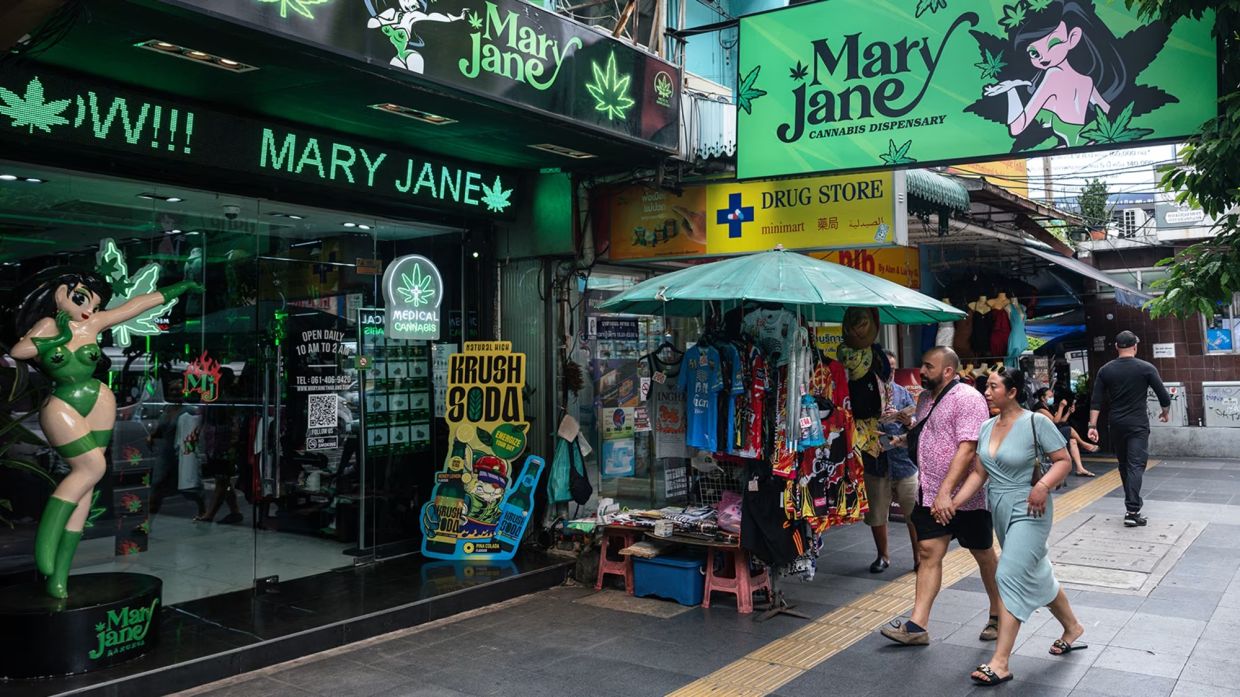
Thailand's approach to cannabis regulation is coming under intensified government scrutiny, with the House Public Health Committee examining whether the Southeast Asian nation should reclassify the drug as a narcotic whilst a comprehensive legal framework is being developed. The high-stakes meeting, convened on June 18 by committee chairman Sakoltee Phattiyakul, exposed fundamental disagreements between public health advocates and cannabis industry representatives over how to manage the economic, agricultural and public health dimensions of cannabis availability in Thailand.
Thailand's relationship with cannabis has been volatile since June 2022, when the kingdom became the first Asian nation to remove the plant from its narcotics list, a move framed at the time as advancing hemp cultivation and traditional medicine applications. Yet nearly three years later, the regulatory architecture governing cannabis remains fragmented and contested. The Department of Thai Traditional and Alternative Medicine currently treats cannabis as a controlled herb under the Protection and Promotion of Thai Traditional Medicine Wisdom Act 1999, while extracts containing more than 0.2 percent THC retain narcotics classification. This patchwork arrangement has created significant regulatory ambiguities, particularly around cannabis flowers and unprocessed plant material, which exist in a legal grey zone that operators and enforcement authorities have struggled to navigate.
The Public Health Ministry's response has been procedural rather than decisive. In June 2025, the ministry issued three separate regulations intended to govern research, sales, processing and international shipments of cannabis products, ostensibly aligning Thailand's approach with global conventions. Concurrently, the department has been collaborating with the Food and Drug Administration, the Department of Health Service Support and the Office of the Permanent Secretary for Public Health to develop an entirely new cannabis and hemp bill. That draft legislation was submitted to the previous Cabinet but never reached parliamentary debate before the dissolution of Parliament, a delay that has left regulatory uncertainty in place for months.
Public health officials and medical networks attending the committee meeting voiced frustration over the status quo. Dr Tewan Thaneerat, deputy director-general of the Department of Thai Traditional and Alternative Medicine, acknowledged that concerns about cannabis availability have persisted since liberalisation, whilst Assoc Prof Dr Smith Srisont, representing medical doctors and civic groups focused on drug-related harms, questioned the wisdom of removing cannabis from the Narcotics Code altogether. These advocates contend that the practical impact of cannabis accessibility is already visible in communities, manifesting in unregistered cultivation, informal retail sales and uncontrolled distribution channels that circumvent the licensed system. Their position reflects a risk-aversion calculus: returning cannabis to narcotics status temporarily would create a cleaner legal slate upon which new permanent regulation could be built.
Ekkapop Sittiwantana, deputy chairman of the House Public Health Committee, articulated this interim strategy explicitly, arguing that cannabis should be reclassified as a narcotic until the new law is ready. He emphasised that unregistered growing operations and direct informal sales networks have proliferated, creating opportunities for what he termed grey businesses to exploit regulatory gaps. Establishing a mandatory plant registration system, he suggested, would bring transparency and accountability to legitimate cultivation whilst making illicit operations more conspicuous. This position reflects a belief that the current permissive framework, despite its superficially modern appearance, has inadvertently created conditions favouring uncontrolled expansion rather than orderly market development.
The Food and Drug Administration provided insight into the compliance mechanisms theoretically available under current law. The FDA oversees herbal medicines intended for disease prevention and treatment through strict licensing across three domains: production sites and processing facilities, imports, and retail sales through certified shops and verified products. Agency representatives reported that ongoing inspections of cannabis-based products generally showed compliance with labelling standards and quality assurance testing. However, they identified a critical weakness: the primary problem remains sales channels operating entirely outside the legal system, circumventing licensing requirements and quality oversight. This candid acknowledgment exposed the fundamental inadequacy of regulatory tools when much of the market operates in shadow channels beyond official reach.
The Thai Cannabis Future Network and allied business operators presented a starkly different narrative, one increasingly heard across Southeast Asia as emerging cannabis markets navigate between reform and control. They contended that legally licensed operators face an untenable competitive situation, squeezed between an expansive black market, illegal imports and constant legislative uncertainty that discourages long-term investment. The network raised additional concerns about what it characterised as unofficial demands for benefits or discretionary pressure linked to cannabis licensing, as well as structural impediments such as medical prescription requirements that are financially prohibitive for farmers or are allegedly diverted into non-medical channels. These complaints highlight a recurring tension in emerging regulated markets: heavy-handed enforcement by some officials can drive legitimate businesses underground, paradoxically strengthening the very black market that regulation ostensibly aims to suppress.
The network's position reflects broader philosophical questions about cannabis policy in Thailand and across the region. Cannabis, the network argued, possesses economic and cultural value extending beyond pharmaceutical and medical applications, rooted in traditional Thai medicine and agricultural heritage. A regulatory framework designed narrowly around mainstream medical uses would, they contend, exclude traditional applications and marginalise small-scale farmers whilst creating advantage for large investors capable of navigating complex licensing and compliance bureaucracies. This argument resonates with broader Southeast Asian conversations about development: whether regulatory frameworks should concentrate economic benefits or distribute them more broadly among communities and traditional practitioners.
The current public health minister remains committed to advancing the dedicated cannabis bill, which is proceeding through public hearing processes expected to conclude by late July before resubmission to the Cabinet. Yet Sakoltee's conclusion to the meeting suggested a more cautious and expansive approach. He ordered officials to compile comprehensive registries of legally licensed cannabis shops in Bangkok and FDA-certified cannabis products for detailed review. He also flagged concern about the ease with which cannabis has become accessible and stipulated that future legislation must include spatial restrictions on cannabis retail outlets relative to educational institutions—a policy mechanism already familiar in many countries regulating alcohol and tobacco.
The committee further mandated a broader epidemiological and social assessment of cannabis-related harms and affected populations, recognising that regulatory decisions require robust evidence rather than assumption. Sakoltee signalled openness to considering alternative draft legislation from the public sector alongside the Health Ministry's bill, suggesting that Parliament may ultimately choose between competing regulatory models rather than endorsing a single proposal. This approach could potentially produce more balanced outcomes but also risks further delays, as different stakeholder coalitions advocate for divergent frameworks.
Thailand's cannabis regulation dilemma ultimately reflects tensions pervasive across Southeast Asia as countries contemplate drug policy reform in contexts where public health infrastructure remains developing, agricultural communities depend on cultivation income, and organised crime networks exploit regulatory uncertainty. Whether Thailand resolves this tension through temporary reclassification followed by comprehensive law, or through incremental legislative improvement of existing frameworks, will substantially influence how neighbouring countries approach cannabis regulation. The outcome will also test whether democratic institutions can reconcile competing interests—industrial operators, small farmers, traditional practitioners, public health advocates and enforcement agencies—into a coherent policy architecture that serves public interest rather than narrow commercial or bureaucratic advantage.