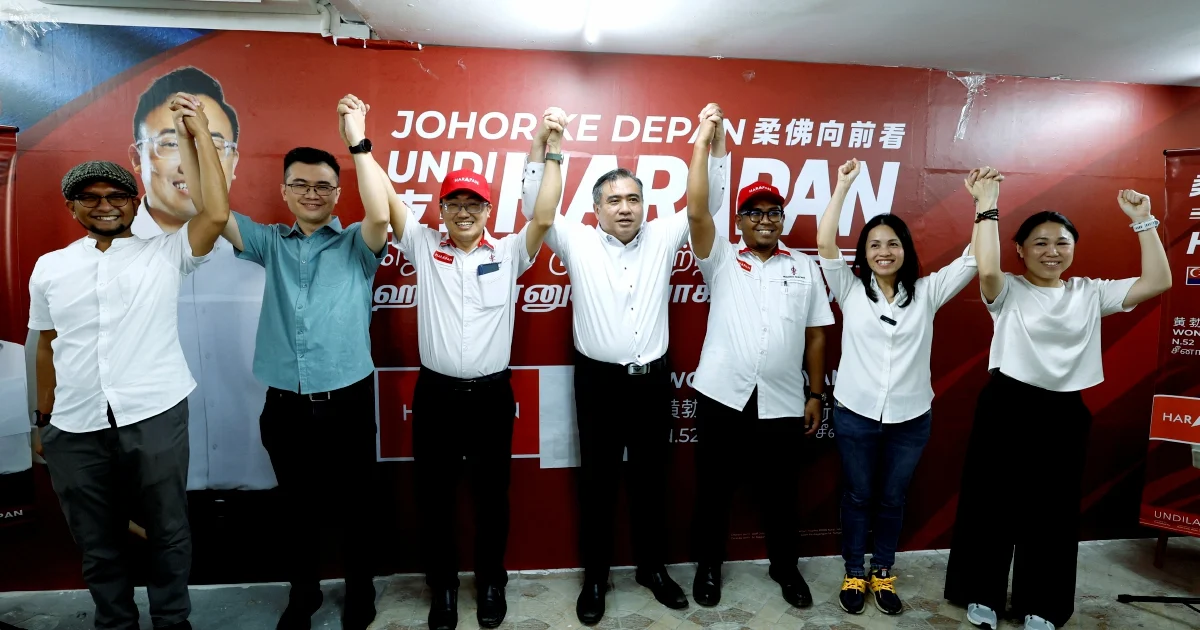
Pakatan Harapan is keeping its cards close to its chest regarding the identity of its candidate for Johor Menteri Besar, signalling that naming the figure remains a secondary consideration to the immediate task of winning the state election. The coalition has made clear it will not unveil this pivotal appointment until after voters deliver their verdict, allowing the party to focus its campaign machinery squarely on securing seats rather than entangling internal politics in pre-election discourse.
The decision to withhold the announcement reflects a deliberate campaign strategy. By declining to anoint a potential chief minister before the election, PH avoids potential complications that could arise from nominating a candidate too early. Such announcements often invite scrutiny of the nominee's background, capabilities, and standing within party structures, potentially providing ammunition for political rivals during a critical electoral contest. The coalition's leadership appears intent on preventing any distraction that might dilute its core messaging about governance, economic recovery, or policy platforms.
This approach also preserves flexibility for PH's top echelon. Coalition leaders may wish to assess the actual composition of their winning team in the Johor assembly before determining who possesses the greatest mandate and legitimacy to lead the state government. Should the election produce unexpected results—with certain prominent candidates winning or losing their seats—having already committed to a specific person could create awkward situations or internal discord.
The Johor state election carries significant implications beyond the peninsular state itself. Johor has long served as a bellwether for Malaysian politics, with electoral outcomes there often foreshadowing broader national trends. A PH victory would strengthen the coalition's standing ahead of potential federal-level political manoeuvres, while a loss could embolden opposition forces in other states and at the national level. The stakes thus extend well beyond determining who occupies the Menteri Besar's office in Johor Baru.
For Malaysian voters and political observers in the region, the postponement of the announcement underscores how electoral politics in Malaysia operates at multiple levels simultaneously. The Menteri Besar position represents not merely an administrative appointment but a prize that carries factional significance within the coalition itself. Different component parties within PH, including the Democratic Action Party, Amanah, and others, may harbour expectations about which party's representative should claim the top post, making the decision inherently fraught with intra-coalition dynamics.
Historically, delaying such announcements has proven a mixed strategy. On one hand, it prevents early criticism or scandal from derailing a campaign. On the other hand, it can leave voters uncertain about which personality they are actually voting to empower, potentially dampening voter enthusiasm. The calculus differs depending on whether the coalition is ahead or behind in polling and public perception. If PH is confident about its prospects, timing seems less urgent; if facing headwinds, clarity about leadership might energise supporters.
The leadership council structure that will make the final determination comprises representatives from PH's constituent parties and senior figures recognised within the coalition's hierarchy. This inclusive arrangement theoretically ensures that no single party can unilaterally impose its preference, though in practice, whichever party wins the most seats for the coalition typically exercises substantial influence over such decisions. The council-based approach also allows for negotiation and consensus-building, reducing the likelihood of a controversial choice that could fracture coalition unity immediately after the election.
For Southeast Asian politics more broadly, Malaysia's coalition approach to leadership selection reflects the complexity of managing multiparty alliances. Unlike systems with clear majority holders, PH must constantly balance the interests of multiple partners, each with their own power bases and expectations. This reality shapes not just who becomes Menteri Besar but how effectively that person can govern, given the need to maintain coalition coherence.
The election itself will determine not only whether PH has the numbers to form government but also which leaders emerge with the strongest electoral mandates. A candidate who wins by a landslide in their constituency carries different weight in post-election negotiations than one who scrapes through by a handful of votes. This reality further justifies PH's decision to await election results before naming its pick, as doing so allows the party to recognise and reward those who deliver the most substantial victories.
Looking ahead, Malaysian voters focused on Johor should understand that their choice on election day will effectively determine the Menteri Besar's identity, even if the formal announcement comes afterward. By concentrating on winning rather than pre-announcing a selection, PH is essentially asking voters to trust the coalition's judgment while demonstrating confidence in its ability to form government. Whether this strategy succeeds depends partly on whether the electorate perceives PH as offering a genuine alternative capable of delivering improved governance and economic benefits to Johor, independent of who ultimately sits in the chief minister's chair.