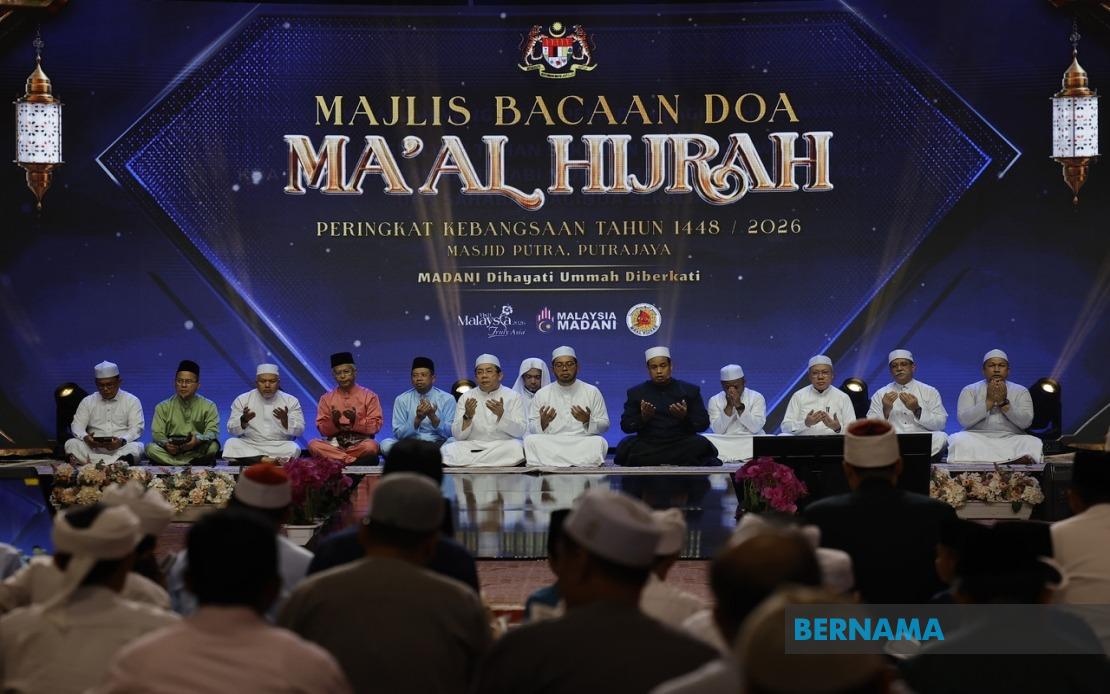
Malaysia's Minister in the Prime Minister's Department (Religious Affairs), Datuk Dr Zulkifli Hasan, has issued a significant appeal to the country's young people to channel the profound lessons embedded within the concept of Hijrah—the Prophet Muhammad's migration from Makkah to Madinah—as a catalyst for meaningful personal and national transformation. Speaking during the lead-up to this year's Maal Hijrah commemoration in Putrajaya, the minister emphasised that Malaysian youth possess tremendous capacity to effect positive change when guided by the principles that underpinned this pivotal moment in Islamic history.
The minister's message carries particular resonance for a generation navigating rapid technological change, economic uncertainty, and evolving social dynamics. By anchoring youthful aspirations to the historical narrative of Hijrah, Zulkifli proposed a framework through which young Malaysians might evaluate their own life choices and contribution to society. The underlying thesis suggests that just as Prophet Muhammad's migration represented a decisive break from an unsustainable status quo and the establishment of an alternative community model, contemporary Malaysian youth can harness similar spiritual conviction to address modern challenges and build resilient communities.
Rather than approaching the annual Maal Hijrah celebration as merely a commemorative observance, Zulkifli articulated a vision centred on active introspection and the internalisation of values that animated the Prophet's journey. This interpretative approach positions the celebration less as a historical recollection and more as a template for contemporary action, inviting young people to reflect on how principles such as sacrifice, community building, and adherence to conviction might translate into their own spheres of influence—whether in academia, commerce, civil service, or social engagement.
The 1448H/2026M national celebration adopts a deliberately structured geographical and symbolic approach this year. Commencing at Putra Mosque in Putrajaya, the programming sequence carries deliberate significance. The choice of venue underscores an integral dimension of the Hijrah narrative: the establishment of the mosque as the foundational institution upon which Prophet Muhammad constructed both spiritual life and community infrastructure in Madinah. By initiating proceedings at this location, organisers have sought to reconstruct, in contemporary context, the mosque's role as the nexus point where civilisational and developmental initiatives begin.
Zulkifli elaborated that this year's celebration operates under a modified operational framework, deliberately pitched at a modest scale to align with broader national conservation priorities during a period when global supply chain disruptions and energy security concerns demand conscious resource management. This pragmatic approach reflects an understanding that observing the Hijrah's lessons on sacrifice and prudence extends beyond spiritual contemplation into demonstrable material choices and institutional practices. The scaled-back event structure thus becomes itself a pedagogical statement about responsible stewardship.
The centrepiece of the national observance occurs at Putra Mosque, beginning at 7 am on the date corresponding to 1 Muharam 1448H. The ceremony, which will be officiated by Sultan Nazrin Shah, the Sultan of Perak, will feature the presentation of national and international Maal Hijrah Figure awards. These recognitions serve to identify and elevate individuals and organisations whose lived examples embody the transformative principles the celebration seeks to promote, providing concrete reference points for youth seeking to understand how Hijrah's ideals manifest in contemporary accomplishment and service.
Complementing the primary ceremonial proceedings, a keynote lecture programme scheduled for June 18 at the JAKIM Auditorium will convene approximately one thousand participants to engage directly with nationally and internationally recognised figures associated with Maal Hijrah discourse. This pedagogical component intends to create space for audiences to encounter the perspectives, insights, and lived experiences of established voices who have grappled with the challenge of embodying Hijrah principles within modern contexts. The explicit framing as a platform for hearing messages and observing demonstrated approaches suggests recognition that abstract principles require grounding in relatable narratives and demonstrable examples.
For Malaysian readers and policymakers, this renewed emphasis on Hijrah's transformative dimensions carries several layers of significance. Regionally, Malaysia's positioning as a Muslim-majority nation with substantial Islamic institutional infrastructure invests particular importance in how the country articulates and operationalises Islamic narratives for contemporary audiences. The minister's framing of Hijrah as a template for youth engagement addresses an often-noted challenge: how religious observances maintain relevance and inspirational force for younger demographics increasingly shaped by global secular and pluralistic frameworks.
The deliberate engagement of youth through the Hijrah narrative also reflects broader governmental concern with channelling youthful energy toward constructive national purposes. By tethering individual transformation to religious historical memory, policymakers hope to create conceptual bridges between spiritual conviction and civic responsibility, between personal integrity and community contribution. This represents a sophisticated understanding that secular exhortations toward national development often prove insufficient without accompanying frameworks that situate such development within transcendent value systems.
Moreover, the emphasis on institutional architecture—particularly the mosque's role as civilisational foundation—carries implications for how Malaysia envisions community resilience and social cohesion amid contemporary pressures. The suggestion that examining the Prophet's institutional choices in Madinah offers guidance for contemporary society implies that religious institutions might play renewed roles in addressing modern social fragmentation, youth disengagement, and community disconnection.
The timing and scale of this year's celebration also merit consideration within Malaysia's current economic and political context. The deliberate modesty of programming, framed explicitly around energy conservation during global supply disruptions, demonstrates how religious observances increasingly incorporate consciousness of environmental and resource constraints. This integration suggests an evolving understanding wherein Hijrah's principles are interpreted to encompass not only spiritual migration and personal transformation but also responsible stewardship of planetary resources.
For Malaysian youth specifically, the invitation to internalise and reflect upon Hijrah principles presents an opportunity to engage with their Islamic heritage not as received doctrine but as a dynamic source of personal empowerment and social contribution. The minister's framing suggests that this engagement need not remain confined to devotional practice but can extend into every domain of youthful endeavour, from professional aspiration to community leadership, from personal integrity to institutional responsibility.


%22%2F%3E%3C%2Fpattern%3E%3C%2Fdefs%3E%3Crect%20width%3D%22100%25%22%20height%3D%22100%25%22%20fill%3D%22url(%23ph40buhg)%22%2F%3E%3Crect%20width%3D%22100%25%22%20height%3D%22100%25%22%20fill%3D%22url(%23ph40buhp)%22%2F%3E%3Ctext%20x%3D%2250%25%22%20y%3D%2250%25%22%20text-anchor%3D%22middle%22%20dominant-baseline%3D%22central%22%20fill%3D%22rgba(255%2C255%2C255%2C0.95)%22%20font-family%3D%22Georgia%2C%20'Times%20New%20Roman'%2C%20serif%22%20font-weight%3D%22700%22%20font-size%3D%22320%22%20letter-spacing%3D%22-0.02em%22%3EGRS%3C%2Ftext%3E%3C%2Fsvg%3E)