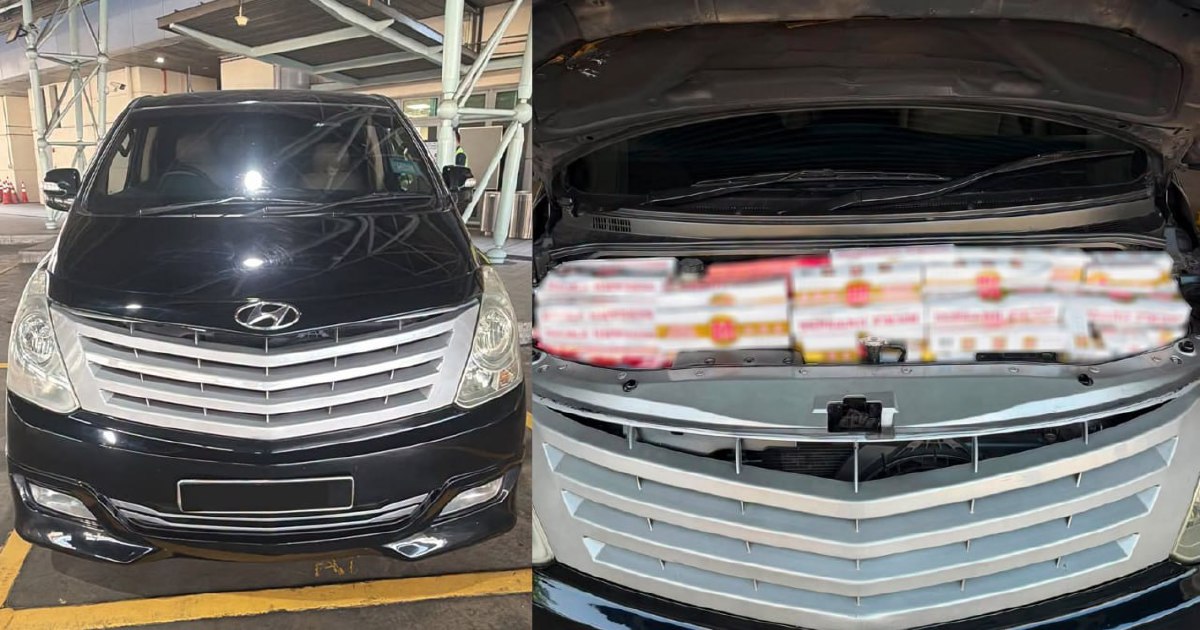
Singapore's border enforcement agencies have detained a 26-year-old Malaysian national following the discovery of extensive cigarette smuggling at a checkpoint. Officers from the Immigration and Checkpoints Authority (ICA) uncovered more than 600 cartons and 900 individual packets of duty-unpaid cigarettes concealed within a specially modified compartment beneath the multipurpose vehicle's floorboard. The seizure underscores the persistent challenge of illicit tobacco trafficking across one of Southeast Asia's most heavily monitored borders.
The arrest highlights the lengths smugglers are prepared to go in order to evade detection at Singapore's border crossings. Rather than relying on simple concealment methods, the vehicle involved had been specially prepared with a compartment designed specifically to hide contraband products. Such modifications suggest a degree of planning and coordination, pointing towards organised smuggling networks that have developed intimate knowledge of inspection procedures and checkpoint vulnerabilities.
Cigarette smuggling remains a significant cross-border issue throughout Southeast Asia, with Malaysia and Singapore at the epicentre of this illicit trade. The price differential between the two countries creates powerful economic incentives for smugglers. Singapore's tobacco taxation system imposes substantial levies on cigarette products, making legally purchased cigarettes considerably more expensive than those available in neighbouring jurisdictions. This price gap drives demand for contraband goods and provides substantial profit margins for smuggling networks that can successfully circumvent customs controls.
From a Malaysian perspective, cigarette smuggling operations often originate from domestic sources or exploit Malaysia's own supply chains. The accessibility of duty-free products in Malaysia, combined with lower local tobacco taxes, makes the country a convenient sourcing point for Singapore-bound contraband. Many smuggling attempts involve Malaysian nationals who either operate independently or as part of larger trafficking syndicates. Each interception therefore represents both a Malaysian and Singaporean enforcement success, though the underlying causes continue to fuel supply.
Singapore's ICA maintains comprehensive surveillance systems and intelligence networks designed to intercept smuggling attempts. However, the sheer volume of daily cross-border traffic—particularly through checkpoints like Woodlands and Tuas—means that detection relies on a combination of random inspections, intelligence-led operations, and sophisticated scanning technology. The discovery of this particular cache required officers to conduct a detailed physical search of the vehicle, demonstrating that even with advanced detection methods, traditional inspection techniques remain essential.
The penalties for cigarette smuggling in Singapore are substantial, serving as a deterrent and enforcement tool. Smugglers face not only criminal prosecution and potential imprisonment but also significant fines. Additionally, vehicles used in smuggling operations are typically seized and forfeited to the state. These consequences, however, appear insufficient to deter organised networks that calculate the risk-reward equation differently, particularly when potential profits from successfully moving contraband reach into the thousands of dollars per consignment.
For Malaysian authorities, the arrest presents an opportunity to investigate supply chains and determine whether the smuggling operation was part of a wider network. Cooperation between Malaysian and Singaporean enforcement agencies has historically proved effective in disrupting smuggling rings that operate across the border. Information sharing about smuggling methods, vehicle modifications, and operator networks helps both jurisdictions refine their enforcement strategies and disrupt trafficking at source.
The incident also reflects broader regulatory challenges facing both countries. Malaysia has recently implemented various tobacco control measures, including plain packaging requirements and stricter marketing restrictions. Singapore maintains among the region's strictest tobacco policies. Despite these regulatory frameworks, the continued existence of price differentials and illicit supply networks ensures that smuggling will remain economically viable for enterprising criminals willing to accept border enforcement risks.
From a public health perspective, cigarette smuggling undermines government tax policies designed to discourage smoking. The revenue lost through smuggling diversion could otherwise fund health services and tobacco control programmes. Moreover, contraband cigarettes often escape quality oversight, potentially containing harmful additives or mislabelled ingredients. The massive scale of this single seizure—enough cigarettes for thousands of consumers—illustrates how significantly smuggling operations can impact local markets and public health objectives.
The broader pattern of cigarette smuggling across the Malaysia-Singapore border reflects fundamental economic realities that enforcement alone cannot fully address. While checkpoint interdiction operations provide important deterrent effects and reduce market supply, addressing smuggling comprehensively requires coordinated efforts across multiple policy areas, including tax harmonisation discussions, supply chain regulation, and international cooperation frameworks. The 26-year-old Malaysian's arrest represents a tactical enforcement victory, but the underlying structural factors driving smuggling persist.

