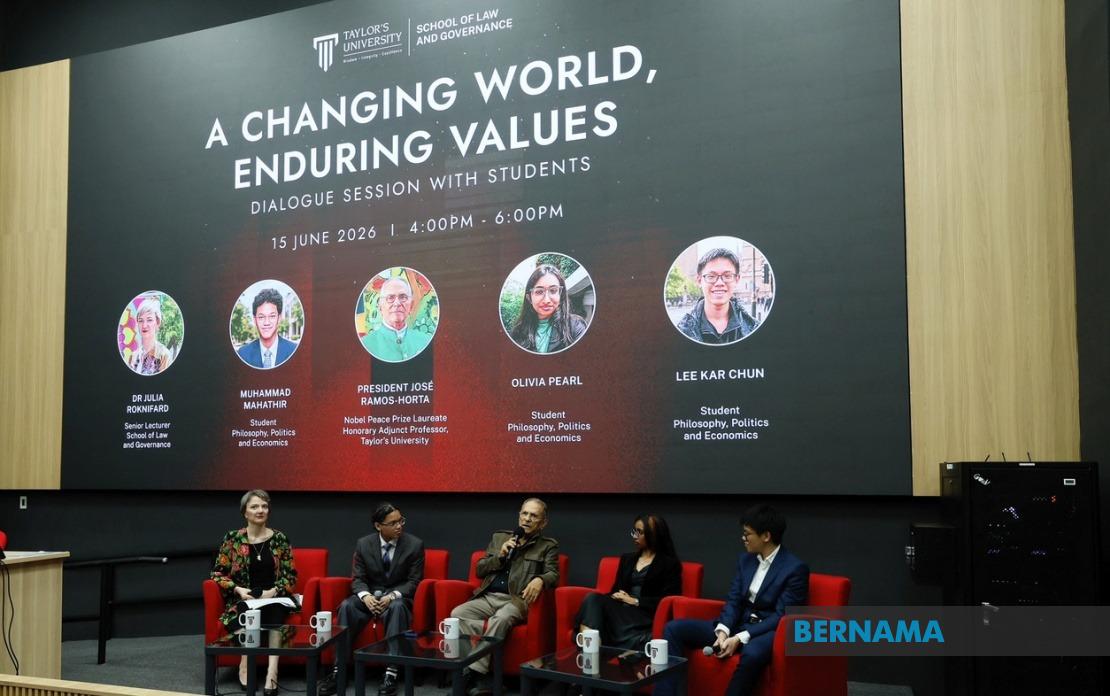
Timor-Leste President Jose Ramos-Horta has characterised the diplomatic relationship between his nation and Malaysia as exceptionally robust, while commending Malaysia's global standing on security, democratic freedoms and governance standards. The Nobel Prize-winning statesman and former journalist made these remarks during his five-day special visit to Malaysia, which concludes on Wednesday, speaking to reporters after engaging in dialogue with students at Taylor's University in Petaling Jaya on Monday.
Ramos-Horta's assessment reflects a relationship rooted in decades of mutual engagement. He highlighted Malaysia's pivotal historical role in supporting Timor-Leste even before the Southeast Asian nation achieved independence in 2002, particularly through Malaysia's participation in the 1999 peacekeeping operations that followed the ballot on East Timor's future. This early commitment, he suggested, established a foundation of trust that has only strengthened over the intervening years.
The Timorese leader attributed part of this positive trajectory to the current Malaysian administration, specifically crediting Prime Minister Datuk Seri Anwar Ibrahim's diplomatic acumen and strategic vision. According to Ramos-Horta, Malaysia's economic resilience and international influence have expanded notably during Anwar Ibrahim's tenure, building upon four decades of consistent development that preceded it. This observation carries particular weight given Ramos-Horta's extensive international experience and his position as a respected voice on regional affairs.
During his university dialogue session titled "A Changing World, Enduring Values," Ramos-Horta shifted focus to Timor-Leste's regional ambitions and infrastructure readiness. The country is preparing to assume the ASEAN chairmanship in 2029, a responsibility that carries significant expectations regarding hosting capacity and organisational infrastructure. Ramos-Horta expressed confidence that his nation would meet the necessary requirements, emphasising that Timor-Leste is actively accelerating its development programmes to ensure facilities and systems are operational before assuming the leadership role.
Timor-Leste's emergence as ASEAN's newest member represents a watershed moment for both the nation and the regional bloc. The country officially joined ASEAN on October 26, 2025, becoming the eleventh member and the first new addition in 26 years, ending a quarter-century of institutional stability that had characterised the association since Vietnam joined in 1995. This historic expansion underscores ASEAN's continuing appeal as a framework for Southeast Asian integration and cooperation.
Ramos-Horta explicitly credited Malaysia with instrumental support during the accession process, particularly during Malaysia's ASEAN chairmanship in 2024. The facilitation of Timor-Leste's full membership represents more than procedural advancement; it signals Malaysia's commitment to welcoming new members and fostering regional cohesion. This role aligns with Malaysia's historical positioning as a pragmatic bridge-builder within ASEAN, often serving as mediator and consensus-builder on contentious regional issues.
Beyond bilateral and institutional matters, Ramos-Horta extended warm wishes to Malaysia's journalism community ahead of the National Journalists' Day celebration scheduled for Penang on Saturday. His message underscores the connection between informed citizenry and social stability, reflecting his background as a journalist and human rights advocate. The president emphasised that well-informed societies possess greater capacity for internal unity and collective problem-solving, suggesting that Malaysia's media landscape contributes meaningfully to the nation's democratic health and social resilience.
Ramos-Horta holds an Honorary Adjunct Professor position at Taylor's University, a distinction that facilitated his engagement with students during this visit. This academic role demonstrates the depth of institutional connections between Malaysia and Timor-Leste, extending beyond governmental channels into educational and intellectual spheres. Such linkages strengthen people-to-people bonds and create pathways for future collaboration in research, education and cultural exchange.
For Malaysia, Ramos-Horta's affirmations carry diplomatic significance. In a regional environment characterised by shifting great-power dynamics and competing interests, validated support from neighbouring nations reinforces Malaysia's positioning as a respected actor committed to regional stability and prosperity. The emphasis on Anwar Ibrahim's statesmanship also provides domestic political value, framing the current administration's international engagement as generating tangible returns in terms of enhanced regional standing and influence.
For Timor-Leste, Malaysia's support becomes increasingly valuable as the country navigates the transition from regional newcomer to ASEAN chair. Managing the organisation's affairs during a period of geopolitical tension requires both administrative competence and diplomatic skill, areas where Malaysian guidance and experience could prove invaluable. The relationship also provides Timor-Leste with a developed democratic model and economic partner as it continues consolidating institutions and pursuing developmental objectives.
The visit encapsulates broader Southeast Asian trends toward deepening intra-regional cooperation amid global uncertainty. As major powers vie for influence and traditional alignments shift, countries increasingly emphasise their regional connections and mutual support networks. Malaysia and Timor-Leste's strengthening relationship exemplifies this dynamic, demonstrating how newer members can integrate effectively while established players maintain their relevance through inclusive engagement.

%22%2F%3E%3C%2Fpattern%3E%3C%2Fdefs%3E%3Crect%20width%3D%22100%25%22%20height%3D%22100%25%22%20fill%3D%22url(%23ph40buhg)%22%2F%3E%3Crect%20width%3D%22100%25%22%20height%3D%22100%25%22%20fill%3D%22url(%23ph40buhp)%22%2F%3E%3Ctext%20x%3D%2250%25%22%20y%3D%2250%25%22%20text-anchor%3D%22middle%22%20dominant-baseline%3D%22central%22%20fill%3D%22rgba(255%2C255%2C255%2C0.95)%22%20font-family%3D%22Georgia%2C%20'Times%20New%20Roman'%2C%20serif%22%20font-weight%3D%22700%22%20font-size%3D%22320%22%20letter-spacing%3D%22-0.02em%22%3EGRS%3C%2Ftext%3E%3C%2Fsvg%3E)