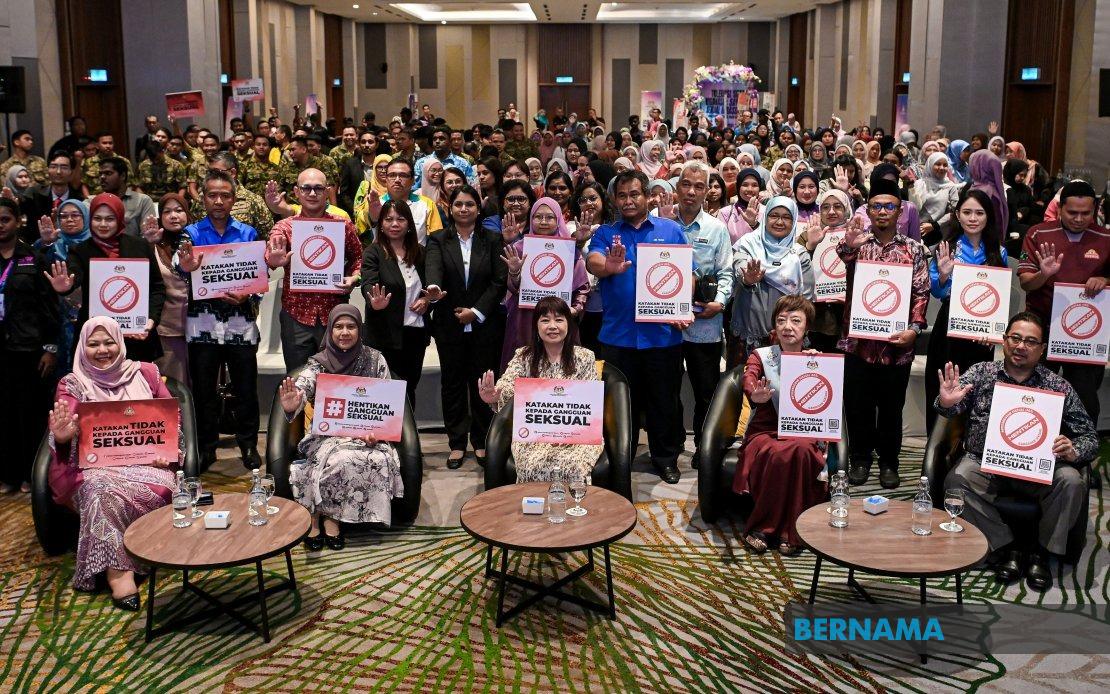
Malaysia's sexual harassment landscape is undergoing a critical shift, with 388 cases reported during the first five months of 2024 alone. This figure, disclosed by Deputy Minister of Women, Family and Community Development Lim Hui Ying in Port Dickson on June 18, underscores an accelerating problem that extends far beyond isolated incidents. What makes these numbers particularly significant is not merely the absolute count but what it reveals about changing social dynamics in how Malaysians respond to workplace misconduct and personal violations.
The trajectory of reported cases paints a striking picture of transformation. Police statistics demonstrate that sexual harassment complaints surged from 477 cases in 2022 to 1,038 cases in 2023, representing more than a doubling within a single year. This dramatic acceleration suggests that Malaysia's communities are gradually dismantling the historical culture of silence that has long shielded perpetrators from accountability. For Malaysian workplaces and institutional frameworks, the figures represent both a challenge and an opportunity to reshape corporate cultures and implement meaningful safeguarding measures.
Deputy Minister Lim cautioned against interpreting the rising numbers as purely reflecting increased prevalence of harassment. Instead, she emphasised that the surge demonstrates greater public courage and awareness among victims who previously remained silent. This distinction carries profound implications for Malaysian society, suggesting that many incidents that were previously unreported are now being brought into the open. The shift indicates that awareness campaigns and institutional support mechanisms are gradually convincing victims that coming forward will not result in social ostracization or career destruction.
The workplace emerges as the primary arena where sexual harassment occurs in Malaysia. Lim's observations reveal that many cases involve individuals who share family or personal connections with victims, a dynamic that complicates reporting and amplifies victim hesitation. Shame, anxiety about career prospects, and concerns about family relationship deterioration continue to silence many sufferers. This pattern underscores a systemic problem where power imbalances and emotional entanglement create barriers to justice that extend beyond legal frameworks.
While women constitute the majority of reported cases, Lim highlighted that men also experience sexual harassment, though at substantially lower rates. This acknowledgement represents an important step toward recognising sexual harassment as a gender-neutral violation of human dignity rather than purely a women's issue. Malaysian policymakers and employers must calibrate their awareness programmes to address harassment across all genders while recognising the disproportionate impact on women.
The Tribunal for Anti-Sexual Harassment (TAGS) has emerged as a critical institution in Malaysia's justice infrastructure. Since its inception, the tribunal has received 100 complaints, with 82 cases resolved within 60 days of initial hearings. This efficiency metric is noteworthy for a region where access to justice often languishes in bureaucratic delays. TAGS represents a tangible commitment to accelerating outcomes and reducing the prolonged trauma that accompanies extended legal proceedings.
Beyond statistical tracking, the Malaysian government is advancing comprehensive advocacy through its Women, Peace and Security initiatives aligned with the National Action Plan 2025–2030. This framework positions women's security not as a peripheral social concern but as integral to national development and stability. The approach recognises that persistent harassment and violence undermine women's economic participation, educational advancement, and civic engagement.
Lim's articulation of collective responsibility marks a significant rhetorical shift in how Malaysia frames harassment prevention. By identifying parents, educators, employers, colleagues, and students as shared stakeholders in building zero-tolerance cultures, the government acknowledges that change requires systemic transformation rather than isolated enforcement. Educational institutions have particular leverage in reshaping attitudes among younger Malaysians, establishing norms that reject harassment before problematic behaviours become entrenched.
The government's integrated support infrastructure extends beyond complaint mechanisms to encompass psychological and counselling services. Talian Kasih 15999, operating around the clock, provides immediate psychosocial intervention for distressed individuals. This 24-hour availability recognises that harassment victims often reach crisis points outside standard business hours, when institutional support traditionally vanishes. For Malaysian readers navigating personal harassment situations, knowing these services exist represents a crucial lifeline.
Lim's emphasis on early intervention carries particular weight for Southeast Asian contexts where honour cultures and family dynamics often suppress disclosure. By encouraging communities to address harassment at its emergence, the Deputy Minister articulates a prevention philosophy that interrupts escalation pathways toward more severe violence. Early-stage interventions prevent normalisation and allow affected individuals to recover dignity before incidents crystallise into trauma patterns.
For Malaysian employers, these statistics and policy frameworks should catalyse immediate institutional audits. Workplace sexual harassment persists partly because many organisations lack robust reporting mechanisms, adequate training, and transparent accountability systems. Companies implementing genuine prevention measures—rather than performative compliance—position themselves as employers of choice while protecting their most valuable asset: committed, secure workforces.
The conversation around Malaysia's sexual harassment crisis must also acknowledge persistent underreporting in sectors characterised by vulnerable workforces. Migrant workers, informal economy participants, and those in precarious employment situations may remain absent from official statistics despite experiencing significant harassment. Expanding support mechanisms to reach these marginalised populations represents the next frontier for Malaysian policymakers committed to comprehensive justice.
As Malaysia confronts these uncomfortable realities, the rising case numbers should inspire neither despair nor complacency. The trajectory reflects a society gradually choosing transparency over silence, justice over shame. Sustaining this momentum requires sustained investment in prevention education, victim support, perpetrator accountability, and cultural transformation that positions respect and dignity as non-negotiable workplace and social values.


%22%2F%3E%3C%2Fpattern%3E%3C%2Fdefs%3E%3Crect%20width%3D%22100%25%22%20height%3D%22100%25%22%20fill%3D%22url(%23ph40buhg)%22%2F%3E%3Crect%20width%3D%22100%25%22%20height%3D%22100%25%22%20fill%3D%22url(%23ph40buhp)%22%2F%3E%3Ctext%20x%3D%2250%25%22%20y%3D%2250%25%22%20text-anchor%3D%22middle%22%20dominant-baseline%3D%22central%22%20fill%3D%22rgba(255%2C255%2C255%2C0.95)%22%20font-family%3D%22Georgia%2C%20'Times%20New%20Roman'%2C%20serif%22%20font-weight%3D%22700%22%20font-size%3D%22320%22%20letter-spacing%3D%22-0.02em%22%3EGRS%3C%2Ftext%3E%3C%2Fsvg%3E)