Malaysia is moving to strengthen the safety net for individuals leaving its witness protection programme through a legislative amendment that would guarantee transitional financial support upon exit. The Witness Protection (Amendment) Bill 2026, which cleared the Dewan Rakyat on July 14, addresses a significant shortfall in the current legal framework by introducing provisions for one-off assistance packages designed to ease participants' transition back into civilian life after the Attorney General terminates their protective status.
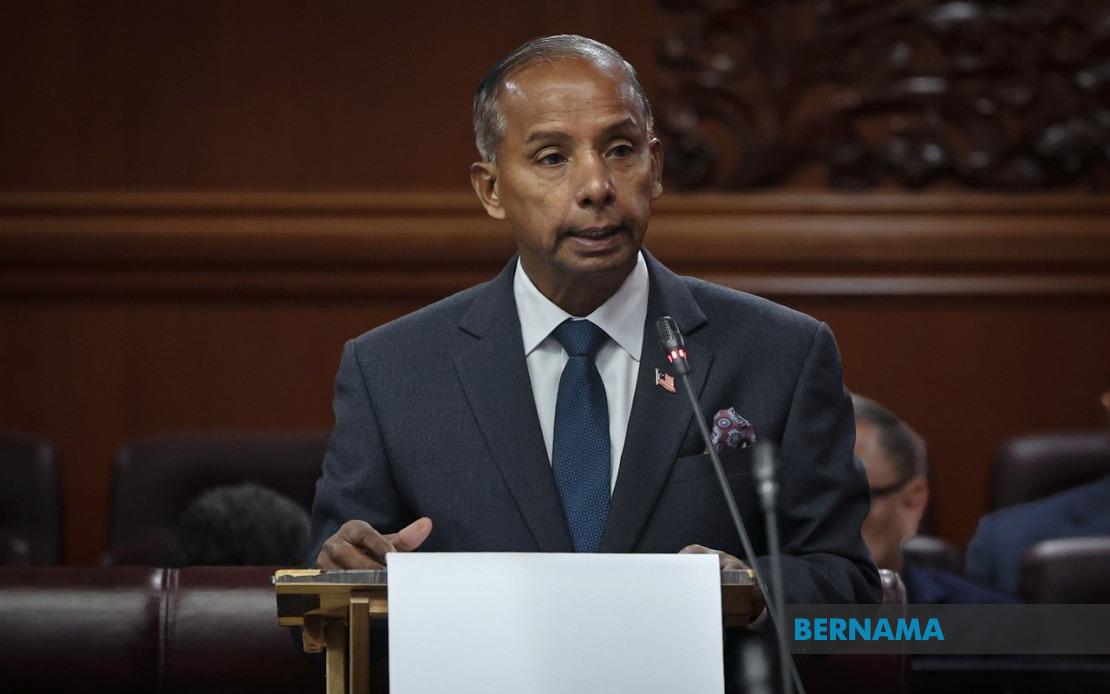
Deputy Minister M. Kulasegaran, speaking during the bill's second reading in the Dewan Negara on July 22, outlined the scope of support envisioned under the proposed legislation. The assistance package encompasses housing expenses, transportation costs associated with relocating from witness protection facilities to permanent residences, and educational transfers for dependents. This targeted approach acknowledges the practical disruptions that arise when individuals must rebuild their lives outside the programme's structured environment, recognising that the period immediately following exit carries considerable vulnerability.
The existing Witness Protection Act 2009, which has governed Malaysia's witness protection regime for over a decade, contains a notable deficiency in its statutory design. The current legislation restricts assistance and protection provisions to the duration of active participation in the programme, leaving no formal mechanism to support individuals once their protective status concludes. This legislative gap has created situations where participants transitioning to independence faced significant practical and financial hurdles without institutional support, potentially undermining the stability that the programme aims to provide during its operational phase.
The six-clause amendment package represents a comprehensive refinement of Malaysia's witness protection framework beyond mere financial assistance. The reforms seek to expand the discretionary authority of the director-general of the Protection Division within the Prime Minister's Department, enabling provision of "necessary and reasonable protection and assistance" tailored to individual circumstances. This expansion of administrative discretion signals a recognition that witness protection operates within complex and varied contexts requiring flexible responses rather than rigid formulaic approaches.
The timing of this legislative initiative reflects broader international trends in witness protection enhancement. Jurisdictions across Asia and beyond have increasingly recognised that the credibility and sustainability of witness protection programmes depends substantially on demonstrating comprehensive support ecosystems. By establishing formal provisions for exit assistance, Malaysia positions itself among jurisdictions prioritising both investigative effectiveness and participant welfare. The narrative around witness protection has shifted from viewing it purely as a law enforcement tool to recognising it as a mechanism serving broader justice interests.
For Malaysian policy observers, the amendment underscores the government's commitment to strengthening criminal justice institutions, particularly in prosecuting serious offences including complex corruption cases. Witnesses willing to testify in high-profile corruption and serious crime prosecutions face genuine personal risks, and the perception that the state abandons participants upon exit could deter potential witnesses from providing testimony essential to successful prosecution. The amendment therefore carries instrumental significance for law enforcement effectiveness beyond its humanitarian dimensions.
The proposal explicitly disclaims any intention to establish recurring or long-term support obligations, emphasising that assistance remains fundamentally transitional in character. This specification addresses potential concerns about open-ended fiscal commitments while maintaining the principle that participants deserve targeted support during the vulnerable exit period. The language distinguishes between emergency bridging support and permanent welfare provision, establishing clear boundaries around the state's post-programme responsibilities.
The amendment bill's passage through the lower house without recorded opposition suggests considerable parliamentary consensus regarding the necessity of exit provisions. This agreement likely reflects recognition across political divisions that witness protection programme integrity serves national justice interests transcending partisan divisions. However, the bill's implementation will depend heavily on adequate budgetary allocation and administrative capacity within the Prime Minister's Department to assess individual circumstances and determine appropriate assistance levels.
For Southeast Asian contexts more broadly, Malaysia's legislative innovation offers a model suggesting how regional jurisdictions might strengthen witness protection frameworks. Countries developing or refining witness protection programmes might consider incorporating similar transitional support mechanisms, recognising that programme effectiveness ultimately rests on participants' confidence in institutional commitment to their welfare throughout and beyond the protection relationship.
The amendment also reflects evolving understanding of witness protection's psychological and social dimensions. Individuals spending extended periods in protective custody experience significant trauma and social disruption. Exit assistance addressing immediate practical needs—secure housing, children's schooling, relocation logistics—acknowledges that reintegration involves multifaceted challenges requiring coordinated institutional support rather than abrupt programme termination. This holistic approach potentially enhances long-term adjustment and reduces recidivism toward criminal activities that might occur when participants lack legitimate economic alternatives.
Implementation of the amendment will require developing operational guidelines specifying assistance parameters, eligibility criteria, and administrative procedures. The director-general's expanded discretion necessitates clear policy frameworks preventing both arbitrary decisions and unsustainable commitments. Malaysian authorities must balance flexibility responding to individual circumstances against institutional consistency and fiscal accountability, challenges common to all jurisdictions managing discretionary assistance programmes.
Looking forward, the amendment represents incremental but meaningful progress in Malaysia's witness protection architecture. While assistance remains finite and temporary rather than comprehensive or indefinite, formalising the state's commitment to supporting participants through the exit transition addresses a demonstrable vulnerability in the current framework. Success will ultimately depend on rigorous implementation, adequate resourcing, and continued parliamentary attention to programme operations as practical experience accumulates under the amended statute.

