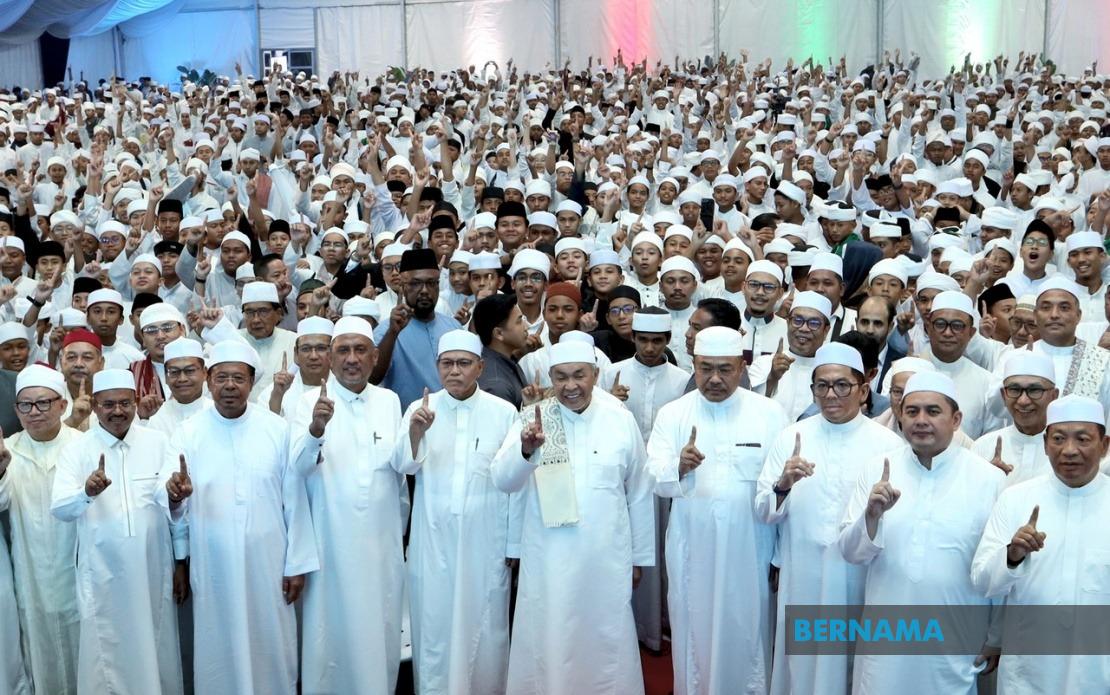
The Malaysian federal government has taken a significant institutional step to professionalize and systematize Islamic religious education by approving the establishment of a National Tahfiz Council. Unveiled by Deputy Prime Minister Datuk Seri Dr Ahmad Zahid Hamidi during the Pahang State Huffaz Gathering 2026 in Kuantan on June 18, the decision emerged from a Cabinet discussion and represents a watershed moment for tahfiz education policy in Southeast Asia's largest Muslim-majority nation. The new council aims to create coherence across the disparate landscape of tahfiz institutions, addressing longstanding gaps in curriculum standardization, credential recognition, and academic progression pathways that have historically limited students' access to tertiary education and white-collar employment.
Ahmad Zahid, who will chair the council at Prime Minister Datuk Seri Anwar Ibrahim's request, positioned the initiative as a transformative policy framework rather than a mere administrative formality. Speaking before more than five thousand hafiz—individuals who have memorized the entire Quran—gathered at the state-level event, he articulated an ambitious vision that extends well beyond religious instruction. The council's core mandate encompasses standardizing the educational direction tahfiz institutions should follow, establishing a unified model for pedagogical delivery, defining recognition standards that government and employers will respect, and constructing formal academic pathways that permit students to advance from traditional madrasahs into mainstream universities without losing credits or facing institutional prejudice.
The rationale underlying this institutional restructuring reflects a broader regional trend in Muslim-majority countries seeking to integrate religious education into national qualification frameworks. Currently, tahfiz students who complete their memorization face a structural dilemma: their achievement, profound as it is, carries limited currency in Malaysia's formal education and labour markets. The council's architecture is designed to resolve this disconnect by enabling students to simultaneously pursue Quranic memorization while acquiring vocational skills, technical qualifications, and recognized academic credentials that employers in finance, law, education, and public service sectors will acknowledge and value.
Ahmad Zahid articulated the government's aspirational endpoint with remarkable specificity: tahfiz students should progress confidently from madrasahs to universities, transition from pure memorization to applied professional skills, and move from their religious learning communities into the broader professional economy equipped with both qualifications and realistic career prospects. This trajectory fundamentally reimagines tahfiz education not as an alternative to mainstream schooling but as a distinctive educational stream with equivalent status and comparable employment outcomes. The policy signals governmental recognition that Malaysia's Islamic education sector has long laboured under a credibility gap, and that addressing this requires institutional legitimacy rather than rhetorical support alone.
Pahang state has emerged as a pilot region demonstrating how tahfiz education can evolve into a comprehensive knowledge pathway spanning from early childhood through to international-level achievement. The state's approach, notably inspired by Sultan Al-Sultan Abdullah Ri'ayatuddin Al-Mustafa Billah Shah, includes initiatives such as Tadika Tahfiz Negeri Pahang—a state-run kindergarten programme that cultivates children's connection to the Quran from their earliest years. This foundational emphasis reflects educational research suggesting that early exposure to memorization significantly enhances long-term retention and motivation. Building upon this early-years infrastructure, Pahang has constructed a sequential pathway allowing students to progress through structured schooling with tahfiz components and eventually reach international achievement levels, thereby demonstrating the feasibility of Ahmad Zahid's vision at provincial scale.
The government's review of the National Tahfiz Policy 2.0, commencing this year, introduces a sophisticated suite of supportive mechanisms designed to operationalize the council's mandate. The Huffaz Financing Scheme addresses a practical barrier that has deterred many talented students from pursuing memorization—the financial burden placed on families during lengthy study periods. The Malaysian Tahfiz Recognition Standard creates a uniformity of assessment that institutional diversity has historically prevented, ensuring that a hafiz graduating from a Selangor pesantren receives equivalent recognition to one from a Kelantan institution. The introduction of TVET (Technical and Vocational Education and Training) Tahfiz represents perhaps the most innovative component, directly combining Quranic memorization with technical skills acquisition in fields such as electronics, construction, culinary arts, and automotive technology.
The Malaysian Tahfiz Certificate 2.0 and the Graded Hafazan Certification together establish a granular credentialing system that accommodates students across varying levels of achievement and learning trajectories. Rather than imposing an all-or-nothing completion standard, this tiered approach acknowledges that partial memorization combined with other qualifications can yield meaningful credentials. For students who cannot dedicate sufficient years to complete the full Quran—a feat requiring typically five to eight years of intensive study—the graded system provides recognition proportional to their accomplishment while preventing wastage of partially completed learning. This flexibility is particularly valuable for students balancing tahfiz instruction with secondary education or vocational training.
The strategic partnerships formalized during the Pahang gathering underscore the inter-agency coordination required to implement this transformation. The memorandum of understanding between Yayasan Pahang, the Community Development Department (KEMAS), and Majlis Amanah Rakyat (MARA) demonstrates how government entities can align their respective mandates toward a common educational objective. KEMAS brings community-level implementation capacity and early childhood expertise, while MARA contributes its established infrastructure for supporting bumiputera business development and skills training. This tripartite arrangement suggests that the National Tahfiz Council will function not as an isolated bureaucratic entity but as a coordinator across existing governmental structures, leveraging established networks rather than creating redundant institutions.
For Malaysian students considering tahfiz education, the council's establishment fundamentally alters the risk-benefit calculation. Previously, embarking on full-time Quranic memorization represented a significant opportunity cost—abandoning conventional schooling pathways for an achievement whose labour market value remained uncertain. The new framework substantially reduces this risk by guaranteeing recognized credentials, providing skills training alongside religious instruction, and establishing clear pathways to further study and professional employment. This shift is particularly consequential for lower-income families who have historically been deterred from allowing children to pursue tahfiz education precisely because of its perceived incompatibility with economic mobility.
Regionally, Malaysia's institutionalization of tahfiz education carries implications extending beyond its borders. The country sits alongside Indonesia as a major centre of Islamic learning in Southeast Asia, and its policy decisions influence thinking in the broader Muslim world. By positioning tahfiz education within a modern credentialing framework rather than as a parallel, alternative system, Malaysia demonstrates how Islamic educational traditions can coexist with secular labour market requirements—a template potentially adaptable to other Muslim-majority nations grappling with comparable questions about the integration of religious and mainstream education. The council's emphasis on skills development and professional pathways suggests a pragmatic approach that honours religious tradition while acknowledging contemporary economic realities.
The scale of the Pahang gathering itself—attracting more than five thousand hafiz—testifies to the constituency invested in tahfiz education across Malaysia. This substantial population represents both a demographic reality and a political constituency whose educational interests the government now prioritizes through institutional infrastructure. The timing of the council's establishment during Ahmad Zahid's tenure as Rural and Regional Development Minister, alongside his current Deputy Prime Minister role, suggests senior governmental commitment to implementation. The coming months will reveal whether the council translates this political will into concrete regulatory changes, funding allocations, and institutional partnerships capable of delivering on its ambitious mandate to reposition tahfiz education within Malaysia's knowledge economy.


%22%2F%3E%3C%2Fpattern%3E%3C%2Fdefs%3E%3Crect%20width%3D%22100%25%22%20height%3D%22100%25%22%20fill%3D%22url(%23ph40buhg)%22%2F%3E%3Crect%20width%3D%22100%25%22%20height%3D%22100%25%22%20fill%3D%22url(%23ph40buhp)%22%2F%3E%3Ctext%20x%3D%2250%25%22%20y%3D%2250%25%22%20text-anchor%3D%22middle%22%20dominant-baseline%3D%22central%22%20fill%3D%22rgba(255%2C255%2C255%2C0.95)%22%20font-family%3D%22Georgia%2C%20'Times%20New%20Roman'%2C%20serif%22%20font-weight%3D%22700%22%20font-size%3D%22320%22%20letter-spacing%3D%22-0.02em%22%3EGRS%3C%2Ftext%3E%3C%2Fsvg%3E)