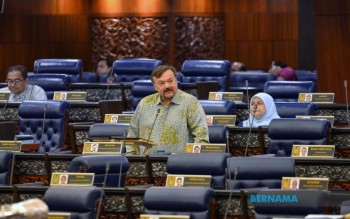
The Malaysian government is intensifying its financial support for micro and small enterprises, having approved more than RM500 million in micro-financing over a six-week period spanning May 15 to June 26, 2026. Finance Minister II Datuk Seri Amir Hamzah Azizan disclosed the development during parliamentary questioning, highlighting the administration's commitment to buffering small business operators from mounting operational costs and global economic uncertainty. The initiative represents a significant injection of capital aimed at stabilising the backbone of Malaysia's private sector economy, where small traders, hawkers, and micro-entrepreneurs collectively employ millions of Malaysians.
The approved financing forms part of a larger RM5 billion government allocation dedicated exclusively to the Micro Financing Facility Programme, a comprehensive safety net designed to sustain micro enterprises navigating a period of elevated business expenses. By channelling capital through established financial institutions and government-linked entities, the programme ensures that funds reach intended beneficiaries efficiently while maintaining proper credit assessment standards. The participating disbursement channels include Amanah Ikhtiar Malaysia, Agrobank, Bank Simpanan Nasional, Bank Rakyat, MARA, and TEKUN Nasional—organisations with deep expertise in lending to underserved market segments.
Complementing the micro-financing push, the government has simultaneously rolled out the RM5 billion MADANI Government Assistance Guarantee Scheme, administered through Syarikat Jaminan Pembiayaan Perniagaan Bhd. This scheme operates on a guarantee model rather than direct lending, effectively reducing risk for participating financial institutions and widening credit access for micro, small, and medium enterprises. Between May 15 and June 20, 2026, the scheme had secured approval for RM219 million in financing guarantees benefiting more than 300 MSMEs. Notably, beneficiaries have concentrated in agriculture, construction, logistics, and tourism sectors—industries particularly vulnerable to external economic shocks and international demand fluctuations.
Amir Hamzah's response to a parliamentary question from Datuk Andi Muhammad Suryady Bandy, the Kalabakan representative, underscored how multiple government mechanisms are working in concert to address enterprise resilience challenges. Rather than relying on a single intervention, the administration has deployed layered support combining direct financing, guarantee schemes, and restructuring assistance. This multi-pronged approach acknowledges that different enterprise categories face distinct challenges—some require new capital for expansion, others need debt relief, and still others benefit from extended payment terms during difficult trading periods.
Beyond approving new credit, the guarantee scheme is facilitating restructuring and rescheduling arrangements with lending banks, effectively providing breathing room for businesses already servicing existing debt. Targeted repayment assistance programmes complement these mechanisms, ensuring that enterprises struggling with cash flow can access temporary relief without defaulting on obligations. Such flexibility proves crucial during economic downturns, as forced insolvencies can trigger cascading failures throughout supply chains and local communities dependent on small business employment.
The government has simultaneously activated the RM5 billion SME Stabilisation Relief Facility, launched by Bank Negara Malaysia in mid-May 2026. Nearly RM1 billion had already been approved for more than 1,500 SMEs through this separate channel by the time of Amir Hamzah's parliamentary statement. The existence of multiple parallel facilities, each with distinct parameters and eligibility criteria, suggests that policymakers recognised diverse enterprise needs require tailored responses. A micro-trader in a night market faces different circumstances than a small manufacturing operation or a logistics startup.
The scale of unutilised funds remaining in these schemes—approximately RM4 billion still available across all facilities—indicates that the government maintains substantial capacity to respond to fresh applications. This financial headroom proves psychologically important to business communities, as access to emergency credit during downturns often prevents panic-driven business closures. The knowledge that government support remains available encourages entrepreneurs to maintain operations through temporary difficulties rather than liquidating assets or laying off staff prematurely. For Malaysia's regional competitiveness, preserving the institutional knowledge and employment relationships embedded in existing enterprises typically generates better long-term economic outcomes than forcing wholesale business failures and subsequent rebuilding.
The parliamentary disclosure carries particular significance for Malaysian entrepreneurs and small business associations seeking clarity on government commitment levels and accessible financing volumes. Official statements during parliamentary question time carry legal and political weight, creating clear documentation of government promises and timelines. Entrepreneurs can reference these figures when negotiating with banks or government agencies, knowing that stated allocations represent genuine policy commitments rather than aspirational targets. This transparency reduces information asymmetries that typically disadvantage smaller actors dealing with larger financial institutions.
For Southeast Asia's broader economic context, Malaysia's proactive micro-enterprise support reflects regional trends toward recognising small business resilience as central to national economic stability. Countries across the region have implemented similar programmes, yet Malaysia's scale—RM5 billion across multiple channels—ranks among the region's more substantial commitments. The initiative signals that policymakers view small enterprise survival as essential to maintaining social stability and employment, particularly in communities where alternative livelihoods remain limited. This approach contrasts with purely market-driven models that might allow enterprise failures to proceed without intervention.
The concentration of benefits in agriculture, construction, logistics, and tourism sectors reflects both government priorities and where MSME concentrations are highest. Agriculture remains economically significant for rural Malaysia and import substitution strategies. Construction supports urban development and infrastructure expansion. Logistics underpins Malaysia's international trade competitiveness. Tourism sustains communities in destination areas. By prioritising these sectors, the government simultaneously pursues economic objectives while providing relief to politically important constituency groups.
Looking forward, the sustained availability of RM4 billion in uncommitted funds suggests that government intent to continue expanding these facilities if demand warrants. Policymakers will monitor take-up rates and impact metrics to determine whether allocations require adjustment. For entrepreneurs, the message is clear: government financing windows remain open, multiple pathways to capital exist, and restructuring assistance is available for those already carrying debt. The challenge ahead lies in ensuring that these approvals translate into actual fund disbursements reaching eligible beneficiaries without excessive bureaucratic delays or excessive collateral demands that defeat the financing purpose.

