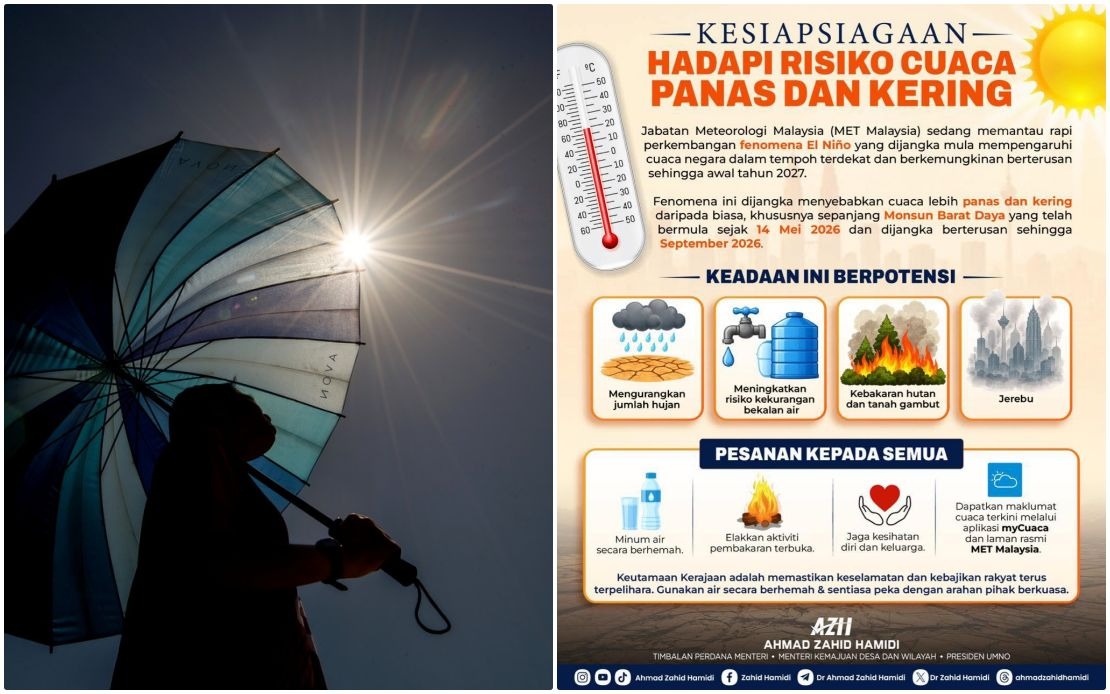
Malaysia is entering a critical period of climatic stress as Deputy Prime Minister Datuk Seri Dr Ahmad Zahid Hamidi alerts the nation to prepare for a sustained El Niño episode that meteorologists project will influence weather patterns until the opening months of 2027. The announcement, delivered through official channels, underscores growing concern among government agencies about the cascading environmental and social consequences of this naturally occurring climate phenomenon, which is already being felt across Southeast Asia.
The El Niño phenomenon, characterised by unusually warm ocean temperatures in the equatorial Pacific Ocean, is expected to intensify conditions during Malaysia's Southwest Monsoon season, which commenced on May 14 and will continue through September. During this period, the country typically experiences reduced rainfall in many regions, a pattern that El Niño significantly amplifies. Ahmad Zahid, who chairs the Central Disaster Management Committee, emphasised that the convergence of monsoon patterns and El Niño effects creates a compound risk scenario requiring coordinated national response and individual vigilance.
The meteorological implications extend beyond mere temperature increases. According to the Malaysian Meteorological Department (MetMalaysia), the phenomenon will produce substantially drier conditions across multiple geographical zones. This precipitation deficit poses immediate threats to water availability, particularly in urban centres and agricultural regions dependent on regular rainfall. Communities that have already experienced water rationing in recent years may face additional strain on reservoirs and groundwater supplies, forcing authorities to implement stricter conservation measures.
Forest and peatland fires represent perhaps the most visible threat. Elevated temperatures combined with lower moisture content in vegetation create ideal conditions for uncontrolled combustion, whether from intentional clearing activities or natural ignition sources. Such fires not only destroy critical ecosystems and carbon stores—particularly in peatlands where centuries of accumulated organic matter can burn—but also generate transboundary haze that blankets neighbouring countries including Singapore and Brunei. The economic costs associated with haze, including health expenditures, reduced visibility affecting transport, and agricultural losses, are substantial and persistent.
Acknowledging these multifaceted challenges, Ahmad Zahid issued a comprehensive appeal to Malaysians emphasising three pillars of preparedness. First, water conservation must become a collective priority, with households, businesses, and industrial operations adopting practices that reduce consumption and minimise wastage. Second, the public must refrain from open burning activities that exacerbate fire risks and degrade air quality. Third, vulnerable populations—including the elderly, children, and individuals with respiratory conditions—require special attention and protection from heat stress and air pollution exposure.
The government's response framework relies partly on technological solutions and information accessibility. MetMalaysia's myCuaca application provides real-time weather updates and alerts, enabling citizens to make informed decisions about outdoor activities, water usage, and health precautions. By directing the public toward official meteorological channels, authorities seek to counter misinformation while promoting evidence-based decision-making at the household and community levels. Accessibility to accurate forecasting data becomes particularly crucial when drought conditions and fire risk escalate.
The regional context amplifies Malaysia's vulnerability. Southeast Asia has witnessed increasingly severe El Niño impacts in recent decades, with the 2015-2016 episode causing recordbreaking wildfires in Indonesia that spread smoke across the region for months. The anticipated persistence of current conditions through early 2027 suggests the region faces a prolonged period of elevated environmental stress rather than a short-term anomaly. This timeline shapes long-term planning for water infrastructure, agricultural adjustments, and disaster preparedness.
Ahmad Zahid's statement reflects a shift toward proactive climate communication, wherein government leadership explicitly connects meteorological forecasting to concrete lifestyle adjustments. Rather than treating El Niño as merely a technical weather phenomenon, the framing positions it as a shared challenge requiring coordinated action spanning government agencies, private sector entities, and individual households. This holistic approach acknowledges that weather patterns alone do not determine outcomes—human behaviour, policy decisions, and resource allocation critically influence resilience.
For Malaysian businesses, particularly those dependent on water-intensive operations or vulnerable to supply chain disruptions from regional haze, the El Niño warning prompts strategic reassessment. Agricultural enterprises must evaluate irrigation efficiency and crop selection. Logistics and aviation sectors should prepare for possible operational constraints during severe haze episodes. Insurance companies and risk managers will likely adjust premiums and coverage terms reflecting elevated environmental hazard exposure.
The extended timeframe through early 2027 demands institutional preparation beyond conventional seasonal responses. Water authorities must accelerate infrastructure projects enhancing storage capacity and distribution efficiency. Environmental agencies should strengthen fire prevention and suppression capabilities. Healthcare systems should bolster capacity for heat-related illnesses and respiratory conditions exacerbated by poor air quality. Educational institutions can integrate climate adaptation messaging into curricula, building societal resilience across generations.
Moving forward, Ahmad Zahid stressed that continuous monitoring and adaptive management form the foundation of risk mitigation. The government has committed to maintaining situational awareness while implementing measures calibrated to emerging conditions. This iterative approach recognises that climate forecasts, while increasingly sophisticated, contain inherent uncertainties requiring flexibility in response strategies. Citizens and organisations are encouraged to view the El Niño period not as a passive phenomenon to endure, but as a call to action demanding collective responsibility and sustained commitment to environmental stewardship.


%22%2F%3E%3C%2Fpattern%3E%3C%2Fdefs%3E%3Crect%20width%3D%22100%25%22%20height%3D%22100%25%22%20fill%3D%22url(%23ph40buhg)%22%2F%3E%3Crect%20width%3D%22100%25%22%20height%3D%22100%25%22%20fill%3D%22url(%23ph40buhp)%22%2F%3E%3Ctext%20x%3D%2250%25%22%20y%3D%2250%25%22%20text-anchor%3D%22middle%22%20dominant-baseline%3D%22central%22%20fill%3D%22rgba(255%2C255%2C255%2C0.95)%22%20font-family%3D%22Georgia%2C%20'Times%20New%20Roman'%2C%20serif%22%20font-weight%3D%22700%22%20font-size%3D%22320%22%20letter-spacing%3D%22-0.02em%22%3EGRS%3C%2Ftext%3E%3C%2Fsvg%3E)